
Pulp Fiction, 1956 · page 128 of 162
Authentic Science Fiction Monthly, No. 67 — page 128: what you’re looking at
A restored page from Pulp Fiction, 1956. Page through the whole issue in the reader above.
📄 Transcribed text from this page (OCR, searchable)
Machine-transcribed from the original scan — historical spelling and the odd misread are preserved.
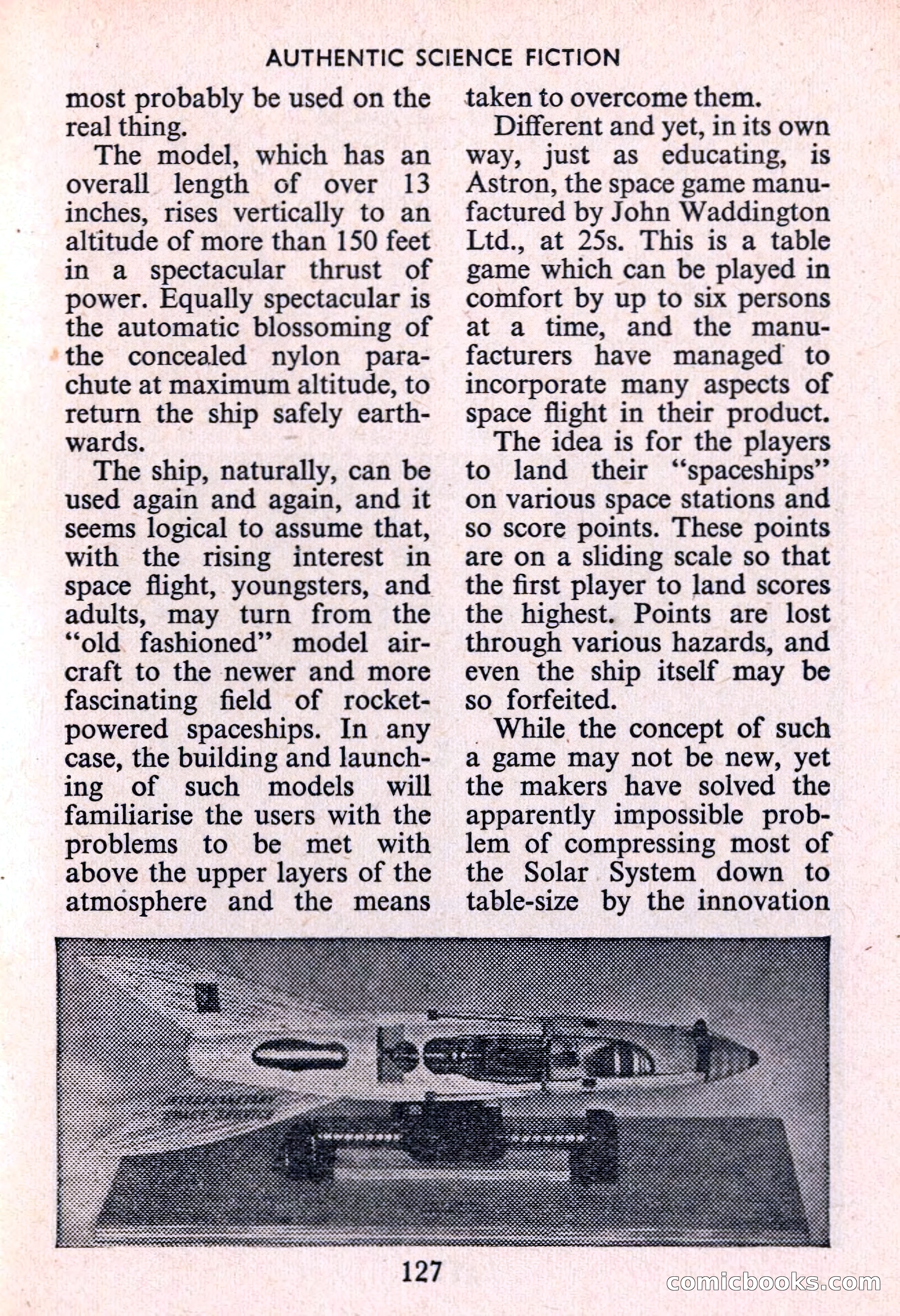
AUTHENTIC SCIENCE FICTION most probably be used on the real thing. The model, which has an overall length of over 13 inches, rises vertically to an altitude of more than 150 feet in a spectacular thrust of power. Equally spectacular is the automatic blossoming of the concealed nylon para- chute at maximum altitude, to return the ship safely earth- wards. The ship, naturally, can be used again and again, and it seems logical to assume that, with the rising interest in space flight, youngsters, and adults, may turn from the “old fashioned’? model air- craft to the newer and more fascinating field of rocket- powered spaceships. In any case, the building and launch- ing of such models. will familiarise the users with the problems to be met with above the upper layers of the atmosphere and the means “Sweex taken to overcome them. Different and yet, in its own way, just as educating, is Astron, the space game manu- factured by John Waddington Ltd., at 25s. This is a table game which can be played in comfort by up to six persons at a time, and the manu- facturers have managed to incorporate many aspects of space flight in their product. The idea is for the players to land their “spaceships’’ on various space stations and so score points. These points are on a sliding scale so that the first player to land scores the highest. Points are lost through various hazards, and even the ship itself may be so forfeited. _ While the concept of such a game may not be new, yet the makers have solved the apparently impossible prob- lem of compressing most of the Solar System down to table-size by the innovation 127 conmcloooks.con