
Pulp Fiction, 1955 · page 97 of 146
Authentic Science Fiction Monthly No. 54 — page 97: what you’re looking at
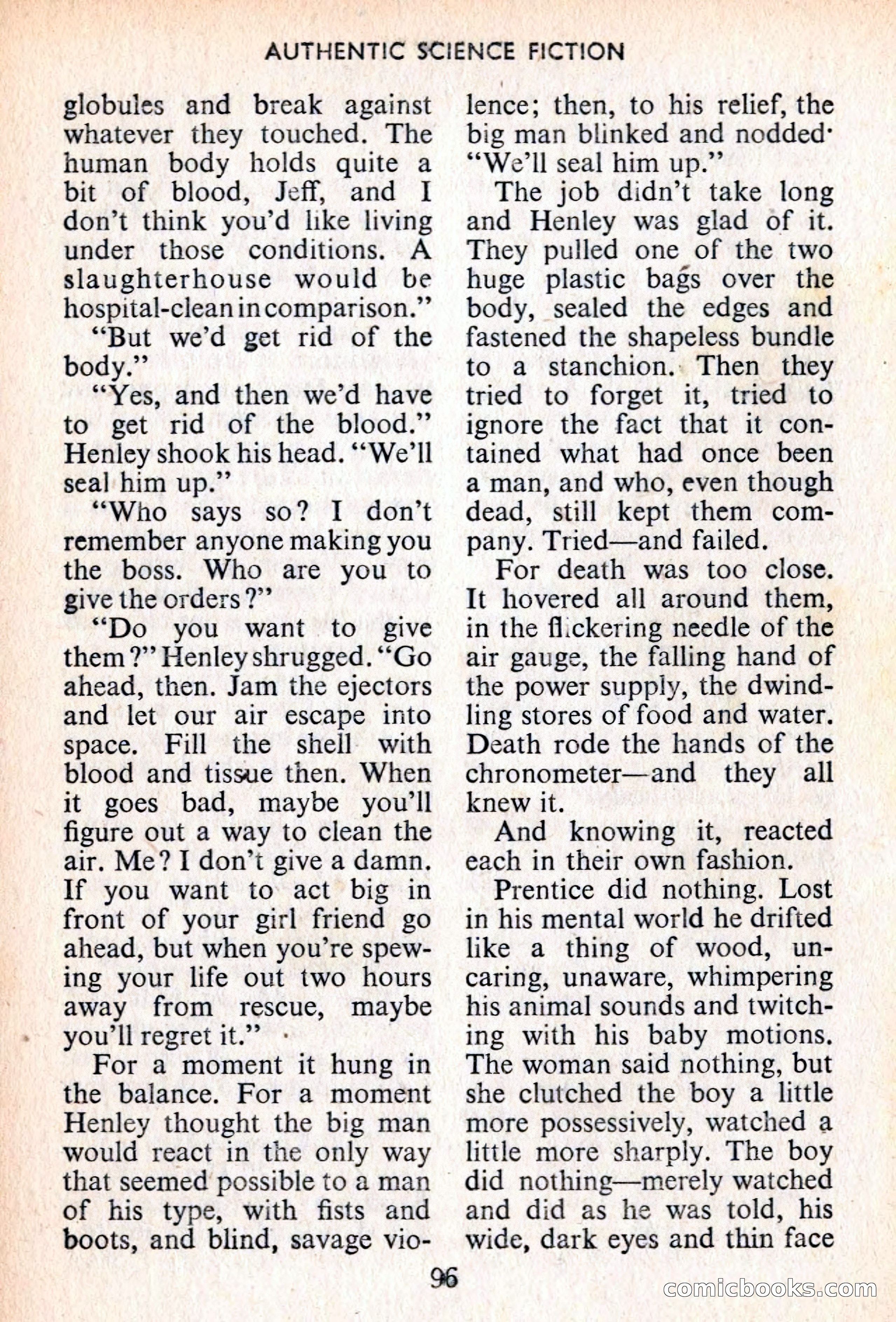
A restored page from Pulp Fiction, 1955. Page through the whole issue in the reader above.
📄 Transcribed text from this page (OCR, searchable)
Machine-transcribed from the original scan — historical spelling and the odd misread are preserved.
AUTHENTIC SCIENCE FICTION globules and break against whatever they touched. The human body holds quite a bit of blood, Jeff, and I don’t think you'd like living under those conditions. A slaughterhouse would be hospital-clean in comparison.”’ “But we’d get rid of the body.” “Yes, and then we’d have to get rid of the blood.” Henley shook his head. **We’ll seal him up.” “Who says so? I don’t remember anyone making you the boss. Who are you to give the orders?” “Do you want to give them ?”’ Henley shrugged. “Go ahead, then. Jam the ejectors and let our air escape into space. Fill the shell with blood and tissue then. When it goes bad, maybe you'll figure out a way to clean the air. Me? I don’t give a damn. If you want to act big in front of your girl friend go ahead, but when you’re spew- ing your life out two hours away from rescue, maybe you'll regret it.” - For a moment it hung in the balance. For a moment Henley thought the big man would react in the only way that seemed possible to a man of his type, with fists and boots, and blind, savage vio- 96 lence; then, to his relief, the big man blinked and nodded’ “We'll seal him up.”’ The job didn’t take long and Henley was glad of it. They pulled one of the two huge plastic bags over the body, sealed the edges and fastened the shapeless bundle to a stanchion. Then they tried to forget it, tried to ignore the fact that it con- tained what had once been a man, and who, even though dead, still kept them com- pany. Tried—and failed. For death was too close. It hovered all around them, in the flickering needle of the air gauge, the falling hand of the power supply, the dwind- ling stores of food and water. Death rode the hands of the chronometer—and they all knew it. And knowing it, reacted each in their own fashion. Prentice did nothing. Lost in his mental world he drifted like a thing of wood, un- caring, unaware, whimpering his animal sounds and twitch- ing with his baby motions. The woman said nothing, but she clutched the boy a little more possessively, watched a little more sharply. The boy did nothing—merely watched and did as he was told, his wide, dark eyes and thin face comiclooks.corn