
Pulp Fiction, 1954 · page 123 of 146
Authentic Science Fiction Monthly No. 52 — page 123: what you’re looking at
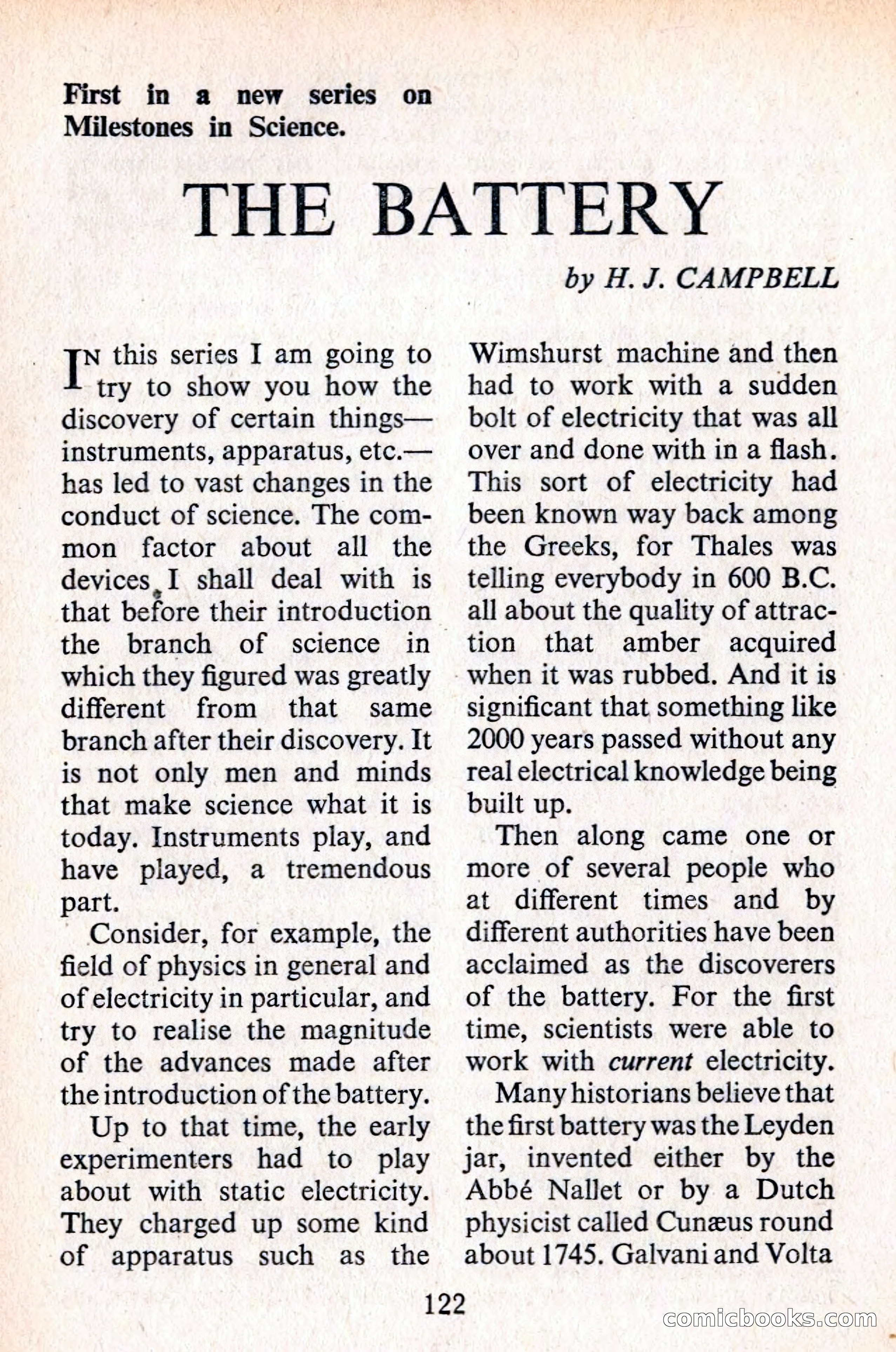
A restored page from Pulp Fiction, 1954. Page through the whole issue in the reader above.
📄 Transcribed text from this page (OCR, searchable)
Machine-transcribed from the original scan — historical spelling and the odd misread are preserved.
First in a new series on Milestones in Science. THE BATTERY N this series I am going to try to show you how the discovery of certain things— instruments, apparatus, etc.— has led to vast changes in the conduct of science. The com- mon factor about all the devices, I shall deal with is that before their introduction the which they figured was greatly different from that same branch after their discovery. It is not only men and minds that make science what it is today. Instruments play, and have played, a tremendous part. Consider, for example, the field of physics in general and of electricity in particular, and try to realise the magnitude of the advances made after the introduction of the battery. Up to that time, the early experimenters had to play about with static electricity. They charged up some kind of apparatus such as the 122 branch of science in by H. J. CAMPBELL Wimshurst machine and then had to work with a sudden bolt of electricity that was all over and done with in a flash. This sort of electricity had been known way back among the Greeks, for Thales was telling everybody in 600 B.C. all about the quality of attrac- tion that amber acquired when it was rubbed. And it is significant that something like 2000 years passed without any real electrical knowledge being built up. Then along came one or more of several people who at different times and by different authorities have been acclaimed as the discoverers of the battery. For the first time, scientists were able to work with current electricity. Many historians believe that the first battery was the Leyden jar, invented either by the Abbé Nallet or by a Dutch physicist called Cunzus round about 1745. Galvani and Volta comiclooks.cormn