
Pulp Fiction, 1954 · page 3 of 162
Authentic Science Fiction Monthly No. 44 — page 3: what you’re looking at
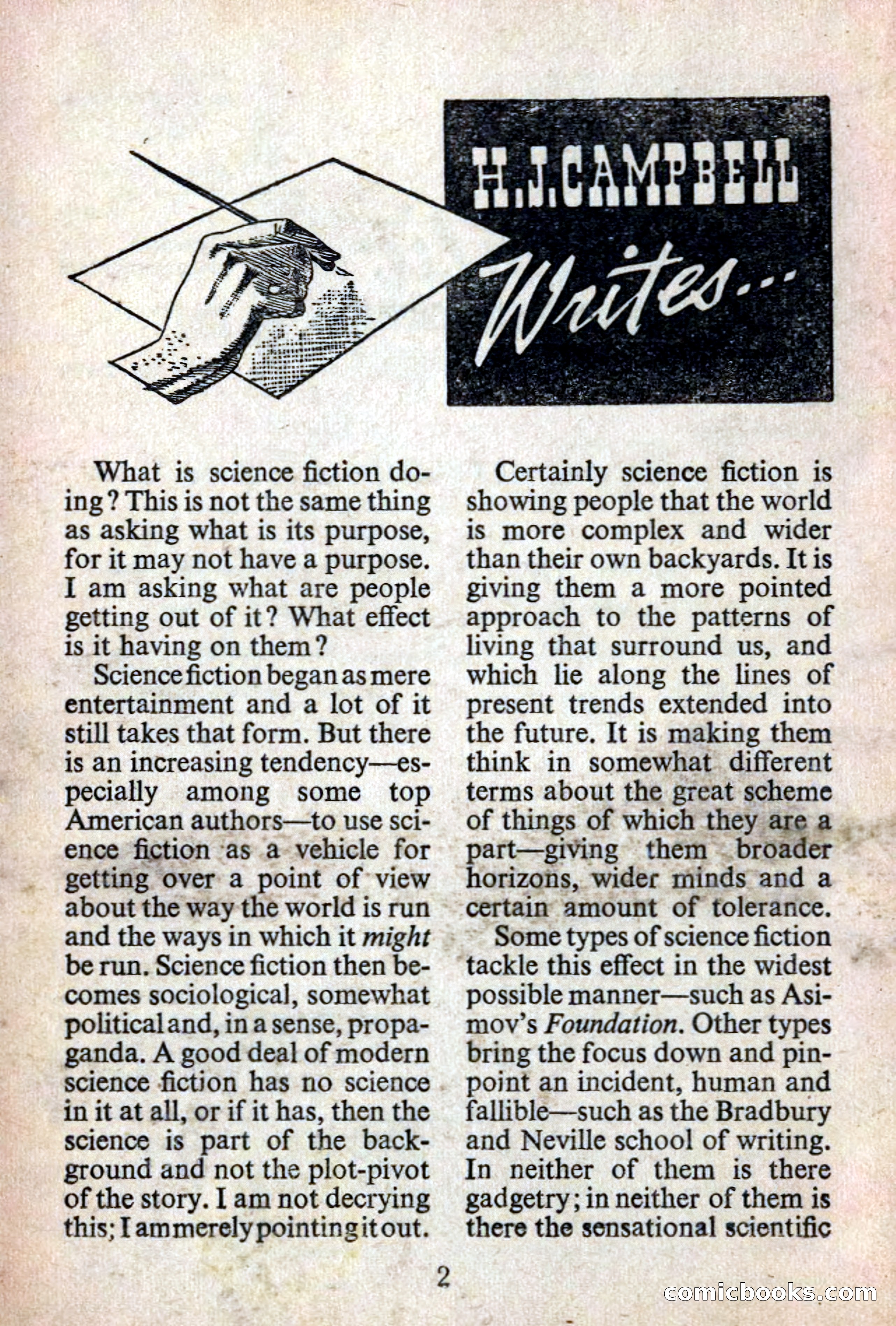
A restored page from Pulp Fiction, 1954. Page through the whole issue in the reader above.
📄 Transcribed text from this page (OCR, searchable)
Machine-transcribed from the original scan — historical spelling and the odd misread are preserved.
What is science fiction do- ing? This is not the same thing as asking what is its purpose, for it may not have a purpose. I am asking what are people getting out of it? What effect is it having on them? Science fiction began as mere entertainment and a lot of it still takes that form. But there is an increasing tendency—es- pecially among some top American authors—to use sci- ence fiction ‘as a vehicle for getting over a point of view about the way the world is run and the ways in which it might » be run. Science fiction then be- comes sociological, somewhat politicaland, in a sense, propa- ganda. A good deal of modern science fiction has no science in it at all, or if it has, then the science is part of the back- ground and not the plot-pivot of the story. I am not decrying this; [ammerely pointingitout. Ht aM Certainly science fiction is showing people that the world is more complex and wider than their own backyards. It is giving them a more pointed approach to the patterns of living that surround us, and which lie along the lines of present trends extended into the future. It is making them think in somewhat different terms about the great ene of things of which they ars part—giving them _broa e , horizons, wider minds and a certain amount of tolerance. ~ Some types of science fiction tackle this effect in the widest possible manner—such as Asi- mov’s Foundation. Other types bring the focus down and pin- point an incident, human and fallible—such as the Bradbury and Neville school of writing. In neither of them is there gadgetry; in neither of them is there the sensational scientific : Connicbooks,.conn