
Pulp Fiction, 1954 · page 130 of 162
Authentic Science Fiction Monthly No. 44 — page 130: what you’re looking at
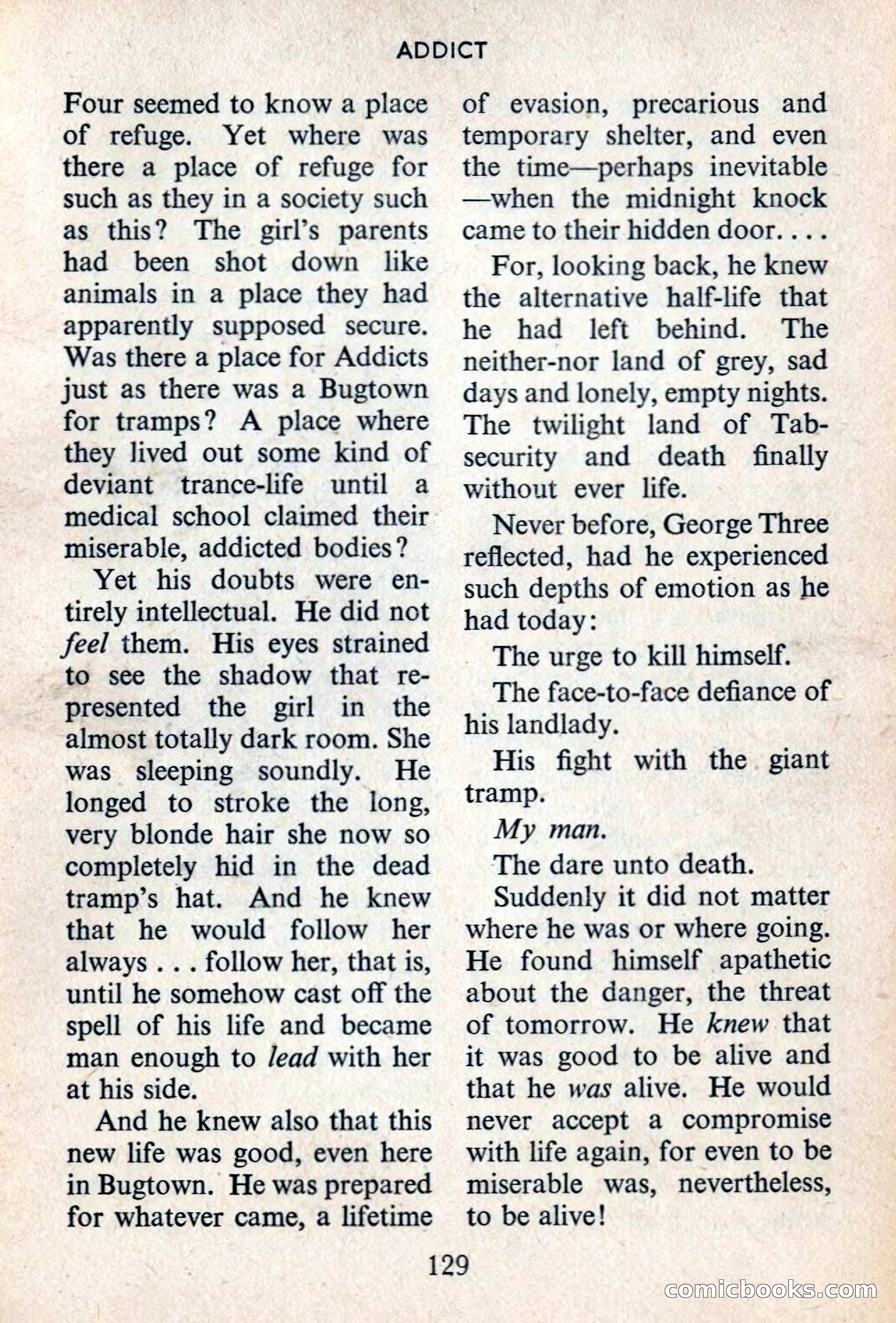
A restored page from Pulp Fiction, 1954. Page through the whole issue in the reader above.
📄 Transcribed text from this page (OCR, searchable)
Machine-transcribed from the original scan — historical spelling and the odd misread are preserved.
ADDICT Four seemed to know a place of refuge. Yet where was there a place of refuge for such as they in a society such as this? The girl’s parents had been shot down like animals in a place they had apparently supposed secure. Was there a place for Addicts just as there was a Bugtown for tramps? A place where they lived out some kind of deviant trance-life until a medical school claimed their miserable, addicted bodies? Yet his doubts were en- tirely intellectual. He did not feel them. His eyes strained to see the shadow that re- _ presented the girl in the almost totally dark room. She was sleeping soundly. He longed to stroke the long, very blonde hair she now so completely hid in the dead tramp’s hat. And he knew that he would follow her always .. . follow her, that is, until he somehow cast off the spell of his life and became man enough to /ead with her at his side. And he knew also that this new life was good, even here in Bugtown. He was prepared for whatever came, a lifetime of evasion, precarious and temporary shelter, and even the time—perhaps inevitable —when the midnight knock came to their hidden door. ... For, looking back, he knew the alternative half-life that he had left behind. The neither-nor land of grey, sad days and lonely, empty nights. The twilight land of Tab- security and death finally without ever life. Never before, George Three reflected, had he experienced such depths of emotion as he had today: _ The urge to kill himself. The face-to-face defiance of his landlady. His fight with the giant tramp. My man. The dare unto death. Suddenly it did not matter where he was or where going. He found himself apathetic about the danger, the threat of tomorrow. He knew that it was good to be alive and that he was alive. He would never accept a compromise with life again, for even to be miserable was, nevertheless, to be alive! 129 comiclooks.conn