
Pulp Fiction, 1954 · page 117 of 162
Authentic Science Fiction Monthly No. 44 — page 117: what you’re looking at
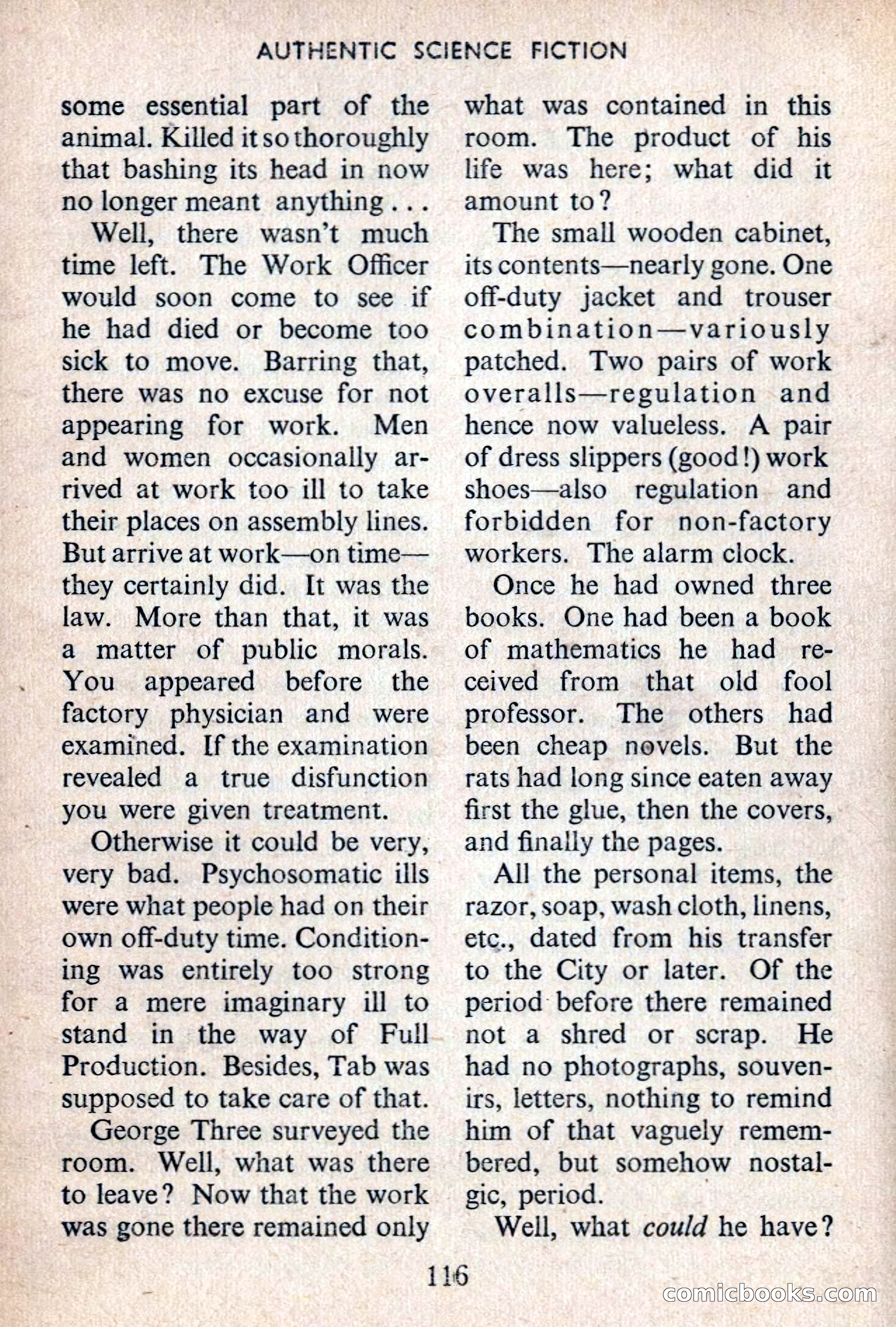
A restored page from Pulp Fiction, 1954. Page through the whole issue in the reader above.
📄 Transcribed text from this page (OCR, searchable)
Machine-transcribed from the original scan — historical spelling and the odd misread are preserved.
AUTHENTIC SCIENCE FICTION some essential part of the animal. Killed itso thoroughly that bashing its head in now no longer meant anything... Well, there wasn’t much time left. The Work Officer would soon come to see if he had died or become too sick to move. Barring that, there was no excuse for not appearing for work. Men and women occasionally ar- rived at work too ill to take their places on assembly lines. But arrive at work—on time— they certainly did. It was the law. More than that, it was a matter of public morals. You appeared before the factory physician and were examined. If the examination revealed a true disfunction you were given treatment. Otherwise it could be very, very bad. Psychosomatic ills were what people had on their own off-duty time. Condition- ing was entirely too strong for a mere imaginary ill to stand in the way of Full Production. Besides, Tab was supposed to take care of that. George Three surveyed the room. Well, what was there to leave? Now that the work was gone there remained only what was contained in this room. The product of his life was here; what did it amount to? The small wooden cabinet, its contents—nearly gone. One off-duty jacket and trouser combination—variously patched. Two pairs of work overalls—regulation and hence now valueless. A pair of dress slippers (good!) work shoes—also regulation and forbidden for non-factory workers. The alarm clock. Once he had owned three books. One had been a book of mathematics he had re- ceived from that old fool professor. The others had been cheap novels. But the rats had long since eaten away first the glue, then the covers, and finally the pages. All the personal items, the razor, soap, wash cloth, linens, etc., dated from his transfer to the City or later. Of the period before there remained not a shred or scrap. He had no photographs, souven- irs, letters, nothing to remind him of that vaguely remem- bered, but somehow nostal- gic, period. | Well, what could he have? 116 comicloooks.conrn