
Pulp Fiction, 1954 · page 138 of 162
Authentic Science Fiction Monthly No. 43 — page 138: what you’re looking at
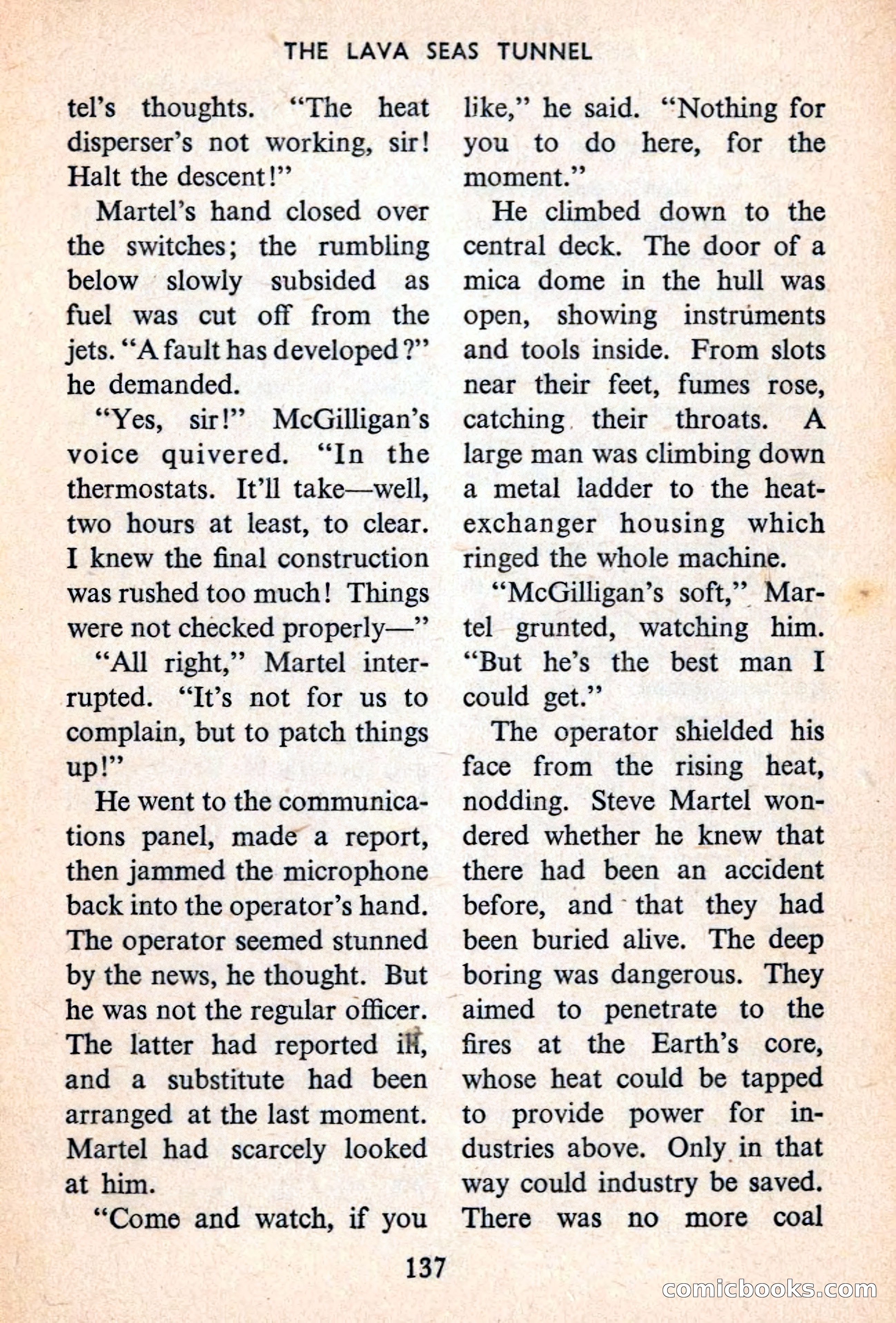
A restored page from Pulp Fiction, 1954. Page through the whole issue in the reader above.
📄 Transcribed text from this page (OCR, searchable)
Machine-transcribed from the original scan — historical spelling and the odd misread are preserved.
THE LAVA SEAS TUNNEL tel’s thoughts. “The heat disperser’s not working, sir! Halt the descent!” Martel’s hand closed over the switches; the rumbling below slowly subsided as fuel was cut off from the jets. ‘A fault has developed ?” he demanded. “Yes, sir!’ McGilligan’s voice quivered. “In the thermostats. It'll take—well, two hours at least, to clear. I knew the final construction was rushed too much! Things were not checked properly—”’ “All right,’’ Martel inter- rupted. “It’s not for us to complain, but to patch things up!” He went to the communica- tions panel, made a report, then jammed the microphone back into the operator’s hand. The operator seemed stunned by the news, he thought. But he was not the regular officer. The latter had reported iff, and a substitute had been arranged at the last moment. Martel had scarcely looked at him. “Come and watch, if you 137 like,” he said. “Nothing for you to do here, for the moment.” He climbed down to the central deck. The door of a mica dome in the hull was open, showing instruments and tools inside. From slots near their feet, fumes rose, catching. their throats. A large man was climbing down a metal ladder to the heat- exchanger housing which ringed the whole machine. “McGilligan’s soft,’ Mar- tel grunted, watching him. “But he’s the best man I could get.” The operator shielded his face from the rising heat, nodding. Steve Martel won- dered whether he knew that there had been an accident before, and that they had been buried alive. The deep boring was dangerous. They aimed to penetrate to the fires at the Earth’s core, whose heat could be tapped to provide power for in- dustries above. Only in that way could industry be saved. There was no more coal conmmicloooks.comn