
Pulp Fiction, 1954 · page 100 of 162
Authentic Science Fiction Monthly No. 43 — page 100: what you’re looking at
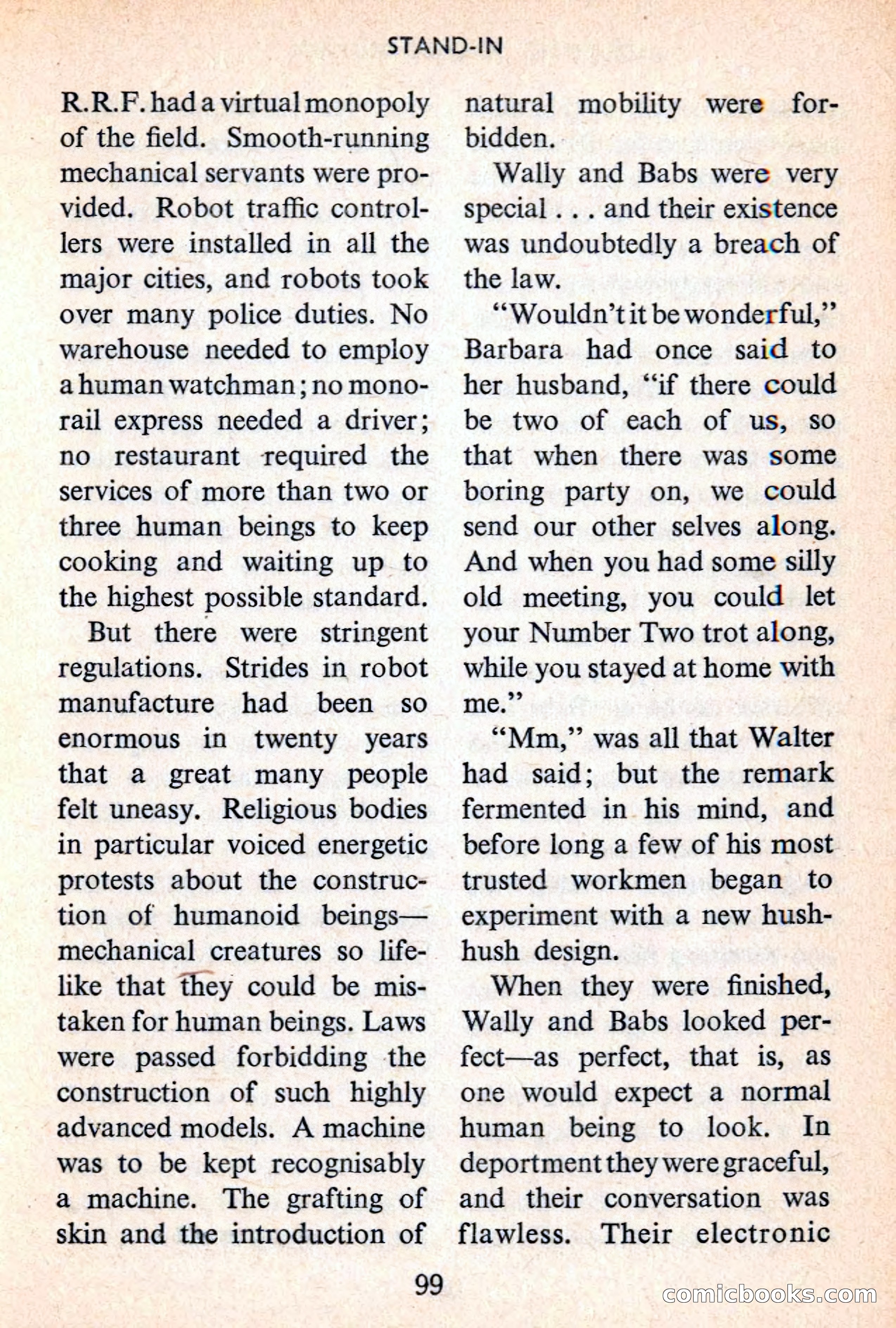
A restored page from Pulp Fiction, 1954. Page through the whole issue in the reader above.
📄 Transcribed text from this page (OCR, searchable)
Machine-transcribed from the original scan — historical spelling and the odd misread are preserved.
STAND-IN R.R.F. had a virtual monopoly of the field. Smooth-running mechanical servants were pro- vided. Robot traffic control- lers were installed in all the major cities, and robots took over many police duties. No warehouse needed to employ a human watchman; no mono- rail express needed a driver; no restaurant required the services of more than two or three human beings to keep cooking and waiting up to the highest possible standard. But there were stringent regulations. Strides in robot manufacture had been so enormous in twenty years that a great many people felt uneasy. Religious bodies in particular voiced energetic protests about the construc- tion of humanoid beings— mechanical creatures so life- like that they could be mis- taken for human beings. Laws were passed forbidding the construction of such highly advanced models. A machine was to be kept recognisably a machine. The grafting of skin and the introduction of 99 natural mobility were for- bidden. Wally and Babs were very special ... and their existence was undoubtedly a breach of the law. ““Wouldn’tit be wonderful,” Barbara had once said to her husband, “‘if there could be two of each of us, so that when there was some boring party on, we could send our other selves along. And when you had some silly old meeting, you could let your Number Two trot along, while you stayed at home with me.” “Mm,” was all that Walter had said; but the remark fermented in his mind, and before long a few of his most trusted workmen began to experiment with a new hush- hush design. When they were finished, Wally and Babs looked per- fect—as perfect, that is, as one would expect a normal human being to look. In deportment they were graceful, and their conversation was flawless. Their electronic comiclooks.corn