
Pulp Fiction, 1954 · page 82 of 162
Authentic Science Fiction Monthly No. 42 — page 82: what you’re looking at
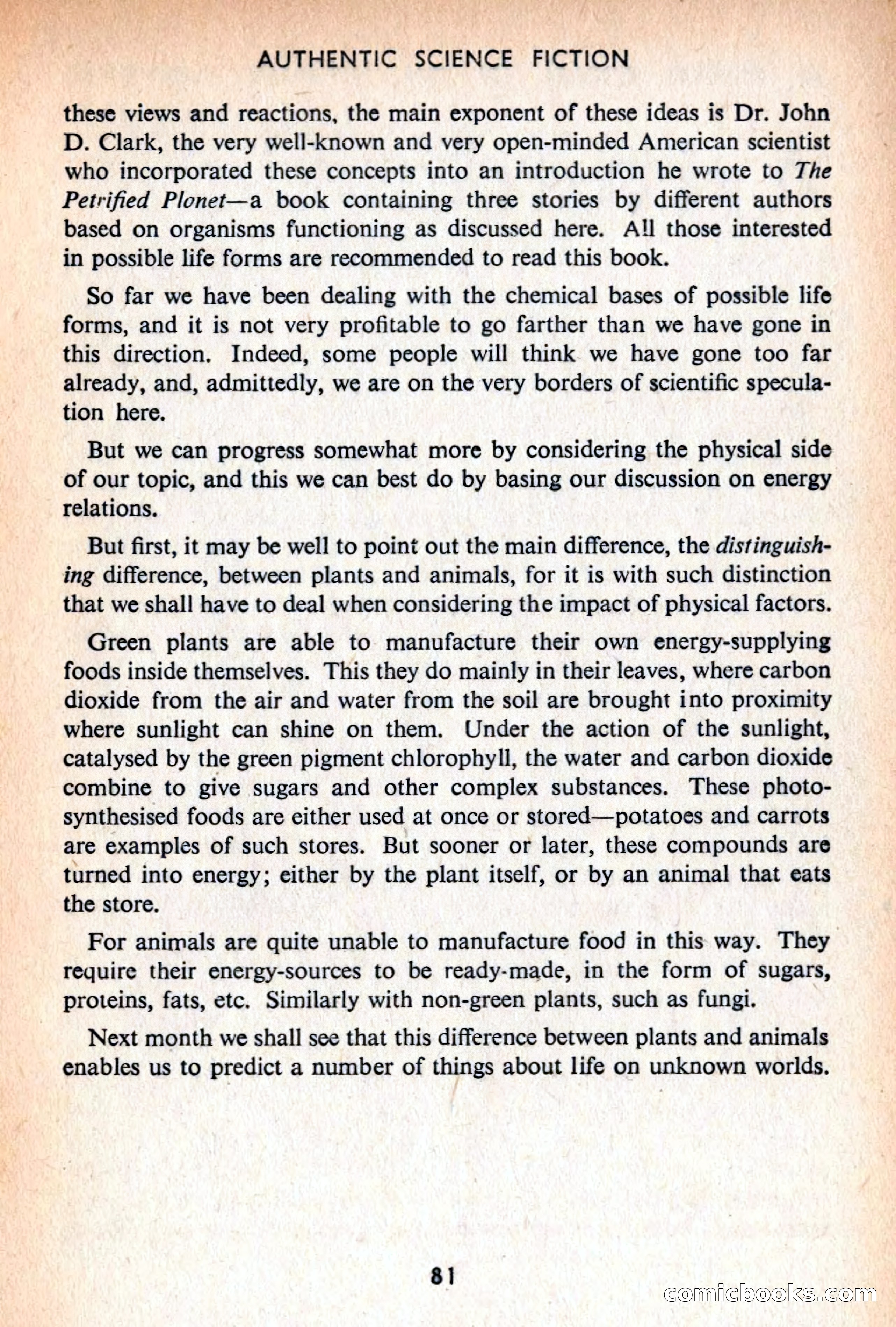
A restored page from Pulp Fiction, 1954. Page through the whole issue in the reader above.
📄 Transcribed text from this page (OCR, searchable)
Machine-transcribed from the original scan — historical spelling and the odd misread are preserved.
AUTHENTIC SCIENCE FICTION these views and reactions, the main exponent of these ideas is Dr. John D. Clark, the very well-known and very open-minded American scientist who incorporated these concepts into an introduction he wrote to The Petrified Plonet—a book containing three stories by different authors based on organisms functioning as discussed here. All those interested in possible life forms are recommended to read this book. So far we have been dealing with the chemical bases of possible life forms, and it is not very profitable to go farther than we have gone in this direction. Indeed, some people will think we have gone too far already, and, admittedly, we are on the very borders of scientific specula- tion here. But we can progress somewhat more by considering the physical side of our topic, and this we can best do by basing our discussion on energy relations. But first, it may be well to point out the main difference, the distinguish- ing difference, between plants and animals, for it is with such distinction that we shall have to deal when considering the impact of physical factors. Green plants are able to manufacture their own energy-supplying foods inside themselves. This they do mainly in their leaves, where carbon dioxide from the air and water from the soil are brought into proximity where sunlight can shine on them. Under the action of the sunlight, catalysed by the green pigment chlorophyll, the water and carbon dioxide combine to give sugars and other complex substances. These photo- synthesised foods are either used at once or stored—potatoes and carrots are examples of such stores. But sooner or later, these compounds are turned into energy; either by the plant itself, or by an animal that eats the store. For animals are quite unable to manufacture food in this way. They require their energy-sources to be ready-made, in the form of sugars, proteins, fats, etc. Similarly with non-green plants, such as fungi. Next month we shall see that this difference between plants and animals enables us to predict a number of things about life on unknown worlds. 8] comiclbooks.corn