
Pulp Fiction, 1954 · page 149 of 162
Authentic Science Fiction Monthly No. 42 — page 149: what you’re looking at
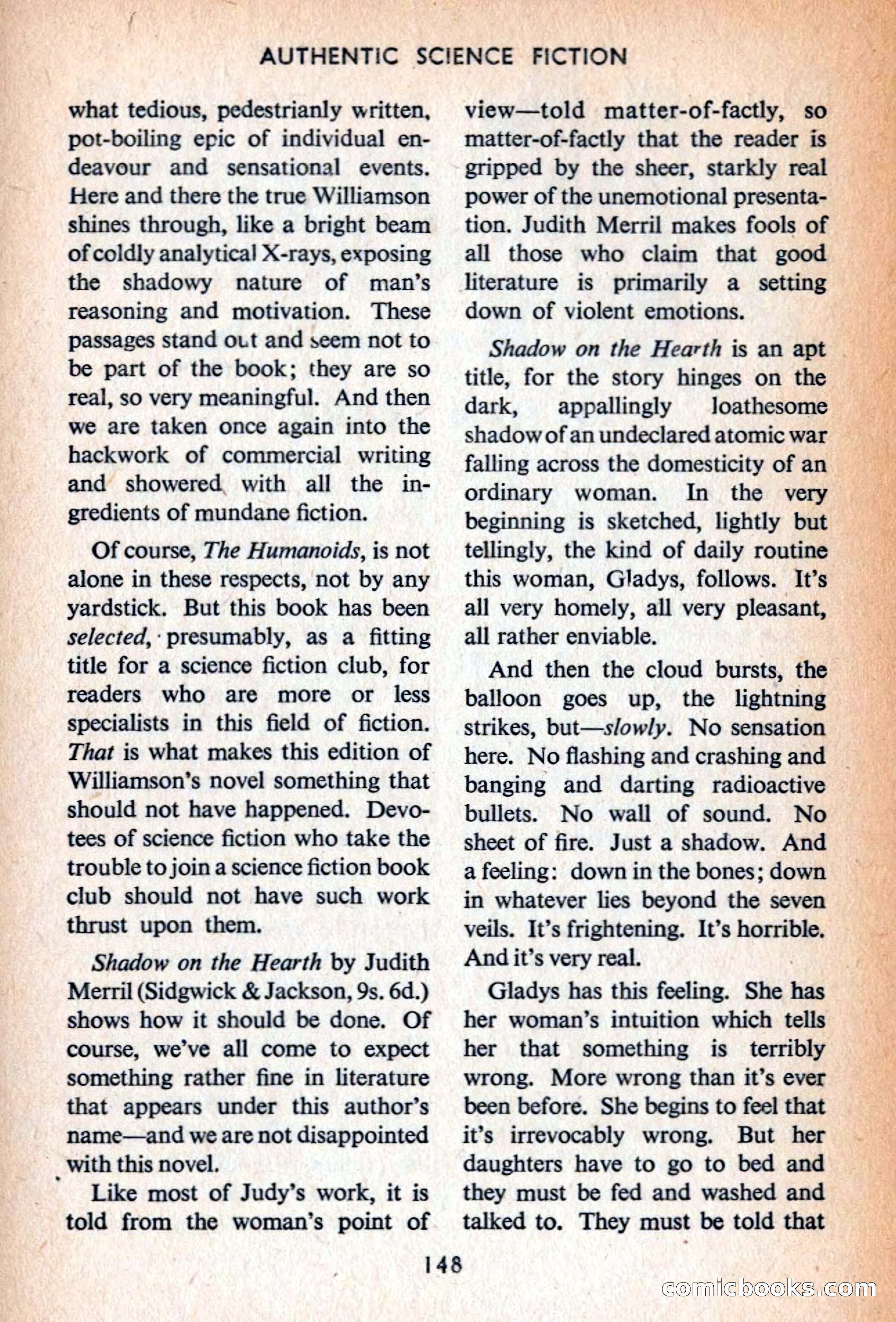
A restored page from Pulp Fiction, 1954. Page through the whole issue in the reader above.
📄 Transcribed text from this page (OCR, searchable)
Machine-transcribed from the original scan — historical spelling and the odd misread are preserved.
AUTHENTIC SCIENCE FICTION what tedious, pedestrianly written, pot-boiling epic of individual en- deavour and sensational events. Here and there the true Williamson shines through, like a bright beam of coldly analytical X-rays, exposing the shadowy nature of man’s reasoning and motivation. These passages stand out and seem not to be part of the book; they are so real, so very meaningful. And then we are taken once again into the hackwork of commercial writing and showered with all the in- gredients of mundane fiction. Of course, The Humanoids, is not alone in these respects, not by any yardstick. But this book has been selected,’ presumably, as a fitting title for a science fiction club, for readers who are more or less specialists in this field of fiction. That is what makes this edition of Williamson’s novel something that should not have happened. Devo- tees of science fiction who take the trouble to join a science fiction book club should not have such work thrust upon them. Shadow on the Hearth by Judith Merril (Sidgwick & Jackson, 9s. 6d.) shows how it should be done. Of course, we’ve all come to expect something rather fine in literature that appears under this author’s name—and we are not disappointed _ with this novel. Like most of Judy’s work, it is told from the woman’s point of 148 view—told matter-of-factly, so matter-of-factly that the reader is gripped by the sheer, starkly real power of the unemotional presenta- tion. Judith Merril makes fools of all those who claim that good literature is primarily a setting down of violent emotions. Shadow on the Hearth is an apt By title, for the story hinges on the dark, ppallingly loathesome shadowofanundeclaredatomicwar _— falling across the domesticity of an ordinary woman. In the very beginning is sketched, lightly but tellingly, the kind of daily routine this woman, Gladys, follows. It’s all very homely, all very pleasant, all rather enviable. And then the cloud bursts, the balloon goes up, the lightning strikes, but—s/owly. No sensation here. No flashing and crashing and banging and darting radioactive bullets. No wall of sound. No sheet of fire. Just a shadow. And a feeling: down in the bones; down in whatever lies beyond the seven veils. It’s frightening. It’s horrible. And it’s very real. Gladys has this feeling. She hai her woman’s intuition which tells her that something is terribly wrong. More wrong than it’s ever been before. She begins to feel that it’s irrevocably wrong. But her daughters have to go to bed and they must be fed and washed and talked to. They must be told that Comicbooksrcom a Viethen ~ ee awa ve — Sn > 7 a eee? vie