
Pulp Fiction, 1954 · page 130 of 162
Authentic Science Fiction Monthly No. 42 — page 130: what you’re looking at
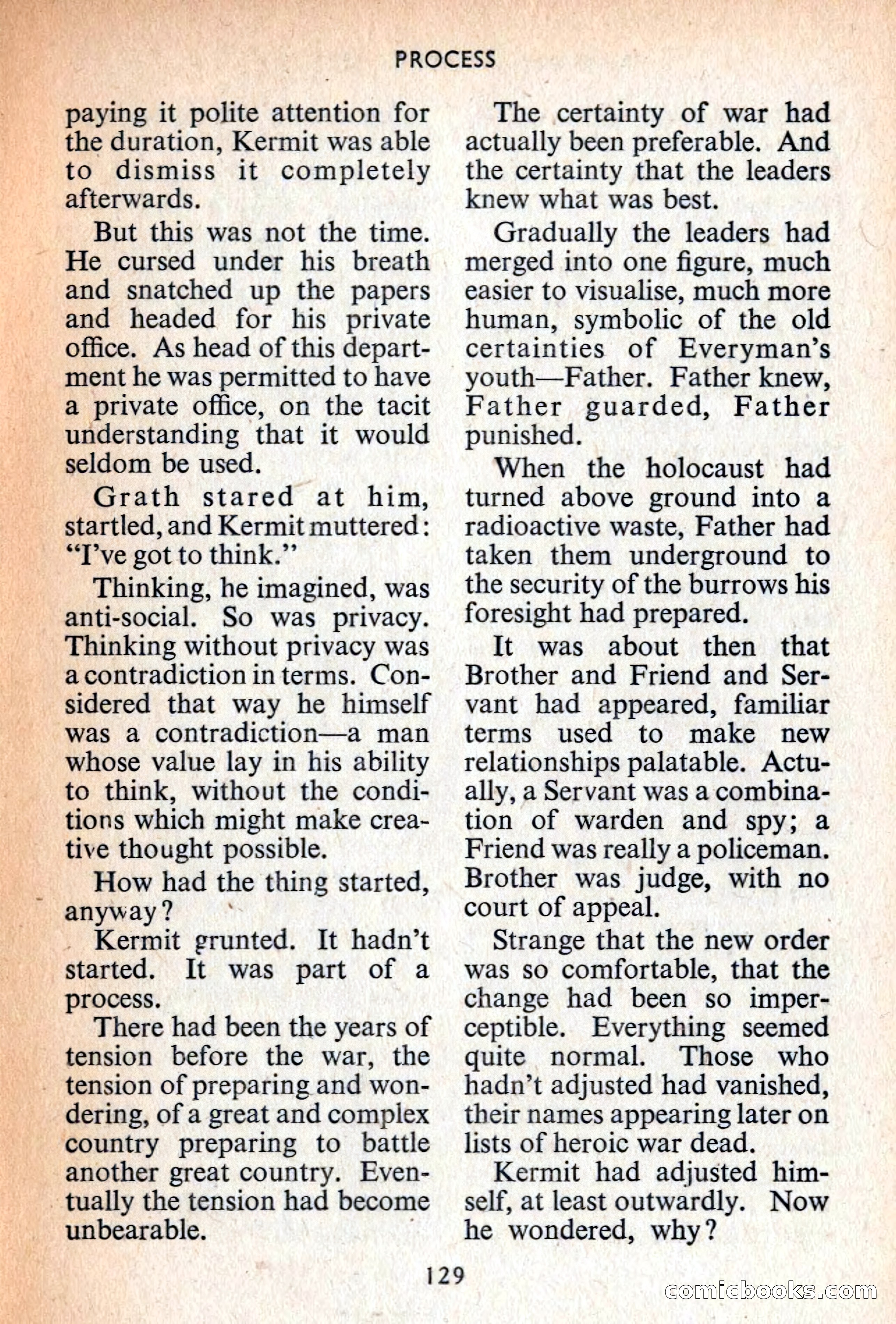
A restored page from Pulp Fiction, 1954. Page through the whole issue in the reader above.
📄 Transcribed text from this page (OCR, searchable)
Machine-transcribed from the original scan — historical spelling and the odd misread are preserved.
paying it polite attention for the duration, Kermit was able to dismiss it completely afterwards. But this was not the time. - He cursed under his breath and snatched up the papers and headed for his private office. As head of this depart- ment he was permitted to have a private office, on the tacit understanding that it would seldom be used. Grath stared at him, startled, and Kermit muttered: “T’ve got to think.” Thinking, he imagined, was anti-social. So was privacy. Thinking without privacy was a contradiction in terms. Con- sidered that way he himself was a contradiction—a man whose value lay in his ability to think, without the condi- tions which might make crea- tive thought possible. How had the thing started, anyway ? . Kermit grunted. It hadn’t started. It was part of a process. There had been the years of tension before the war, the _ tension of preparing and won- dering, of a great and complex country preparing to battle another great country. Even- tually the tension had become unbearable. . PROCESS The certainty of war had actually been preferable. And the certainty that the leaders knew what was best. Gradually the leaders had merged into one figure, much easier to visualise, much more human, symbolic of the old certainties of Everyman’s youth—Father. Father knew, Father guarded, Father punished. When the holocaust had turned above ground into a radioactive waste, Father had taken them underground to the security of the burrows his foresight had prepared. It was about then that Brother and Friend and Ser- vant had appeared, familiar terms used to make new relationships palatable. Actu- ally, a Servant was a combina- tion of warden and spy; a Friend was really a policeman. Brother was judge, with no court of appeal. Strange that the new order was so comfortable, that the change had been so imper- ceptible. Everything seemed quite normal. Those who hadn’t adjusted had vanished, their names appearing later on lists of heroic war dead. Kermit had adjusted him- self, at least outwardly. Now he wondered, why? 129 comiclooks.cormn