
Pulp Fiction, 1954 · page 4 of 162
Authentic Science Fiction Monthly No. 41 — page 4: what you’re looking at
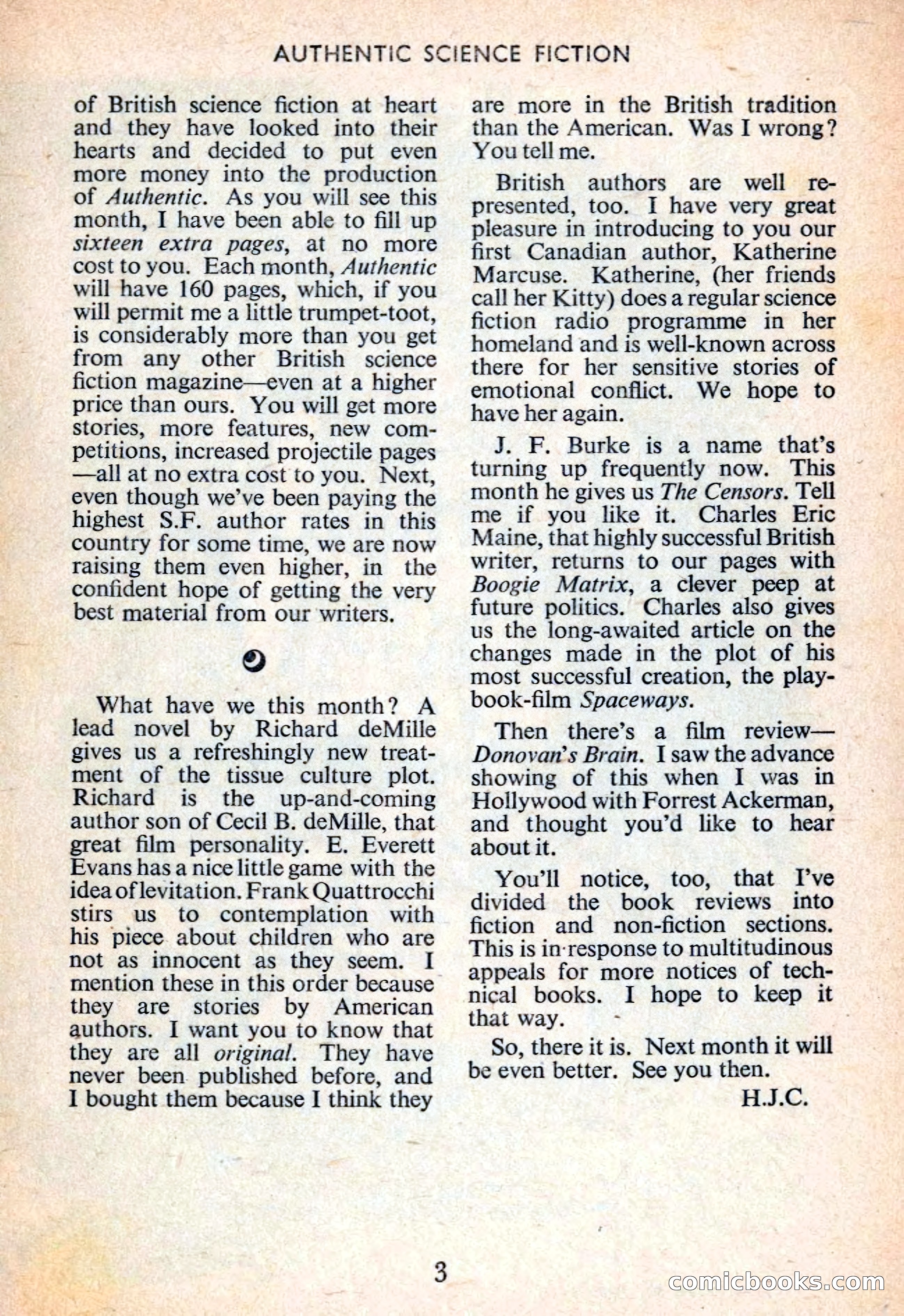
A restored page from Pulp Fiction, 1954. Page through the whole issue in the reader above.
📄 Transcribed text from this page (OCR, searchable)
Machine-transcribed from the original scan — historical spelling and the odd misread are preserved.
AUTHENTIC SCIENCE FICTION of British science fiction at heart and they have looked into their hearts and decided to put even more money into the production of Authentic. As you will see this month, I have been able to fill up sixteen extra pages, at no more cost to you. Each month, Authentic will have 160 pages, which, if you will permit me a little trumpet-toot, is considerably more than you get from any other British science fiction magazine—even at a higher price than ours. You will get more stories, more features, new com- petitions, increased projectile pages —all at no extra cost to you. Next, even though we’ve been paying the highest S.F. author rates in this country for some time, we are now raising them even higher, in the confident hope of getting the very best material from our writers. 9 What have we this month? A lead novel by Richard deMille gives us a refreshingly new treat- ment of the tissue culture plot. Richard is the up-and-coming author son of Cecil B. deMille, that great film personality. E. Everett Evans has a nice little game with the idea of levitation. Frank Quattrocchi stirs us to contemplation with his piece about children who are not as innocent as they seem. I mention these in this order because they are stories by American authors. I want you to know that they are all original. They have never been published before, and I bought them because I think they are more in the British tradition than the American. Was I wrong? You tell me. British authors are well re- presented, too. I have very great pleasure in introducing to you our first Canadian author, Katherine Marcuse. Katherine, (her friends call her Kitty) does a regular science fiction radio programme in her homeland and is well-known across there for her sensitive stories of emotional conflict. We hope to have her again. J. F. Burke is a name that’s turning up frequently now. This month he gives us The Censors. Tell me if you like it. Charles Eric Maine, that highly successful British writer, returns to our pages with Boogie Matrix, a clever peep at future politics. Charles also gives us the long-awaited article on the changes made in the plot of his most successful creation, the play- book-film Spaceways. Then there’s a film review— Donovan's Brain. I saw the advance showing of this when I was in Hollywood with Forrest Ackerman, and thought you’d like to hear about it. You'll notice, too, that I’ve divided the book reviews into fiction and non-fiction sections. This is in-response to multitudinous appeals for more notices of tech- nical books. I hope to keep it that way. ; : So, there it is. Next month it will be even better. See you then. H.J.C. conmicloooks.conn