
Pulp Fiction, 1944 · page 35 of 68
Astounding Science Fiction (British Edition), August 1944 — page 35: what you’re looking at
A restored page from Pulp Fiction, 1944. Page through the whole issue in the reader above.
📄 Transcribed text from this page (OCR, searchable)
Machine-transcribed from the original scan — historical spelling and the odd misread are preserved.
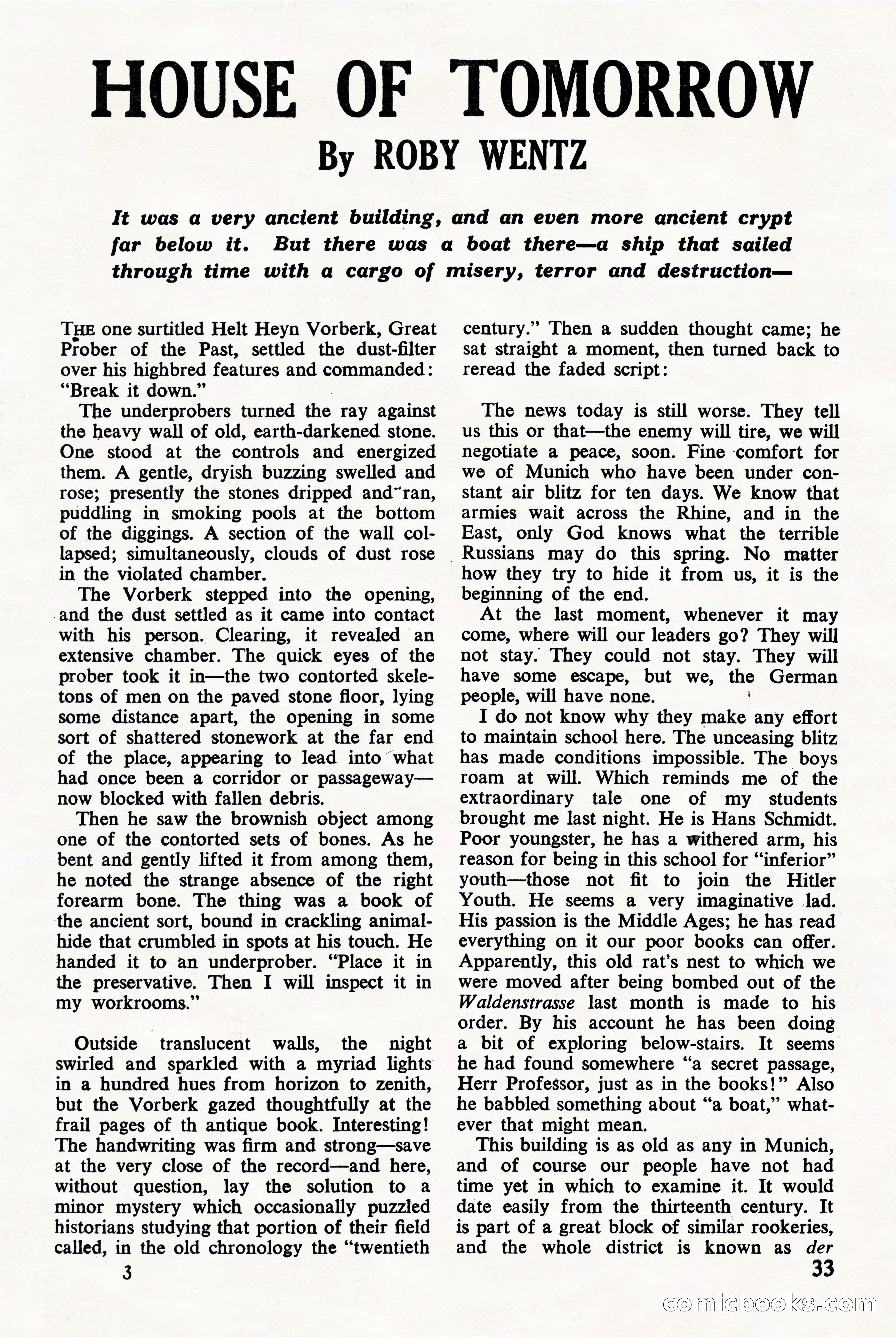
HOUSE OF TOMORROW By ROBY WENTZ It was a very ancient building, and an even more ancient crypt far below it. But there was a boat there—a ship that sailed through time with a cargo of misery, terror and destruction— THE one surtitled Helt Heyn Vorberk, Great Prober of the Past, settled the dust-filter over his highbred features and commanded: “Break it down.” The underprobers turned the ray against the heavy wall of old, earth-darkened stone. One stood at the controls and energized them. A gentle, dryish buzzing swelled and rose; presently the stones dripped and”ran, puddling in smoking pools at the bottom of the diggings. A section of the wall col- lapsed; simultaneously, clouds of dust rose in the violated chamber. The Vorberk stepped into the opening, -and the dust settled as it came into contact with his person. Clearing, it revealed an extensive chamber. The quick eyes of the prober took it in—the two contorted skele- tons of men on the paved stone floor, lying some distance apart, the opening in some sort of shattered stonework at the far end of the place, appearing to lead into what had once been a corridor or passageway— now blocked with fallen debris. Then he saw the brownish object among one of the contorted sets of bones. As he bent and gently lifted 1t from among them, he noted the strange absence of the right forearm bone. The thing was a book of the ancient sort, bound in crackling animal- hide that crumbled in spots at his touch. He handed it to an underprober. “Place it in the preservative. Then I will inspect it in my workrooms.” walls, the night Outside translucent swirled and sparkled with a myriad lights in a hundred hues from horizon to zenith, but the Vorberk gazed thoughtfully at the frail pages of th antique book. Interesting! The handwriting was firm and strong—save at the very close of the record—and here, without question, lay the solution to a minor mystery which occasionally puzzled historians studying that portion of their field called, in the old chronology the “twentieth 3 century.” Then a sudden thought came; he Sat straight a moment, then turned back to reread the faded script: The news today is still worse. They tell us this or that—the enemy will tire, we will negotiate a peace, soon. Fine comfort for we of Munich who have been under con- stant air blitz for ten days. We know that armies wait across the Rhine, and in the East, only God knows what the terrible _ Russians may do this spring. No matter how they try to hide it from us, it is the beginning of the end. At the last moment, whenever it may come, where will our leaders go? They will not stay. They could not stay. They will have some escape, but we, the German people, will have none. I do not know why they make any effort to maintain school here. The unceasing blitz has made conditions impossible. The boys roam at will. Which reminds me of the extraordinary tale one of my _ students brought me last night. He is Hans Schmidt. Poor youngster, he has a withered arm, his reason for being in this school for “inferior” youth—those not fit to join the Hitler Youth. He seems a very imaginative lad. His passion is the Middle Ages; he has read everything on it our poor books can offer. Apparently, this old rat’s nest to which we were moved after being bombed out of the Waldenstrasse last month is made to his order. By his account he has been doing a bit of exploring below-stairs. It seems he had found somewhere “a secret passage, Herr Professor, just as in the books!” Also he babbled something about “a boat,” what- ever that might mean. This building is as old as any in Munich, and of course our people have not had time yet in which to examine it. It would date easily from the thirteenth century. It is part of a great block of similar rookeries, and the whole district is known as der 33 Oo CoOMmicdsookks.€c©