
Pulp Fiction, 1954 · page 76 of 132
Astounding Science Fiction (British edition) — page 76: what you’re looking at
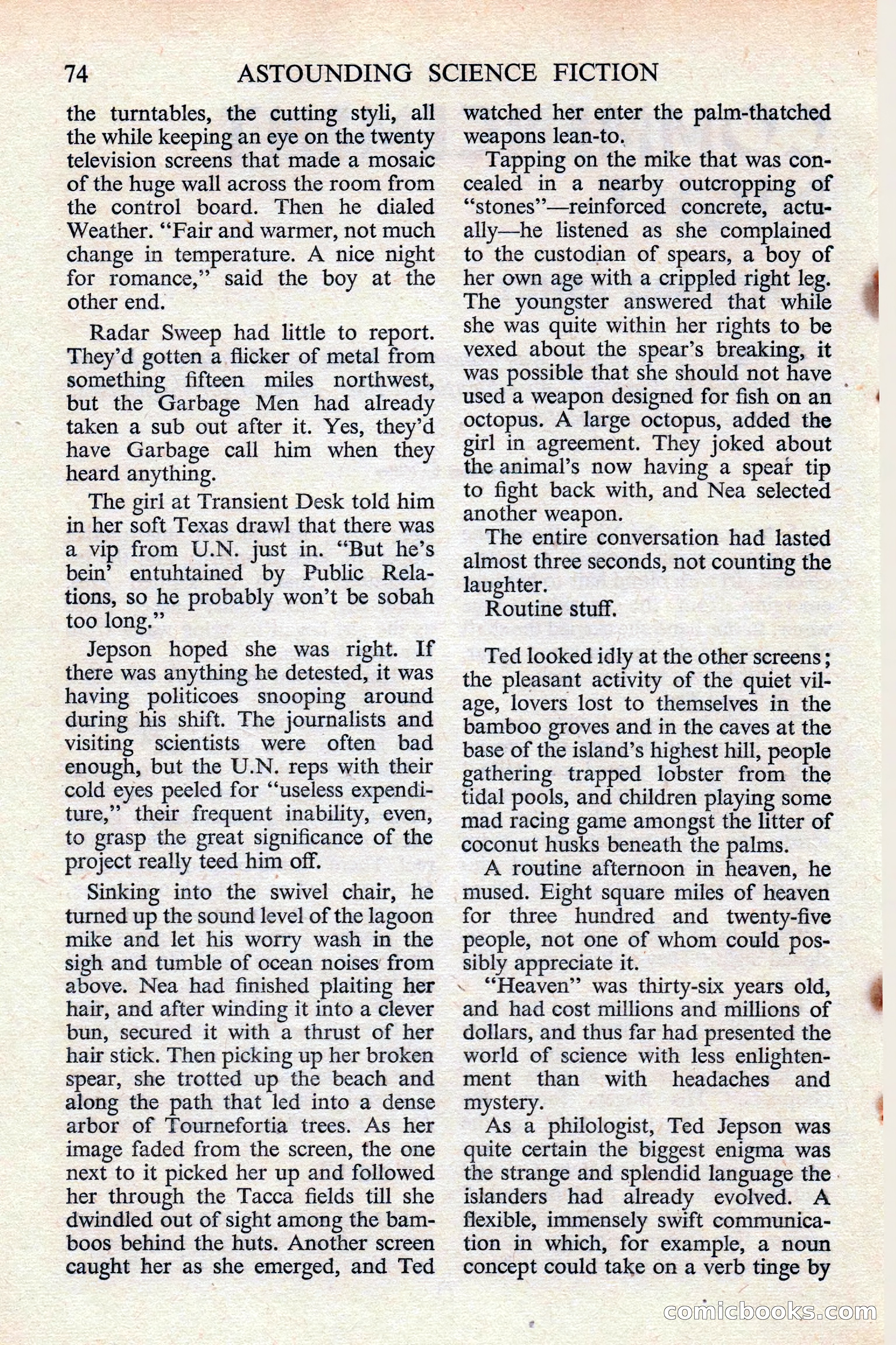
A restored page from Pulp Fiction, 1954. Page through the whole issue in the reader above.
📄 Transcribed text from this page (OCR, searchable)
Machine-transcribed from the original scan — historical spelling and the odd misread are preserved.
74 ASTOUNDING SCIENCE FICTION the turntables, the cutting styli, all the while keeping an eye on the twenty television screens that made a mosaic of the huge wall across the room from the control board. Then he dialed Weather. ‘‘Fair and warmer, not much change in temperature. A nice night for romance,” said the boy at the other end. Radar Sweep had little to report. They’d gotten a flicker of metal from something fifteen miles northwest, but the Garbage Men had already taken a sub out after it. Yes, they'd have Garbage call him when they heard anything. The girl at Transient Desk told him in her soft Texas drawl that there was a vip from U.N. just in. “But he’s bein’ entuhtained by Public Rela- tions, so he probably won’t be sobah too long.” Jepson hoped she was right. If there was anything he detested, it was having politicoes snooping around during his shift. The journalists and visiting scientists were often bad enough, but the U.N. reps with their cold eyes peeled for “useless expendi- ture,” their frequent inability, even, to grasp the great significance of the project really teed him off. Sinking into the swivel chair, he turned up the sound level of the lagoon mike and let his worry wash in the sigh and tumble of ocean noises from above. Nea had finished plaiting her hair, and after winding it into a clever bun, secured it with a thrust of her hair stick. Then picking up her broken spear, she trotted up the beach and along the path that led into a dense arbor of Tournefortia trees. As her image faded from the screen, the one next to it picked her up and followed her through the Tacca fields till she dwindled out of sight among the bam- boos behind the huts. Another screen caught her as she emerged, and Ted watched her enter the palm-thatched weapons lean-to. Tapping on the mike that was con- cealed in a nearby outcropping of ““stones’’—reinforced concrete, actu- ally—he listened as she complained to the custodian of spears, a boy of her own age with a crippled right leg. The youngster answered that while she was quite within her rights to be vexed about the spear’s breaking, it was possible that she should not have - used a weapon designed for fish on an octopus. A large octopus, added the girl in agreement. They joked about the animal’s now having a spear tip to fight back with, and Nea selected another weapon. The entire conversation had lasted almost three seconds, not counting the laughter. Routine stuff. Ted looked idly at the other screens; the pleasant activity of the quiet vil- age, lovers lost to themselves in the bamboo groves and in the caves at the base of the island’s highest hill, people gathering trapped lobster from the tidal pools, and children playing some mad racing game amongst the litter of coconut husks beneath the palms. A routine afternoon in heaven, he mused. Eight square miles of heaven for three hundred and _ twenty-five people, not one of whom could pos- sibly appreciate it. “Heaven” was thirty-six years old, and had cost millions and millions of dollars, and thus far had presented the world of science with less enlighten- ment than with headaches and mystery. As a philologist, Ted Jepson was quite certain the biggest enigma was the strange and splendid language the . islanders had already evolved. A flexible, immensely swift communica- tion in which, for example, a noun concept could take on a verb tinge by cConniclbooks.cO nn