
Pulp Fiction, 1953 · page 65 of 132
Astounding Science Fiction, British Edition — page 65: what you’re looking at
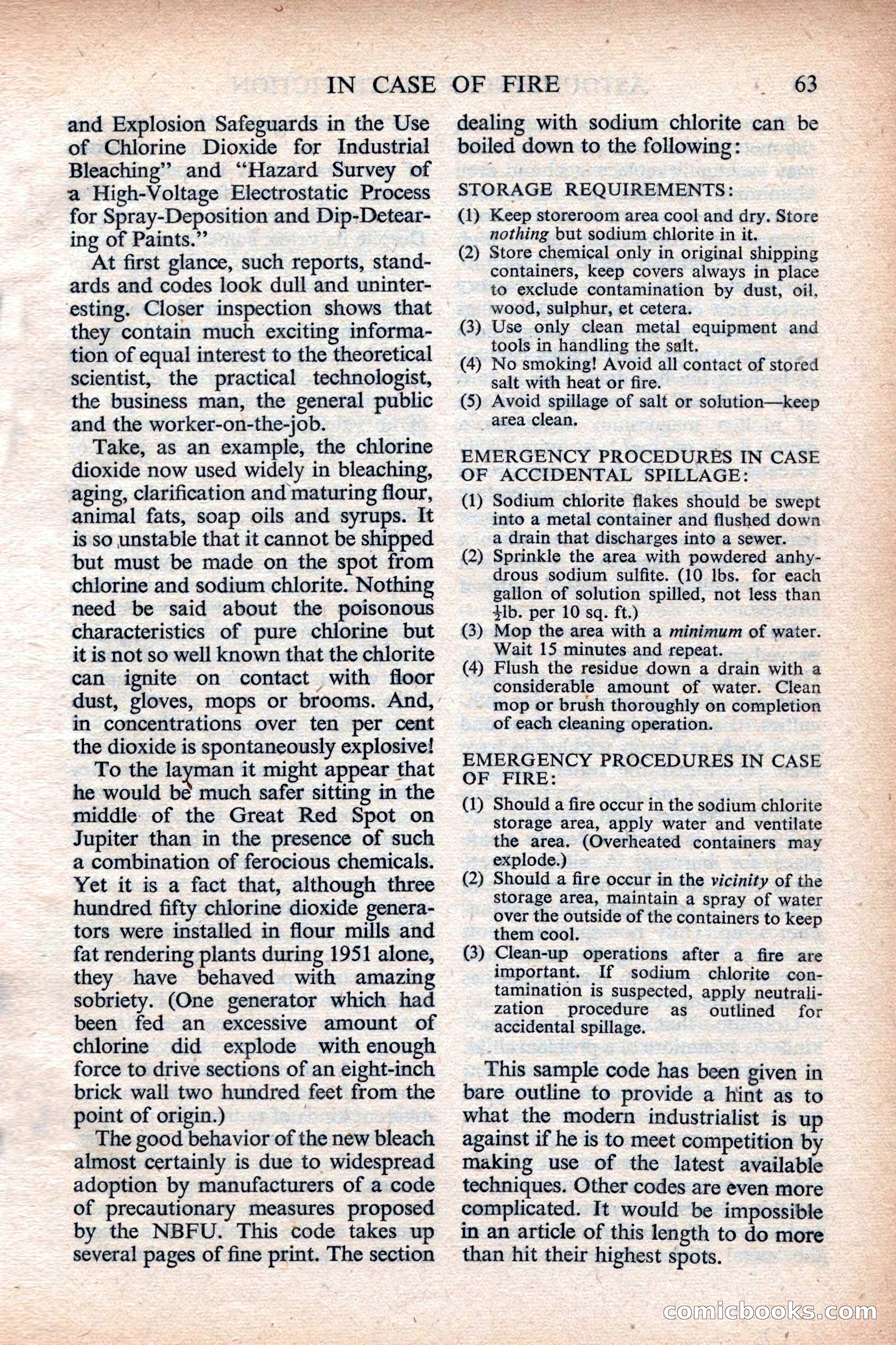
A restored page from Pulp Fiction, 1953. Page through the whole issue in the reader above.
📄 Transcribed text from this page (OCR, searchable)
Machine-transcribed from the original scan — historical spelling and the odd misread are preserved.
IN CASE and Explosion Safeguards in the Use of Chlorine Dioxide for Industrial Bleaching” and “Hazard Survey of a High-Voltage Electrostatic Process for Spray-Deposition and Dip-Detear- ing of Paints.” At first glance, such reports, stand- ards and codes look dull and uninter- esting. Closer inspection shows that they contain much exciting informa- tion of equal interest to the theoretical scientist, the practical technologist, the business man, the general public and the worker-on-the-job. Take, as an example, the chlorine dioxide now used widely in bleaching, aging, clarification and maturing flour, animal fats, soap oils and syrups. It is so unstable that it cannot be shipped but must be made on the spot from chlorine and sodium chlorite. Nothin need be said about the poisonous characteristics of pure chlorine but it is not so well known that the chlorite can ignite on contact with floor dust, gloves, mops or brooms. And, in concentrations over ten per cent the dioxide is spontaneously explosive! To the layman it might appear that he would be much safer sitting in the middle of the Great Red Spot on Jupiter than in the presence of such a combination of ferocious chemicals. Yet it is a fact that, although three hundred fifty chlorine dioxide genera- tors were installed in flour mills and fat rendering plants during 1951 alone, they have behaved with amazing sobriety. (One generator which had been fed an excessive amount of chlorine did explode with enough force to drive sections of an eight-inch brick wall two hundred feet from the point of origin.) | The good behavior of the new bleach almost certainly is due to widespread adoption by manufacturers of a code of precautionary measures proposed by the NBFU. This code takes up several pages of fine print. The section OF FIRE 63 dealing with sodium chlorite can be boiled down to the following: STORAGE REQUIREMENTS: (1) Keep storeroom area cool and dry. Store nothing but sodium chlorite in it. (2) Store chemical only in original shipping containers, keep covers always in place to exclude contamination by dust, oil, wood, sulphur, et cetera. (3), Use only clean metal equipment and tools in handling the salt. (4) No smoking! Avoid all contact of stored salt with heat or fire. (5) Avoid spillage of salt or solution—keep _area clean. EMERGENCY PROCEDURES IN CASE OF ACCIDENTAL SPILLAGE: (1) Sodium chlorite flakes should be swept into a metal container and flushed down a drain that discharges into a sewer. (2) Sprinkle the area with powdered anhy- drous sodium sulfite. (10 lbs. for each gallon of solution spilled, not less than 4lb. per 10 sq. ft.) (3) Mop the area with a minimum of waiter. Wait 15 minutes and repeat. (4) Flush the residue down a drain with a considerable amount of water. Clean mop or brush thoroughly on completion of each cleaning operation. EMERGENCY PROCEDURES IN CASE OF FIRE: (1) Should a fire occur in the sodium chlorite storage area, apply water and ventilate the area. (Overheated containers may explode.) Should a fire occur in the vicinity of the storage area, maintain a spray of water over the outside of the containers to keep them cool. Clean-up operations after a fire are important. If sodium chlorite con- tamination is suspected, apply neutrali- zation procedure as _ outlined for accidental spillage. (2) (3) This sample code has been given in bare outline to provide a hint as to what the modern industrialist is up against if he is to meet competition by making use of the latest available techniques. Other codes are even more complicated. It would be impossible in an article of this length to do more than hit their highest spots. Cconnicloooks f com