
Pulp Fiction, 1922 · page 71 of 187
Argosy All-Story Weekly — page 71: what you’re looking at
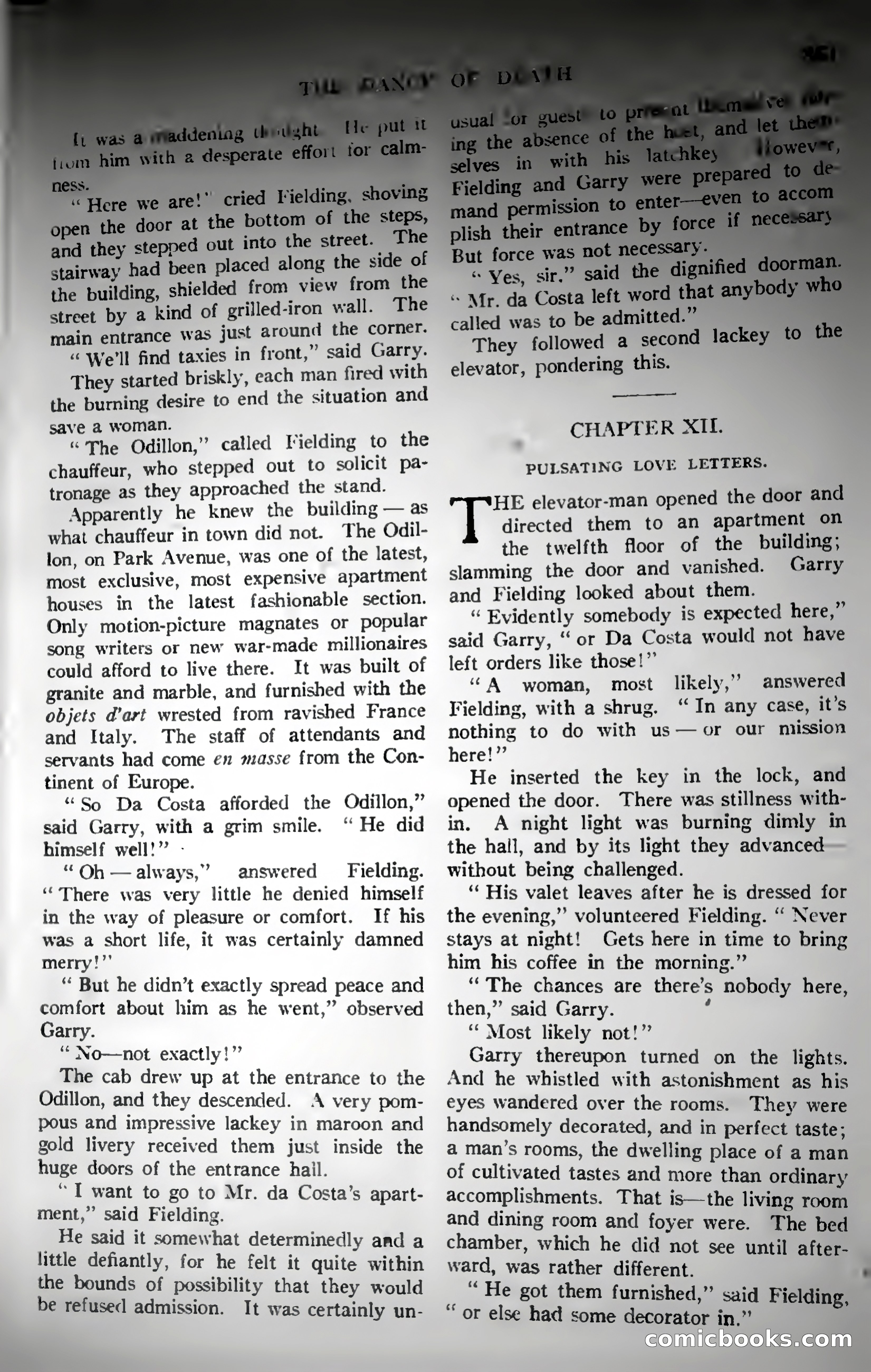
A restored page from Pulp Fiction, 1922. Page through the whole issue in the reader above.
📄 Transcribed text from this page (OCR, searchable)
Machine-transcribed from the original scan — historical spelling and the odd misread are preserved.
"aren door at the bottom of th ree stepped out into the street. agit stairway had been placed along the side o the building, shielded from view from the street by a kind of grilled-iron wall. T he main entrance was just around the corner. “ We'll find taxies in front,” said Garry. They started briskly, each man fired with the burning desire to end the situation and save a woman. “The Odillon,” called Fielding to the chauffeur, who stepped out to solicit pa- tronage as they approached the stand. Apparently he knew the building — as what chauffeur in town did not. The Odil- lon, on Park Avenue, was one of the latest, most exclusive, most expensive apartment houses in the latest fashionable section. Only motion-picture magnates or popular song writers or new war-made millionaires could afford to live there. It was built of granite and marble, and furnished with the objets d’art wrested from ravished France and Italy. The staff of attendants and servants had come en masse from the Con- tinent of Europe. “So Da Costa afforded the Odillon,” said Garry, with a grim smile. ‘“ He did himself well!” - “Oh — always,’ answered Fielding. ‘‘There was very little he denied himself in the way of pleasure or comfort. If his was a short life, it was certainly damned merry!”’ “ But he didn’t exactly spread peace and comfort about him as he went,” observed Garry. “ No—not exactly!” The cab drew up at the entrance to the Odillon, and they descended. A very pom- pous and impressive lackey in maroon and gold livery received them just inside the huge doors of the entrance hail. “ I want to go to Mr. da Costa’s apart- ment,” said Fielding. He said it somewhat determinedly and a little defiantly, for he felt it quite within the bounds of possibility that they would be refused admission. It was certainly un- But force was not nec “ Ves, sir.” said the dignine “ Mr. da Costa left word that an! called was to be admitted.” They followed a second elevator, pondering this. lackey to th CHAPTER XIL. PULSATING LOVE LETTERS. HE elevator-man opened the door and directed them to an apartment on the twelfth floor of the building; slamming the door and vanished. Garry and Fielding looked about them. “ Evidently somebody is expected here,” said Garry, “or Da Costa would not have left orders like those!” ‘® woman, most likely,’ answered Fielding, with a shrug. “In any case, it’s nothing to do with us— or our miission here!” He inserted the key in the lock, and opened the door. There was stillness with- in. A night light was burning dimly in the hall, and by its light they advanced without being challenged. ‘‘ His valet leaves after he is dressed for the evening,” volunteered Fielding. ‘‘ Never stays at night! Gets here in time to bring him his coffee in the morning.” “The chances are there’s nobody here, then,” said Garry. : ‘“* Most likely not!” Garry thereupon turned on the lights. And he whistled with astonishment as his eyes wandered over the rooms. They were handsomely decorated, and in perfect taste; a man’s rooms, the dwelling place of a man of cultivated tastes and more than ordinary accomplishments. That is—the living room and dining room and foyer were. The bed chamber, which he did not see until after- ward, was rather different. . “ He got them furnished,” said Fielding, “or else had some decorator in.” comicbooks.com