
Pulp Fiction, 1922 · page 154 of 187
Argosy All-Story Weekly — page 154: what you’re looking at
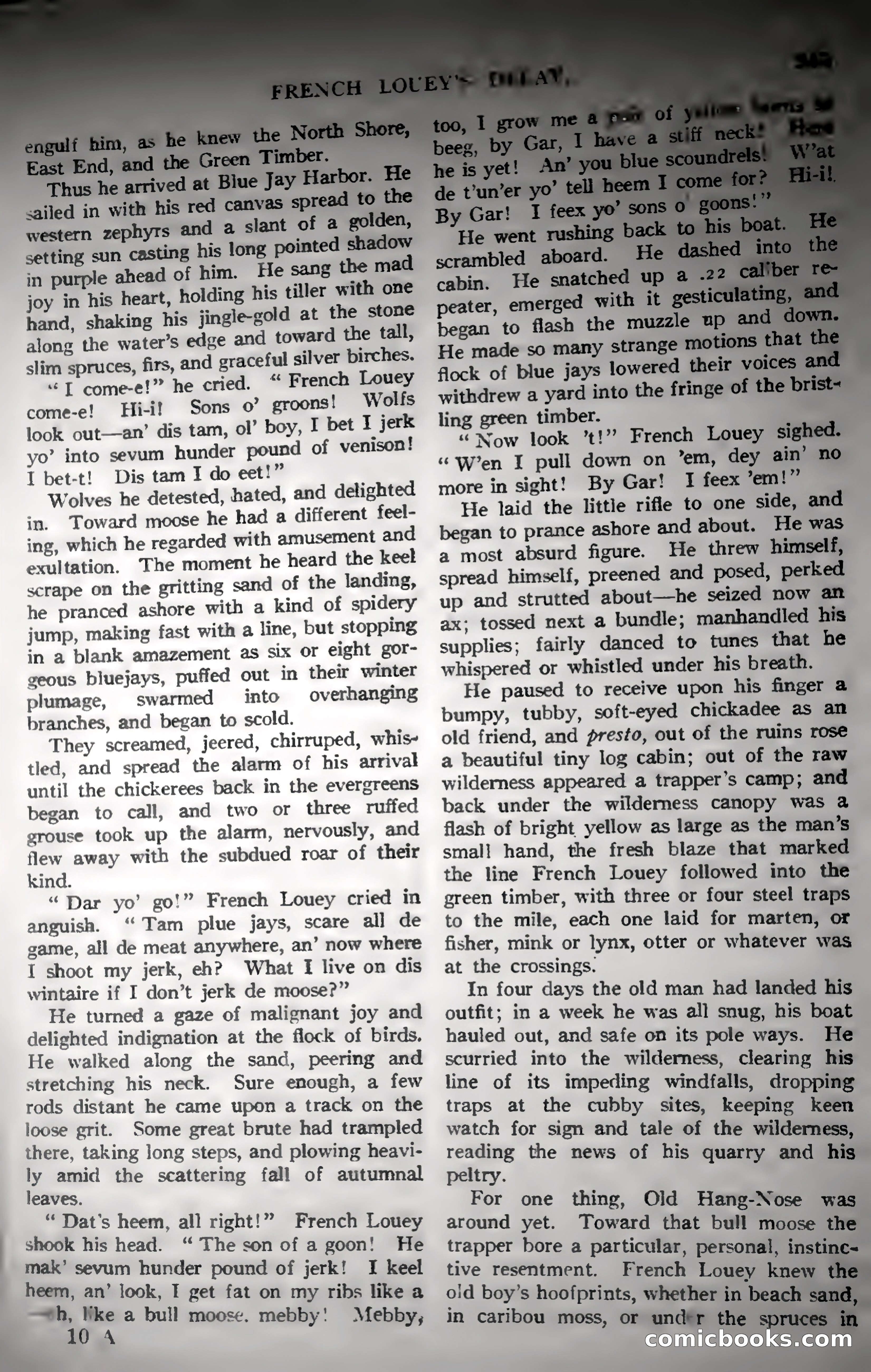
A restored page from Pulp Fiction, 1922. Page through the whole issue in the reader above.
📄 Transcribed text from this page (OCR, searchable)
Machine-transcribed from the original scan — historical spelling and the odd misread are preserved.
oe = Thus he arrived at Blue Jay t sailed in with his red canvas spread to the western zephyrs and a slant of a golden, setting sun casting his long pointed shadow in purple ahead of him. He sang the mad joy in his heart, holding his tiller with one hand, shaking his jingle-gold at the stone along the water’s edge and toward the tall, slim spruces, firs, and graceful silver birches. “TI comee!” he cried. “ French Louey come-e! Hi-i! Sons 0’ groons! Wolfs look out—an’ dis tam, ol’ boy, I bet 1 jerk yo’ into sevum hunder pound of venison! I bet-t! Dis tam I do eet!” Wolves he detested, hated, and delighted in. Toward moose he had a different feel- ing, which he regarded with amusement and exultation. The moment he heard the keel scrape on the gritting sand of the landing, he pranced ashore with a kind of spidery jump, making fast with a line, but stopping in a blank amazement as six or eight gor- geous bluejays, puffed out in their winter plumage, swarmed into overhanging branches, and began to scold. They screamed, jeered, chirruped, whis- tled, and spread the alarm of his arrival until the chickerees back in the evergreens began to call, and two or three ruffed grouse took up the alarm, nervously, and flew away with the subdued roar of their kind. “Dar yo’ go!” French Louey cried in anguish. ‘Tam plue jays, scare all de game, all de meat anywhere, an’ now where I shoot my jerk, eh? What I live on dis wintaire if I don’t jerk de moose?” He turned a gaze of malignant joy and delighted indignation at the flock of birds. He walked along the sand, peering and stretching his neck. Sure enough, a few rods distant he came upon a track on the loose grit. Some great brute had trampled there, taking long steps, and plowing heavi- ly amid the scattering fall of autumnal leaves. “ Dat's heem, all right!”” French Louey shook his head. “ The son of a goon! He mak’ sevum hunder pound of jerk! I keel heem, an’ look, I get fat on my ribs like a —h, Wke a bull moose. mebby! Mebby; 10 4 Speeetad By Gar! I feex He went rushing b scrambled aboard. He @ cabin. He snatched up a -: peater, emerged with it gesticula began to flash the muzzle mp ais He made so many strange motions L* flock of blue jays lowered their voices am withdrew a yard into the fringe of the bris ling green timber. — “Now look ’t!”? French Louey signed. “ Wren I pull down on ’em, dey ain’ no” more in sight! By Gar! I feex em!” He laid the little rifle to one side, and began to prance ashore and about. He was a most absurd figure. He threw himself, spread himself, preened and posed, perked up and strutted about—he seized now an ax; tossed next a bundle; manhandled his supplies; fairly danced to tunes that he whispered or whistled under his breath. He paused to receive upon his finger @ bumpy, tubby, soft-eyed chickadee as an old friend, and presto, out of the ruins rose a beautiful tiny log cabin; out of the raw wilderness appeared a trapper’s camp; and back under the wilderness canopy was 4 flash of bright yellow as large as the man’s small hand, the fresh blaze that marked the line French Louey followed into the green timber, with three or four steel traps to the mile, each one laid for marten, or fisher, mink or lynx, otter or whatever was at the crossings. In four days the old man had landed his outfit; in a week he was all snug, his boat hauled out, and safe on its pole ways. He scurried into the wilderness, clearing his line of its impeding windfalls, dropping traps at the cubby sites, keeping keen watch for sign and tale of the wilderness, reading the news of his quarry and his peltry. For one thing, Old Hang-Nose was around yet. Toward that bull moose | trapper bore a particular, personal, instine tive resentment. French Louey knew th oid boy’s hoofprints, whether in beach sat in caribou moss, or undér the spruce