
Pulp Fiction, 1922 · page 131 of 172
Argosy All-Story Weekly, July 1, 1922 — page 131: what you’re looking at
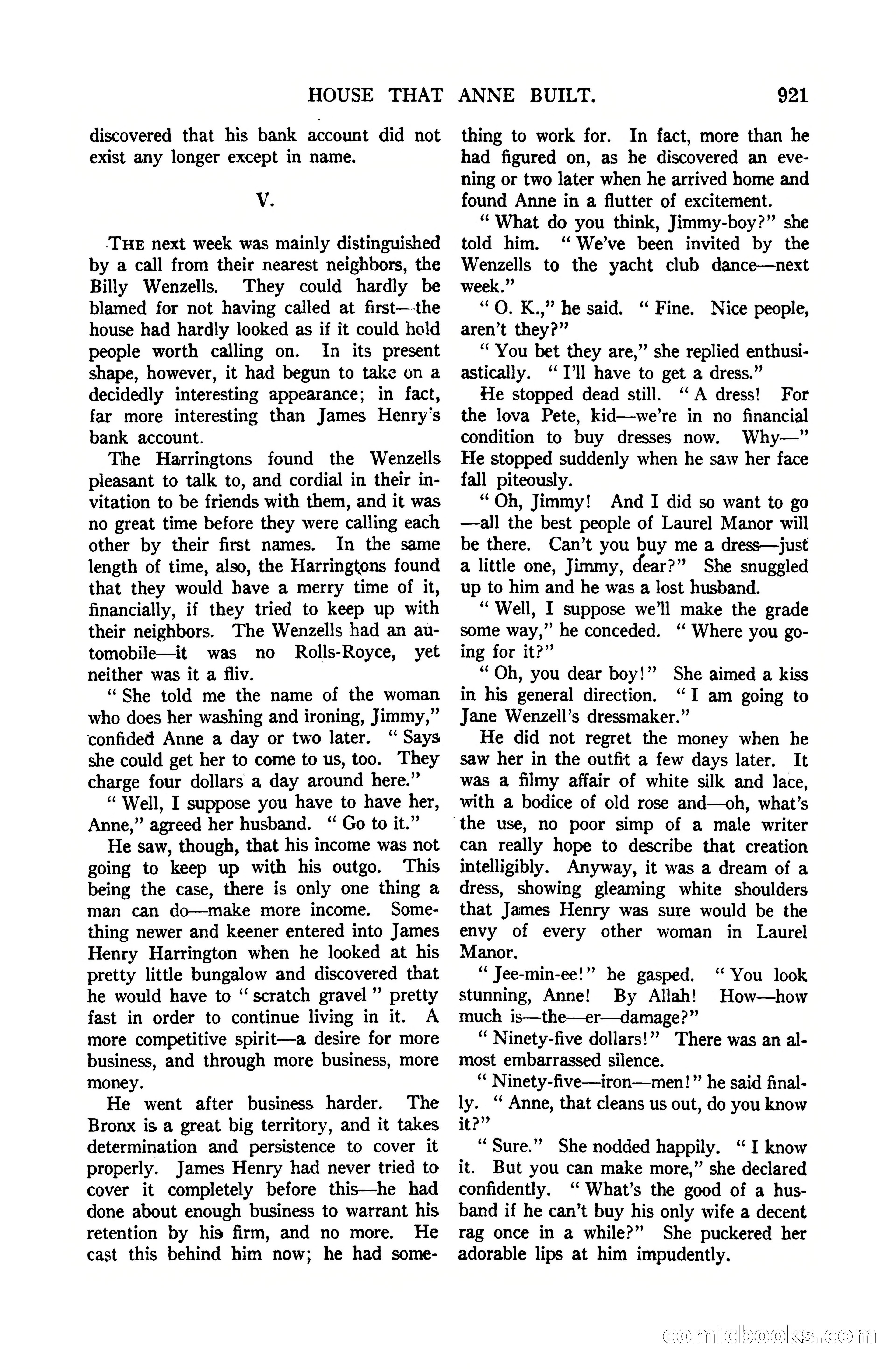
A restored page from Pulp Fiction, 1922. Page through the whole issue in the reader above.
📄 Transcribed text from this page (OCR, searchable)
Machine-transcribed from the original scan — historical spelling and the odd misread are preserved.
HOUSE THAT discovered that his bank account did not exist any longer except in name. V. THE next week was mainly distinguished by a call from their nearest neighbors, the Billy Wenzells. They could hardly be blamed for not having called at first—the house had hardly looked as if it could hold people worth calling on. In its present shape, however, it had begun to take on a decidedly interesting appearance; in fact, far more interesting than James Henry's bank account. The Harringtons found the Wenzells pleasant to talk to, and cordial in their in- vitation to be friends with them, and it was no great time before they were calling each other by their first names. In the same length of time, also, the Harringtons found that they would have a merry time of it, financially, if they tried to keep up with their neighbors. The Wenzells had an au- tomobile—it was no _ Rolls-Royce, yet neither was it a fliv. ‘“She told me the name of the woman who does her washing and ironing, Jimmy,” confided Anne a day or two later. “Says she could get her to come to us, too. They charge four dollars a day around here.” “Well, I suppose you have to have her, Anne,” agreed her husband. “ Go to it.” He saw, though, that his income was not going to keep up with his outgo. This being the case, there is only one thing a man can do—make more income. Some- thing newer and keener entered into James Henry Harrington when he looked at his pretty little bungalow and discovered that he would have to “scratch gravel” pretty fast in order to continue living in it. A more competitive spirit—a desire for more business, and through more business, more money. He went after business harder. The Bronx is a great big territory, and it takes determination and persistence to cover it properly. James Henry had never tried to cover it completely before this—he had done about enough business to warrant his retention by his firm, and no more. He cast this behind him now; he had some- ANNE BUILT. 921 thing to work for. In fact, more than he had figured on, as he discovered an eve- ning or two later when he arrived home and found Anne in a flutter of excitement. “What do you think, Jimmy-boy?” she told him. ‘“ We’ve been invited by the Wenzells to the yacht club dance—next week.” “OQ. K.,” he said. ‘“ Fine. Nice people, aren’t they?” “You bet they are,” she replied enthusi- astically. “Tl have to get a dress.” Te stopped dead still. ‘A dress! For the lova Pete, kid—we’re in no financial condition to buy dresses now. Why—” Ff{e stopped suddenly when he saw her face fall piteously. “Oh, Jimmy! And I did so want to go —all the best people of Laurel Manor will be there. Can’t you buy me a dress—just a little one, Jimmy, dear?” She snuggled up to him and he was a lost husband. “Well, I suppose we’ll make the grade some way,” he conceded. ‘“ Where you go- ing for it?” “Qh, you dear boy!” She aimed a kiss in his general direction. “I am going to Jane Wenzell’s dressmaker.” He did not regret the money when he saw her in the outfit a few days later. It was a filmy affair of white silk and lace, with a bodice of old rose and—oh, what’s ‘the use, no poor simp of a male writer can really hope to describe that creation intelligibly. Anyway, it was a dream of a dress, showing gleaming white shoulders that James Henry was sure would be the envy of every other woman in Laurel Manor. *" Jee-min-ee!”’ he gasped. stunning, Anne! By Allah! much is—the—er—damage?” ‘“ Ninety-five dollars!”” There was an al- most embarrassed silence. “ Ninety-five—iron—men!”’ he said final- ly. “ Anne, that cleans us out, do you know it?” ‘“Sure.”” She nodded happily. “I know it. But you can make more,” she declared confidently. ‘‘ What’s the good of a hus- band if he can’t buy his only wife a decent rag once in a while?” She puckered her adorable lips at him impudently. “You look How—how DOOK C©