
Pulp Fiction, 1922 · page 163 of 172
Argosy All-Story Weekly, January 21, 1922 — page 163: what you’re looking at
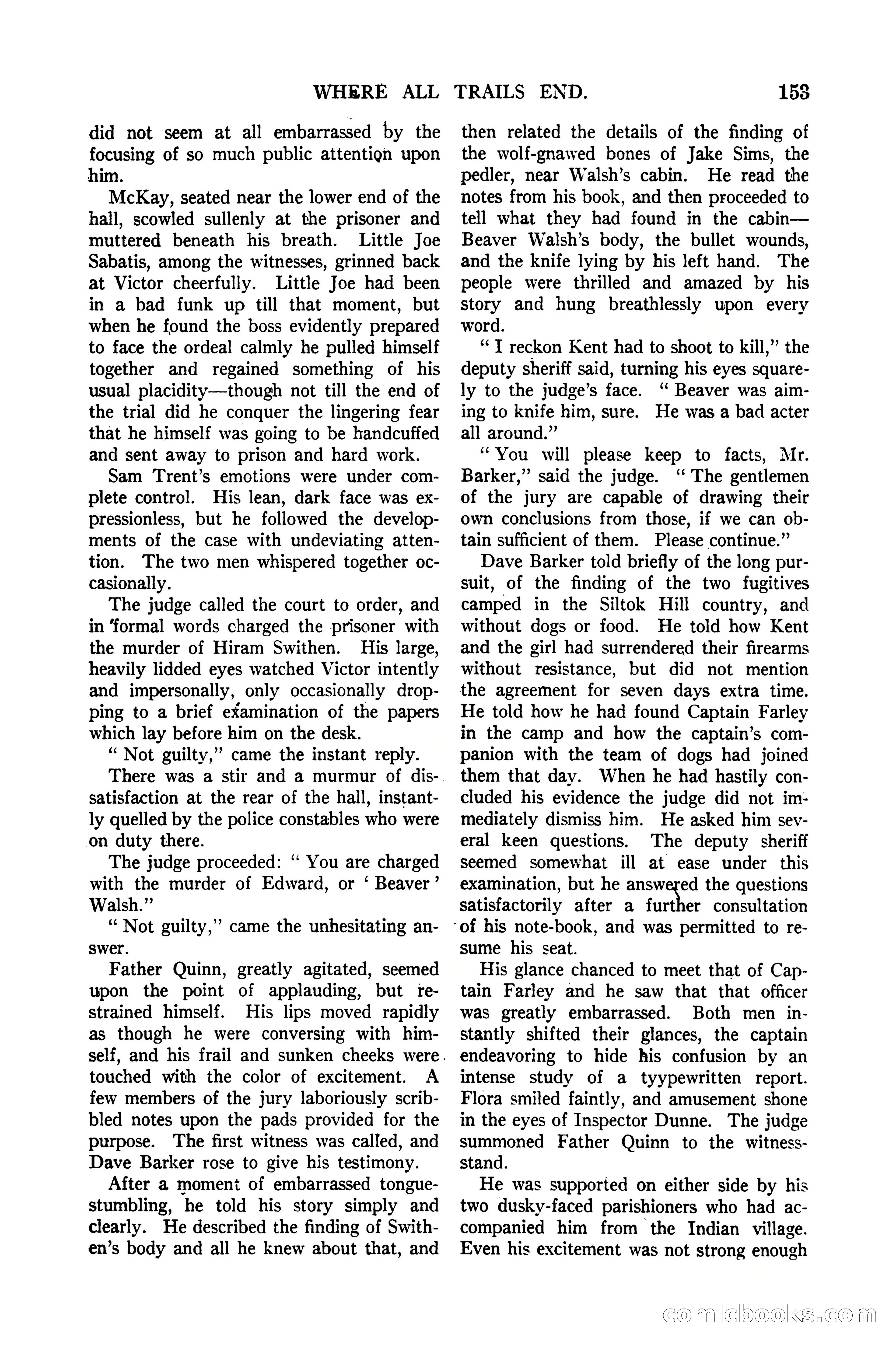
A restored page from Pulp Fiction, 1922. Page through the whole issue in the reader above.
📄 Transcribed text from this page (OCR, searchable)
Machine-transcribed from the original scan — historical spelling and the odd misread are preserved.
WHERE ALL did not seem at all embarrassed by the focusing of so much public attentign upon him. McKay, seated near the lower end of the hall, scowled sullenly at the prisoner and muttered beneath his breath. Little Joe Sabatis, among the witnesses, grinned back at Victor cheerfully. Little Joe had been in a bad funk up till that moment, but when he found the boss evidently prepared to face the ordeal calmly he pulled himself together and regained something of his usual placidity—though not till the end of the trial did he conquer the lingering fear that he himself was going to be handcuffed and sent away to prison and hard work. Sam Trent’s emotions were under com- plete control. His lean, dark face was ex- pressionless, but he followed the develop- ments of the case with undeviating atten- tion. The two men whispered together oc- casionally. The judge called the court to order, and in ‘formal words charged the prisoner with the murder of Hiram Swithen. His large, heavily lidded eyes watched Victor intently and impersonally, only occasionally drop- ping to a brief examination of the papers which lay before him on the desk. “‘ Not guilty,’ came the instant reply. There was a stir and a murmur of dis-. satisfaction at the rear of the hall, instant- ly quelled by the police constables who were on duty there. The judge proceeded: ‘“‘ You are charged with the murder of Edward, or ‘ Beaver’ Walsh.” “ Not guilty,” came the unhesitating an- swer. Father Quinn, greatly agitated, seemed upon the point of applauding, but re- strained himself. His lips moved rapidly as though he were conversing with him- self, and his frail and sunken cheeks were. touched with the color of excitement. A few members of the jury laboriously scrib- bled notes upon the pads provided for the purpose. The first witness was called, and Dave Barker rose to give his testimony. After a moment of embarrassed tongue- stumbling, he told his story simply and clearly. He described the finding of Swith- en’s body and all he knew about that, and TRAILS END. 158 then related the details of the finding of the wolf-gnawed bones of Jake Sims, the pedler, near Walsh’s cabin. He read the notes from his book, and then proceeded to tell what they had found in the cabin— Beaver Walsh’s body, the bullet wounds, and the knife lying by his left hand. The people were thrilled and amazed by his story and hung breathlessly upon every word. ‘““T reckon Kent had to shoot to kill,” the deputy sheriff said, turning his eyes square- ly to the judge’s face. ‘‘ Beaver was aim- ing to knife him, sure. He was a bad acter all around.” “You will please keep to facts, Mr. Barker,” said the judge. ‘‘ The gentlemen of the jury are capable of drawing their own conclusions from those, if we can ob- tain sufficient of them. Please continue.” Dave Barker told briefly of the long pur- suit, of the finding of the two fugitives camped in the Siltok Hill country, and without dogs or food. He told how Kent and the girl had surrendered their firearms without resistance, but did not mention the agreement for seven days extra time. He told how he had found Captain Farley in the camp and how the captain’s com- panion with the team of dogs had joined them that day. When he had hastily con- cluded his evidence the judge did not im- mediately dismiss him. He asked him sev- eral keen questions. The deputy sheriff seemed somewhat ill at ease under this examination, but he answered the questions satisfactorily after a further consultation ‘of his note-book, and was permitted to re- sume his seat. His glance chanced to meet that of Cap- tain Farley and he saw that that officer was greatly embarrassed. Both men in- stantly shifted their glances, the captain endeavoring to hide his confusion by an intense study of a tyypewritten report. Flora smiled faintly, and amusement shone in the eyes of Inspector Dunne. The judge summoned Father Quinn to the witness- stand. He was supported on either side by his two dusky-faced parishioners who had ac- companied him from the Indian village. Even his excitement was not strong enough comiclboooks C©