
Pulp Fiction, 1920 · page 139 of 158
Argosy, Vol. 123, No. 2 — page 139: what you’re looking at
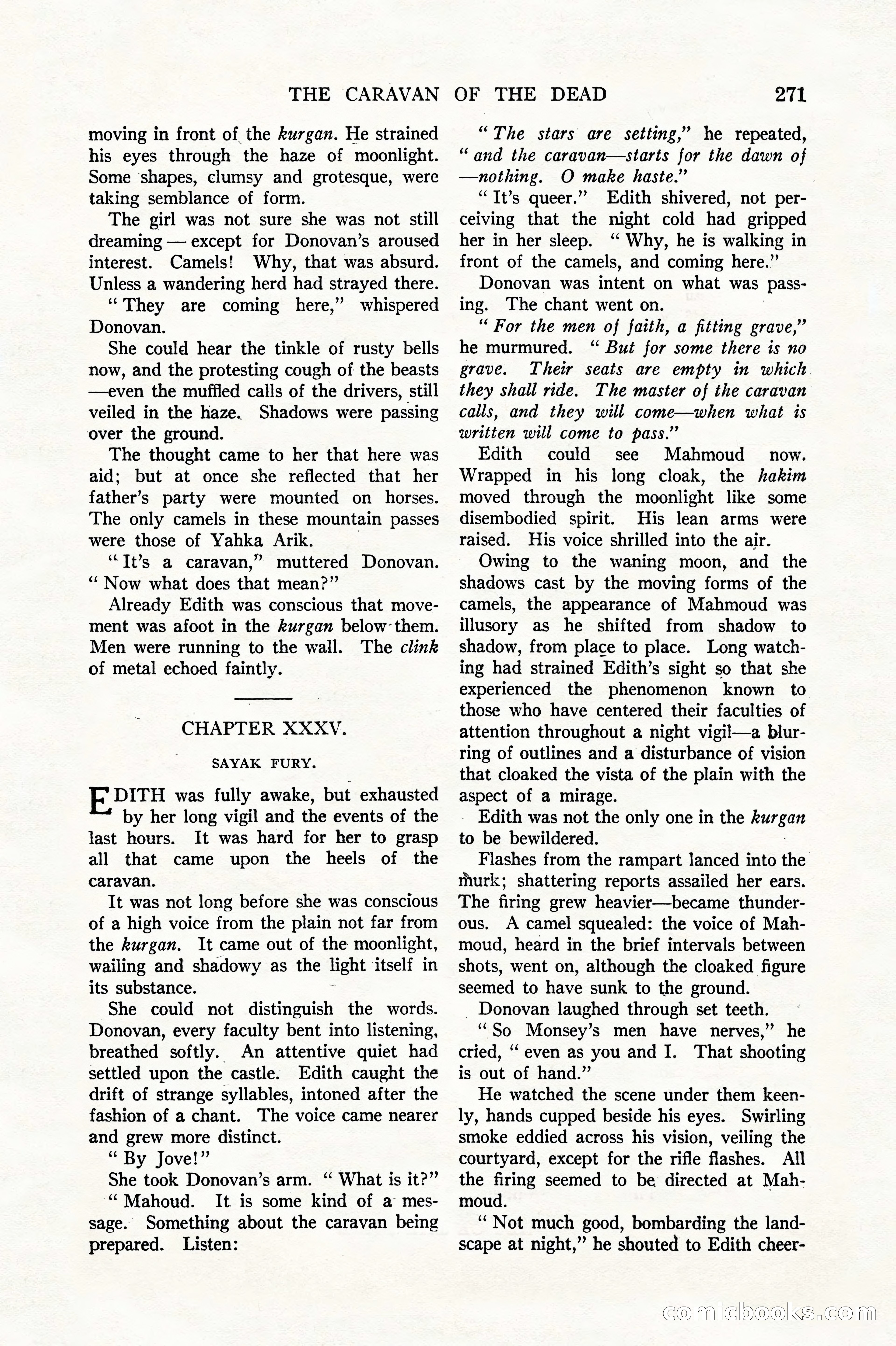
A restored page from Pulp Fiction, 1920. Page through the whole issue in the reader above.
📄 Transcribed text from this page (OCR, searchable)
Machine-transcribed from the original scan — historical spelling and the odd misread are preserved.
THE CARAVAN moving in front of the kurgan. He strained his eyes through the haze of moonlight. Some ‘shapes, clumsy and grotesque, were taking semblance of form. The girl was not sure she was not still dreaming — except for Donovan’s aroused interest. Camels! Why, that was absurd. Unless a wandering herd had strayed there. “They are coming here,” whispered Donovan. She could hear the tinkle of rusty bells now, and the protesting cough of the beasts —even the muffled calls of the drivers, still veiled in the haze. Shadows were passing over the ground. The thought came to her that here was aid; but at once she reflected that her father’s party were mounted on horses. The only camels in these mountain passes were those of Yahka Arik. : “It’s a caravan,” muttered Donovan. ‘“‘ Now what does that mean?” Already Edith was conscious that move- ment was afoot in the kurgan below them. Men were running to the wall. The clink of metal echoed faintly. CHAPTER XXXV. SAYAK FURY. F,DITH was fully awake, but exhausted by her long vigil and the events of the last hours. It was hard for her to grasp all that came upon the heels of the caravan. It was not long before she was conscious of a high voice from the plain not far from the kurgan. It came out of the moonlight, wailing and shadowy as the nen itself in its substance. She could not distinguish the words. Donovan, every faculty bent into listening, breathed softly. An attentive quiet had settled upon the castle. Edith caught the drift of strange syllables, intoned after the fashion of a chant. The voice came nearer and grew more distinct. ‘““ By Jove!” She took Donovan’s arm. ‘‘ What is it?” “ Mahoud. It is some kind of a mes- sage. Something about the caravan being prepared. Listen: OF THE DEAD 271 “The stars are setting,” he repeated, “and the caravan—starts for the dawn of —nothing. O make haste.” “It’s queer.”” Edith shivered, not per- ceiving that the night cold had gripped her in her sleep. ‘‘ Why, he is walking in front of the camels, and coming here.” Donovan was intent on what was pass- ing. The chant went on. “For the men of faith, a fitting grave,” he murmured. ‘“ But for some there is no grave. they shall ride. The master of the caravan calls, and they will come—when what is written will come to pass.” Edith could see Mahmoud now. Wrapped in his long cloak, the hakim moved through the moonlight like some disembodied spirit. His lean arms were raised. His voice shrilled into the air. Owing to the waning moon, and the shadows cast by the moving forms of the camels, the appearance of Mahmoud was illusory as he shifted from shadow to shadow, from place to place. Long watch- ing had strained Edith’s sight so that she experienced the phenomenon known to those who have centered their faculties of attention throughout a night vigil—a blur- ring of outlines and a disturbance of vision that cloaked the vista of the plain with the aspect of a mirage. - Edith was not the only one in the SS to be bewildered. Flashes from the rampart lanced into the murk; shattering reports assailed her ears. The firing grew heavier—became thunder- ous. A camel squealed: the voice of Mah- moud, heard in the brief intervals between shots, went on, although the cloaked figure seemed to have sunk to the ground. - Donovan laughed through set teeth. ‘“So Monsey’s men have nerves,” he cried, “‘ even as you and I. That shooting is out of hand.” He watched the scene under them keen- ly, hands cupped beside his eyes. Swirling smoke eddied across his vision, veiling the courtyard, except for the rifle flashes. All the firing seemed to be directed at Mah- moud. ‘“Not much good, bombarding the land- scape at night,” he shouted to Edith cheer- COMmiclboo Their seats are empty in which. S C@