
Pulp Fiction, 1920 · page 144 of 156
Argosy, Vol. 123, No. 1 — page 144: what you’re looking at
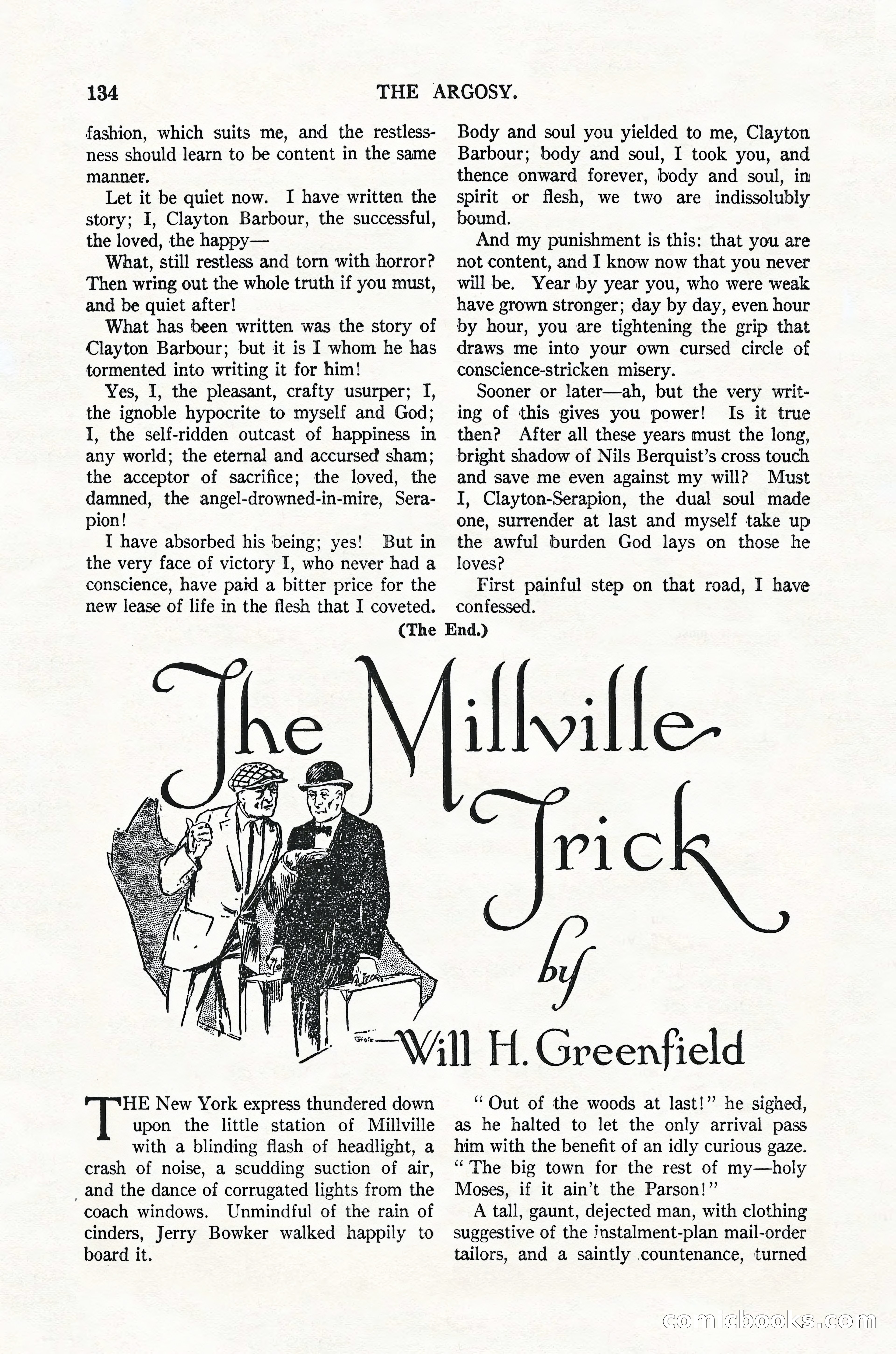
A restored page from Pulp Fiction, 1920. Page through the whole issue in the reader above.
📄 Transcribed text from this page (OCR, searchable)
Machine-transcribed from the original scan — historical spelling and the odd misread are preserved.
134 fashion, which suits me, and the restless- ness should learn to be content in the same manner. Let it be quiet now. I have written the story; I, Clayton Barbour, the successful, the loved, the happy— What, still restless and torn with horror? Then wring out the whole truth if you must, and be quiet after! What has been written was the story of Clayton Barbour; but it is I whom he has tormented into writing it for him! Yes, I, the pleasant, crafty usurper; I, the ignoble hypocrite to myself and God; I, the self-ridden outcast of happiness in any world; the eternal and accursed sham; the acceptor of sacrifice; the loved, the damned, the angel-drowned-in-mire, Sera- pion! I have absorbed his being; yes! But in the very face of victory I, who never had a conscience, have paid a bitter price for the new lease of life in the flesh that I coveted. THE ARGOSY. Body and soul you yielded to me, Clayton Barbour; body and soul, I took you, and thence onward forever, body and soul, in spirit or flesh, we two are indissolubly bound. And my punishment is this: that you are not content, and I know now that you never will be. Year by year you, who were weak have grown stronger; day by day, even hour by hour, you are tightening the grip that draws me into your own cursed circle of conscience-stricken misery. Sooner or later—ah, but the very writ- ing of this gives you power! Is it true then? After all these years must the long, bright shadow of Nils Berquist’s cross touch and save me even against my will? Must I, Clayton-Serapion, the dual soul made one, surrender at last and myself take up the awful burden God lays on those he loves? First painful step on that road, I have confessed. (The End.) he EE B HE New York express thundered down upon the little station of Millville with a blinding flash of headlight, a crash of noise, a scudding suction of air, _and the dance of corrugated lights from the coach windows. Unmindful of the rain of cinders, Jerry Bowker walked happily to board it. ulville- A ayian H. Greenfield “Out of the woods at last!” he sighed, as he halted to let the only arrival pass him with the benefit of an idly curious gaze. “The big town for the rest of my—holy Moses, if it ain’t the Parson!” A tall, gaunt, dejected man, with clothing suggestive of the instalment-plan mail-order tailors, and a saintly countenance, turned COMICLO© S C@