
Pulp Fiction, 1920 · page 13 of 156
Argosy, Vol. 123, No. 1 — page 13: what you’re looking at
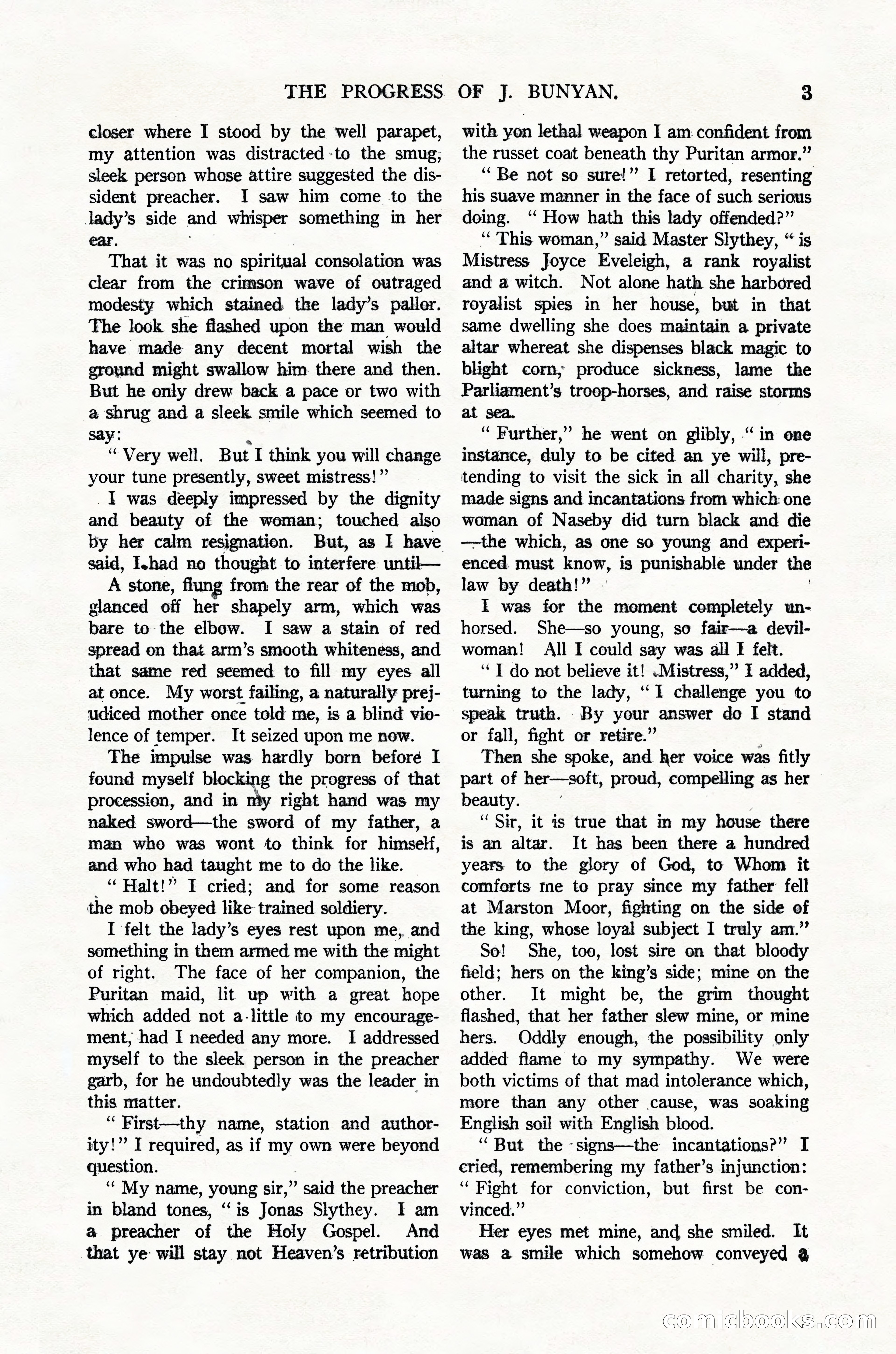
A restored page from Pulp Fiction, 1920. Page through the whole issue in the reader above.
📄 Transcribed text from this page (OCR, searchable)
Machine-transcribed from the original scan — historical spelling and the odd misread are preserved.
THE PROGRESS closer where I stood by the well parapet, my attention was distracted-to the smug; sleek person whose attire suggested the dis- sident preacher. I saw him come to the Jady’s side and whisper something in her That it was no spiritual consolation was clear from the crimson wave of outraged modesty which stained the lady’s paller. The look she flashed upon the man would have. made any decent mortal wish the ground might swallow him there and then. But he only drew back a pace or two with a shrug and a sleek smile which seemed to say: “Very well. But I think you will change your tune presently, sweet mistress! ”’ . 1 was deeply impressed by the dignity and beauty of the weman; touched also by her calm resignation. said, I.had no thought to interfere until— A stone, flung from the rear of the mob, glanced off her shapely arm, which was bare to the elbow. I saw a stain of red spread on that arm’s smooth whiteness, and that same red seemed to fill my eyes all at once. My worst failing, a naturally prej- udiced mother once told me, is a blind vio- lence of temper. It seized upon me now. The impulse was hardly born before I found myself blocking the progress of that procession, and in nity right hand was my naked sword—the sword of my father, a man who was wont to think for himself, and who had taught me to do the like. _“ Halt!” I cried; and for some reason the mob obeyed like trained soldiery. I felt the lady’s eyes rest upon me, and something in them armed me with the might of right. The face of her companion, the Puritan maid, lit up with a great hope which added not a-little to my encourage- ment, had I needed any more. I addressed myself to the sleek person in the preacher garb, for he undoubtedly was the leader in this matter. ‘“ First—thy name, station and author- ity!” I required, as if my own were beyond question. ‘* My name, young sir,”’ said the preacher in bland tones, “is Jonas Slythey. I am a preacher of the Holy Gospel. And that ye will stay not Heaven’s retribution But, as I have OF J. BUNYAN, 3 with yon lethal weapon I am confident from the russet coat beneath thy Puritan armor.” ‘Be not so sure!” I retorted, resenting his suave manner in the face of such serious doing. ‘“ How hath this lady offended?”’ “This woman,” said Master Slythey, “ is Mistress Joyce Eveleigh, a rank royalist and a witch. Not alone hath she harbored royalist spies in her house, but in that same dwelling she does maintain a private altar whereat she dispenses black magic to blight corn, produce sickness, lame the Parliament’s troop-horses, and raise storms at sea. “Further,” he went on glibly, .“ in one instance, duly to be cited an ye will, pre- tending to visit the sick in all charity, she made signs and incantations from which one woman of Naseby did turn black and die —the which, as one so young and experi- enced. must know, is punishable under the law by death!” - I was for the moment completely un- horsed. She—so young, so fair—a devil- woman! All I could say was all I felt. ‘“‘T do not believe it! Mistress,” I added, turning to the lady, ‘I challenge you to speak truth. By your answer do I stand or fall, fight or retire.” Then she spoke, and her voice was fitly part of her—soft, proud, compelling as her beauty. 7 ‘Sir, it is true that in my house there is an altar. It has been there a hundred years. to the glory of God, to Whom it comforts tne to pray since my father fell at Marston Moor, fighting on the side of the king, whose loyal subject I truly am.” So! She, too, lost sire on that bloody field; hers on the king’s side; mine on the other. It might be, the grim thought flashed, that her father slew mine, or mine hers. Oddly enough, the possibility only added flame to my sympathy. We were both victims of that mad intolerance which, more than any other cause, was soaking English soil with English blood. “But the -signs—the incantations?” I cried, remembering my father’s injunction: ‘Fight for conviction, but first be con- vinced.”’ Her eyes met mine, and she smiled. It was a smile which somehow conveyed a cComicboooks C©