
Pulp Fiction, 1917 · page 63 of 200
The Argosy, Vol. 90 No. 1 — page 63: what you’re looking at
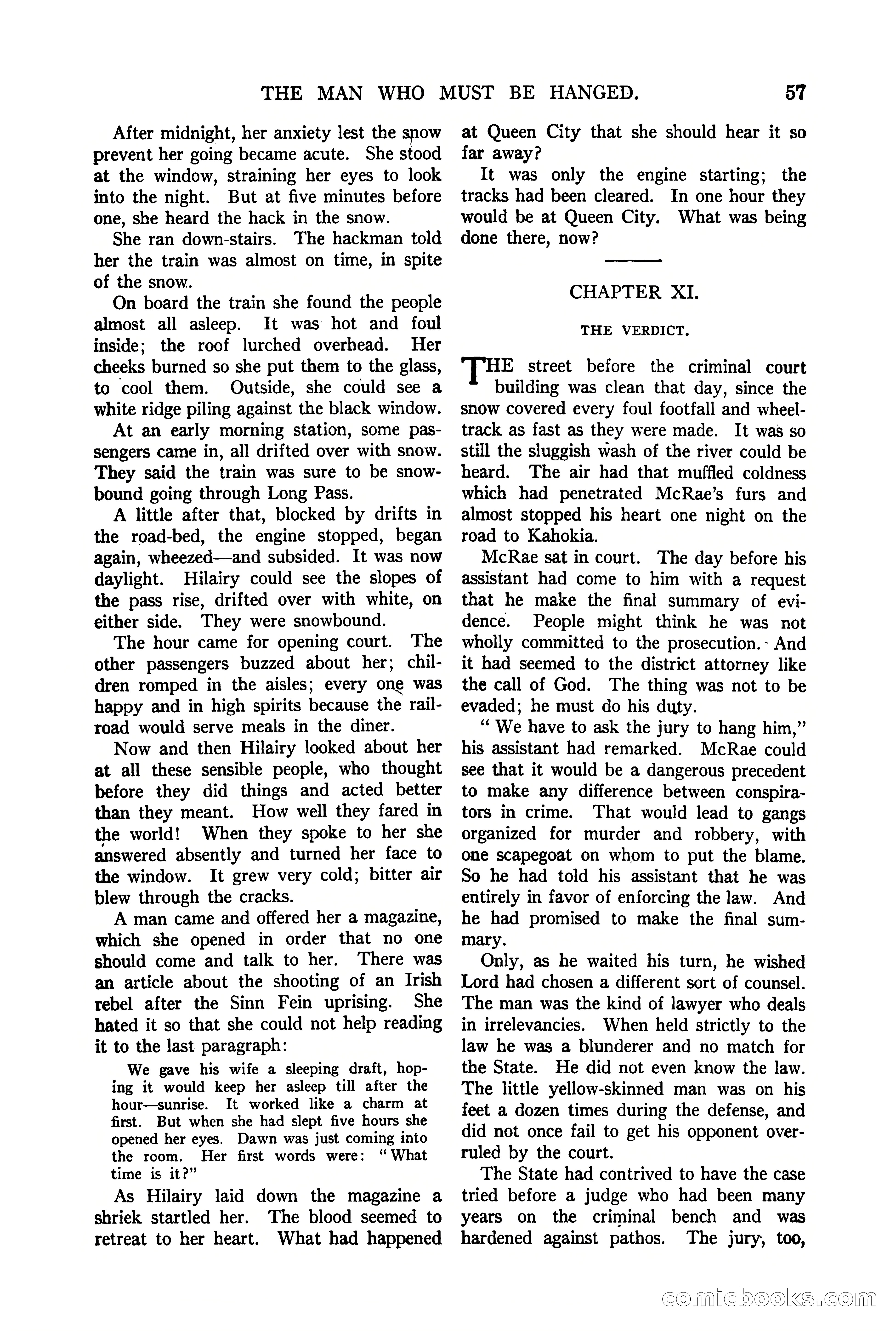
A restored page from Pulp Fiction, 1917. Page through the whole issue in the reader above.
📄 Transcribed text from this page (OCR, searchable)
Machine-transcribed from the original scan — historical spelling and the odd misread are preserved.
THE MAN WHO MUST BE HANGED. After midnight, her anxiety lest the snow prevent her going became acute. She stood at the window, straining her eyes to look into the night. But at five minutes before one, she heard the hack in the snow. She ran down-stairs. The hackman told her the train was almost on time, in spite of the snow. On board the train she found the people almost all asleep. It was hot and foul inside; the roof lurched overhead. Her cheeks burned so she put them to the glass, to cool them. Outside, she could see a white ridge piling against the black window. At an early morning station, some pas- sengers came in, all drifted over with snow. They said the train was sure to be snow- bound going through Long Pass. A little after that, blocked by drifts in the road-bed, the engine stopped, began again, wheezed—and subsided. It was now daylight. Hilairy could see the slopes of the pass rise, drifted over with white, on either side. They were snowbound. The hour came for opening court. The other passengers buzzed about her; chil- dren romped in the aisles; every one was happy and in high spirits because the rail- road would serve meals in the diner. Now and then Hilairy looked about her at all these sensible people, who thought before they did things and acted better than they meant. How well they fared in the world! When they spoke to her she answered absently and turned her face to the window. It grew very cold; bitter air blew through the cracks. A man came and offered her a magazine, which she opened in order that no one should come and talk to her. There was an article about the shooting of an Irish rebel after the Sinn Fein uprising. She hated it so that she could not help reading it to the last paragraph: We gave his wife a sleeping draft, hop- ing it would keep her asleep till after the hour—sunrise. It worked like a charm at first. But when she had slept five hours she opened her eyes. Dawn was just coming into the room. Her first words were: ‘ What time is it?” As Hilairy laid down the magazine a shriek startled her. The blood seemed to retreat to her heart. What had happened 57 at Queen City that she should hear it so far away? It was only the engine starting; the tracks had been cleared. In one hour they would be at Queen City. What was being done there, now? CHAPTER XI. THE VERDICT. "THE street before the criminal court building was clean that day, since the snow covered every foul footfall and wheel- track as fast as they were made. It was so still the sluggish wash of the river could be heard. The air had that muffled coldness which had penetrated McRae’s furs and almost stopped his heart one night on the road to Kahokia. McRae sat in court. The day before his assistant had come to him with a request that he make the final summary of evi- dence. People might think he was not wholly committed to the prosecution. - And it had seemed to the district attorney like the call of God. The thing was not to be evaded; he must do his duty. ‘We have to ask the jury to hang him,” his assistant had remarked. McRae could see that it would be a dangerous precedent to make any difference between conspira- tors in crime. That would lead to gangs organized for murder and robbery, with one scapegoat on whom to put the blame. So he had told his assistant that he was entirely in favor of enforcing the law. And he had promised to make the final sum- mary. Only, as he waited his turn, he wished Lord had chosen a different sort of counsel. The man was the kind of lawyer who deals in irrelevancies. When held strictly to the law he was a blunderer and no match for the State. He did not even know the law. The little yellow-skinned man was on his feet a dozen times during the defense, and did not once fail to get his opponent over- ruled by the court. The State had contrived to have the case tried before a judge who had been many years on the criminal bench and was hardened against pathos. The jury, too, oO Comicbooe S CO