
Pulp Fiction, 1917 · page 182 of 200
The Argosy, Vol. 90 No. 1 — page 182: what you’re looking at
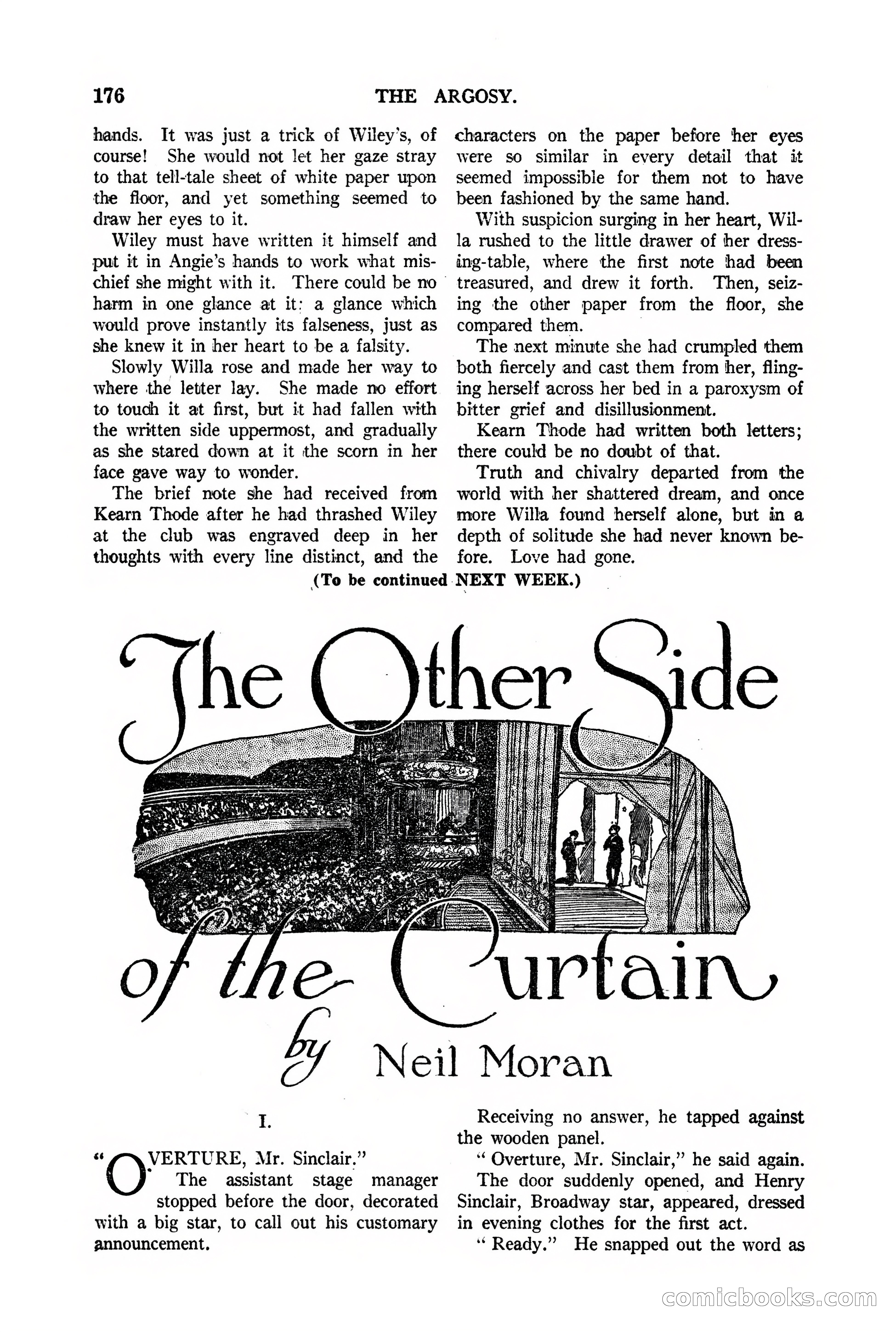
A restored page from Pulp Fiction, 1917. Page through the whole issue in the reader above.
📄 Transcribed text from this page (OCR, searchable)
Machine-transcribed from the original scan — historical spelling and the odd misread are preserved.
176 hands. It was just a trick of Wiley’s, of course! She would not let her gaze stray to that tell-tale sheet of white paper upon the floor, and yet something seemed to draw her eyes to it. Wiley must have written it himself and put it in Angie’s hands to work what mis- chief she might with it. There could be no harm in one glance at it: a glance which would prove instantly its falseness, just as she knew it in her heart to be a falsity. Slowly Willa rose and made her way to where the letter lay. She made no effort to touch it at first, but it had fallen with the written side uppermost, and gradually as she stared down at it the scorn in her face gave way to wonder. The brief note she had received from Kearn Thode after he had thrashed Wiley at the club was engraved deep in her thoughts with every line distinct, and the THE ARGOSY. characters on the paper before her eyes were so similar in every detail that it seemed impossible for them not to have been fashioned by the same hand. With suspicion surging in her heart, Wil- la rushed to the little drawer of her dress- ing-table, where the first note had been treasured, and drew it forth. Then, seiz- ing the other paper from the floor, she compared them. | The next minute she had crumpled them both fiercely and cast them from her, fling- ing herself across her bed in a paroxysm of bitter grief and disillusionment. Kearn Thode had written both letters; there could be no doubt of that. Truth and chivalry departed from the world with her shattered dream, and once more Willa found herself alone, but in a depth of solitude she had never known be- fore. Love had gone. (To be continued NEXT WEEK.) by Neil Moran Receiving no answer, he tapped against the wooden panel. ‘‘ Overture, Mr. Sinclair,” he said again. The door suddenly opened, and Henry Sinclair, Broadway star, appeared, dressed in evening clothes for the first act. -* a VERTURE, Mr. Sinclair.” ' The assistant stage manager stopped before the door, decorated with a big star, to call out his customary announcement, ‘“ Ready.” He snapped out the word as Comicbooe S CO