
Pulp Fiction, 1914 · page 239 of 266
The Argosy, Vol. 76, No. 3 — page 239: what you’re looking at
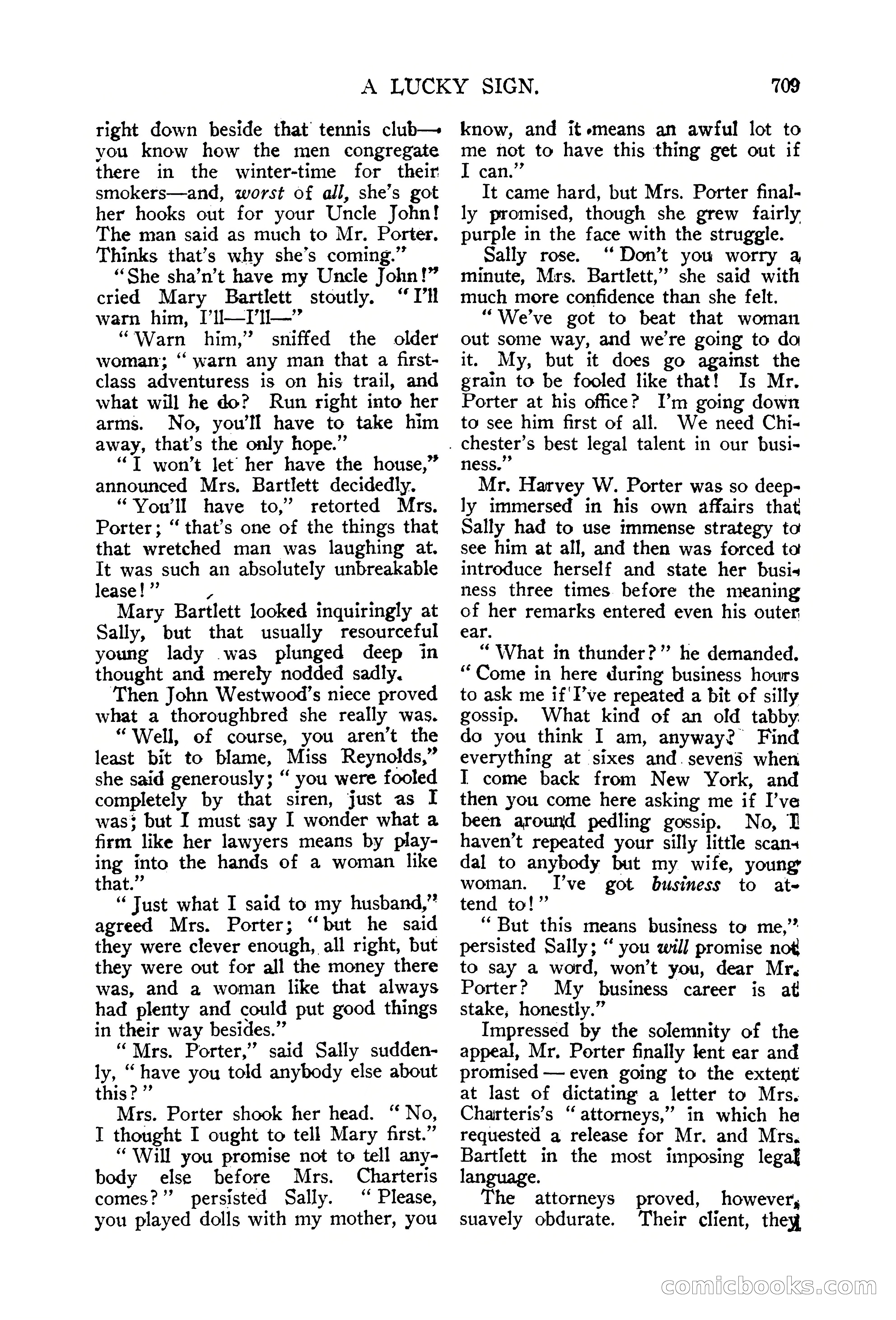
A restored page from Pulp Fiction, 1914. Page through the whole issue in the reader above.
📄 Transcribed text from this page (OCR, searchable)
Machine-transcribed from the original scan — historical spelling and the odd misread are preserved.
A LUCKY SIGN, right down beside that’ tennis club— you know how the men congregate there in the winter-time for their smokers—and, worst of all, she’s got her hooks out for your Uncle John! The man said as much to Mr. Porter. Thinks that’s why she’s coming.” ““She sha’n’t have my Uncle John!” cried Mary Bartlett stoutly. “Vil warn him, ?PU—VII—~” “Warn him,” sniffed the older woman; “warn any man that a first- class adventuress is on his trail, and what will he do? Run right into her arms. No, you'll have to take him away, that’s the only hope.” “TI won’t let her have the house,” announced Mrs. Bartlett decidedly. “You'll have to,’ retorted Mrs. Porter; “ that’s one of the things that that wretched man was laughing at. It was such an absolutely unbreakable lease! ”’ P Mary Bartlett looked inquiringly at Sally, but that usually resourceful young lady was plunged deep in thought and merely nodded sadly. Then John Westwood’s niece proved what a thoroughbred she really was. “Well, of course, you aren't the least bit to blame, Miss Reynolds,” she said generously; “ you were fooled completely by that siren, just as I was; but I must say I wonder what a firm like her lawyers means by play- ing into the hands of a woman like that.” “Just what I said to my husband,” agreed Mrs. Porter; ‘“‘but he said they were clever enough, all right, but they were out for all the money there was, and a woman like that always had plenty and could put good things in their way besides.” “Mrs. Porter,” said Sally sudden- ly, “ have you told anybody else about this? ” Mrs. Porter shook her head. “ No, I thought I ought to tell Mary first.” “Will you promise not to tell any- body else before Mrs. Charteris comes?” persisted Sally. “ Please, you played dolls with my mother, you 109 know, and it means an awful lot to me not to have this thing get out if I can.” It came hard, but Mrs. Porter final- ly promised, though she grew fairly purple in the face with the struggle. Sally rose. ‘Don’t you worry a minute, Mrs. Bartlett,’ she said with much more confidence than she felt. “We've got to beat that woman out some way, and we're going to do it. My, but it does go against the grain to be fooled like that! Is Mr. Porter at his ofice? [Pm going down to see him first of all. We need Chi- . chester’s best legal talent in our busi- ness.” Mr. Harvey W. Porter was so deep- ly immersed in his own affairs that Sally had to use immense strategy to see him at all, and then was forced to introduce herself and state her busis ness three times. before the meaning of her remarks entered even his outer ear. “What in thunder?” he demanded. “Come in here during business hours to ask me if'I’ve repeated a bit of silly gossip. What kind of an old tabby. do you think I am, anyway? Find everything at sixes and.sevens when I come back from New York, and then you come here asking me if I’ve been around pedling gossip. No, T haven’t repeated your silly little scan- dal to anybody but my wife, young woman. I’ve got business to ate tend to!” ‘But this means business to me,” persisted Sally; “ you will promise not to say a word, won’t you, dear Mr. Porter? My business career is at stake, honestly.” Impressed by the solemnity of the appeal, Mr. Porter finally lent ear and promised — even going to the extent at last of dictating a letter to Mrs. Charteris’s “attorneys,” in which he requested a release for Mr. and Mrs. Bartlett in the most imposing legaf language. The attorneys suavely obdurate. proved, however, Their client, they COMicdoo S CO@