
Pulp Fiction, 1914 · page 208 of 266
The Argosy, Vol. 76, No. 3 — page 208: what you’re looking at
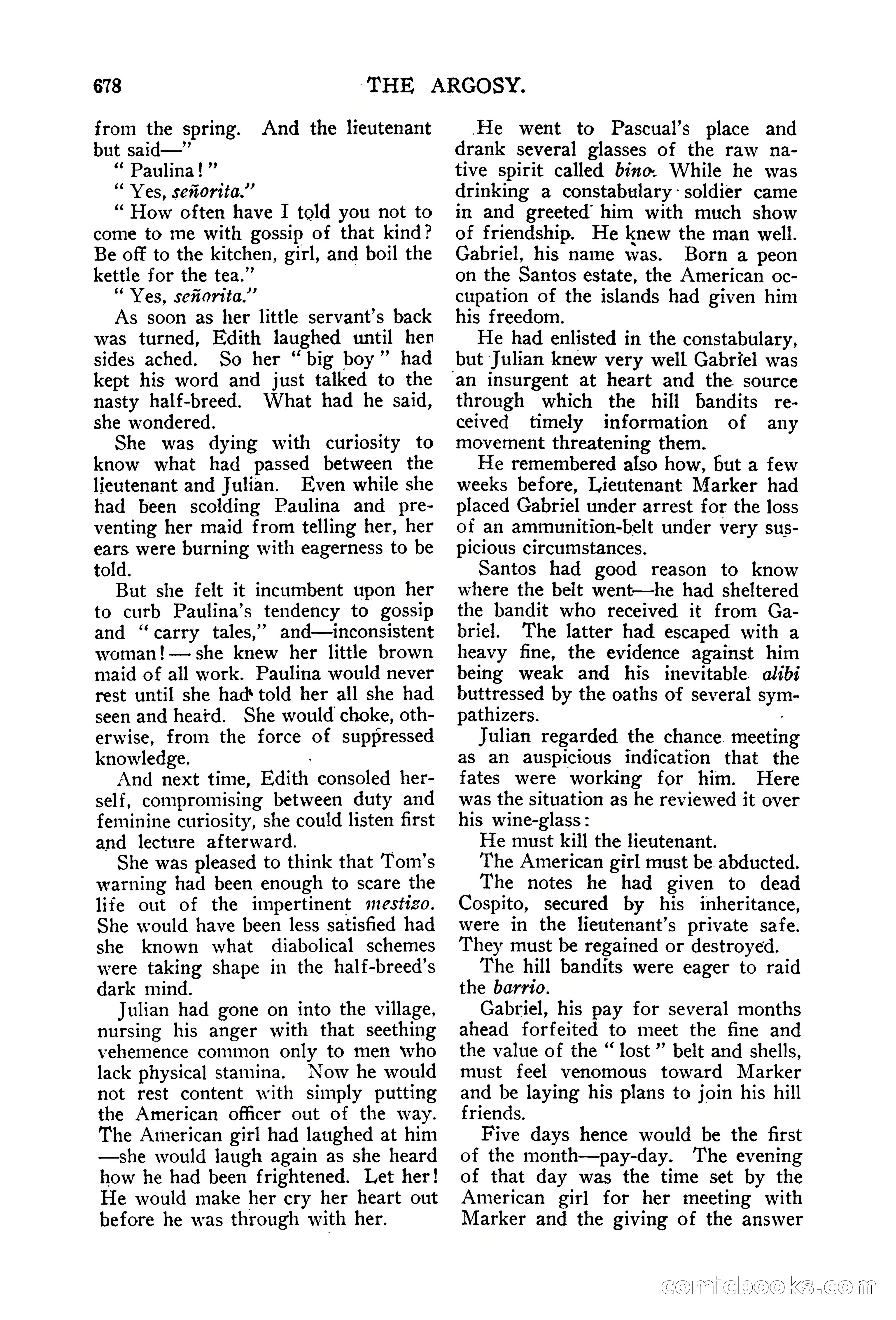
A restored page from Pulp Fiction, 1914. Page through the whole issue in the reader above.
📄 Transcribed text from this page (OCR, searchable)
Machine-transcribed from the original scan — historical spelling and the odd misread are preserved.
678 from the spring. And the lieutenant but said—” “ Paulina!” “Yes, senorita.” “How often have I told you not to come to me with gossip of that kind? Be off to the kitchen, girl, and boil the kettle for the tea.” “ Yes, senorita.” As soon as her little servant’s back was turned, Edith laughed until her sides ached. So her “ big boy” had kept his word and just talked to the nasty half-breed. What had he said, she wondered. She was dying with curiosity to know what had passed between the lieutenant and Julian. Even while she had been scolding Paulina and pre- venting her maid from telling her, her ears were burning with eagerness to be told. But she felt it incumbent upon her to curb Paulina’s tendency to gossip and “carry tales,’ and—inconsistent woman!— she knew her little brown maid of all work. Paulina would never rest until she had* told her all she had seen and heard. She would choke, oth- erwise, from the force of suppressed knowledge. And next time, Edith consoled her- self, compromising between duty and feminine curiosity, she could listen first and lecture afterward. She was pleased to think that Tom’s warning had been enough to scare the life out of the impertinent smestizo. She would have been less satisfied had she known what diabolical schemes were taking shape in the half-breed’s dark mind. Julian had gone on into the village, nursing his anger with that seething vehemence common only to men who lack physical stamina. Now he would not rest content with simply putting the American officer out of the way. The American girl had laughed at him —she would laugh again as she heard how he had been frightened. Let her! He would make her cry her heart out before he was through with her. ‘THE ARGOSY. ‘He went to Pascual’s place and drank several glasses of the raw na- tive spirit called bino. While he was drinking a constabulary: soldier came in and greeted him with much show of friendship. He knew the man well. Gabriel, his name was. Born a peon on the Santos estate, the American oc- cupation of the islands had given him his freedom. He had enlisted in the constabulary, but Julian knew very well Gabriel was an insurgent at heart and the source through which the hill bandits re- ceived timely information of any movement threatening them. He remembered also how, but a few weeks before, Lieutenant Marker had placed Gabriel under arrest for the loss of an ammunition-belt under very sus- picious circumstances. Santos had good reason to know where the belt went—he had sheltered the bandit who received it from Ga- briel. The latter had escaped with a heavy fine, the evidence against him being weak and his inevitable alibi buttressed by the oaths of several sya pathizers. Julian regarded the chance. meeting aS an auspicious indication that the fates were working for him. Here was the situation as he reviewed it over his wine-glass: He must kill the lieutenant. The American girl must be. abducted. The notes he had given to dead Cospito, secured by his inheritance, were in the lieutenant’s private safe. They must be regained or destroyed. The hill bandits were eager to raid the barrio. Gabriel, his pay for several months ahead forfeited to meet the fine and the value of the “ lost” belt and shells, must feel venomous toward Marker and be laying his plans to join his hill friends. Five days hence would be the first of the month—pay-day. The evening of that day was the time set by the American girl for her meeting with Marker and the giving of the answer COMicdoo S CO@