
Pulp Fiction, 1914 · page 183 of 266
The Argosy, Vol. 76, No. 3 — page 183: what you’re looking at
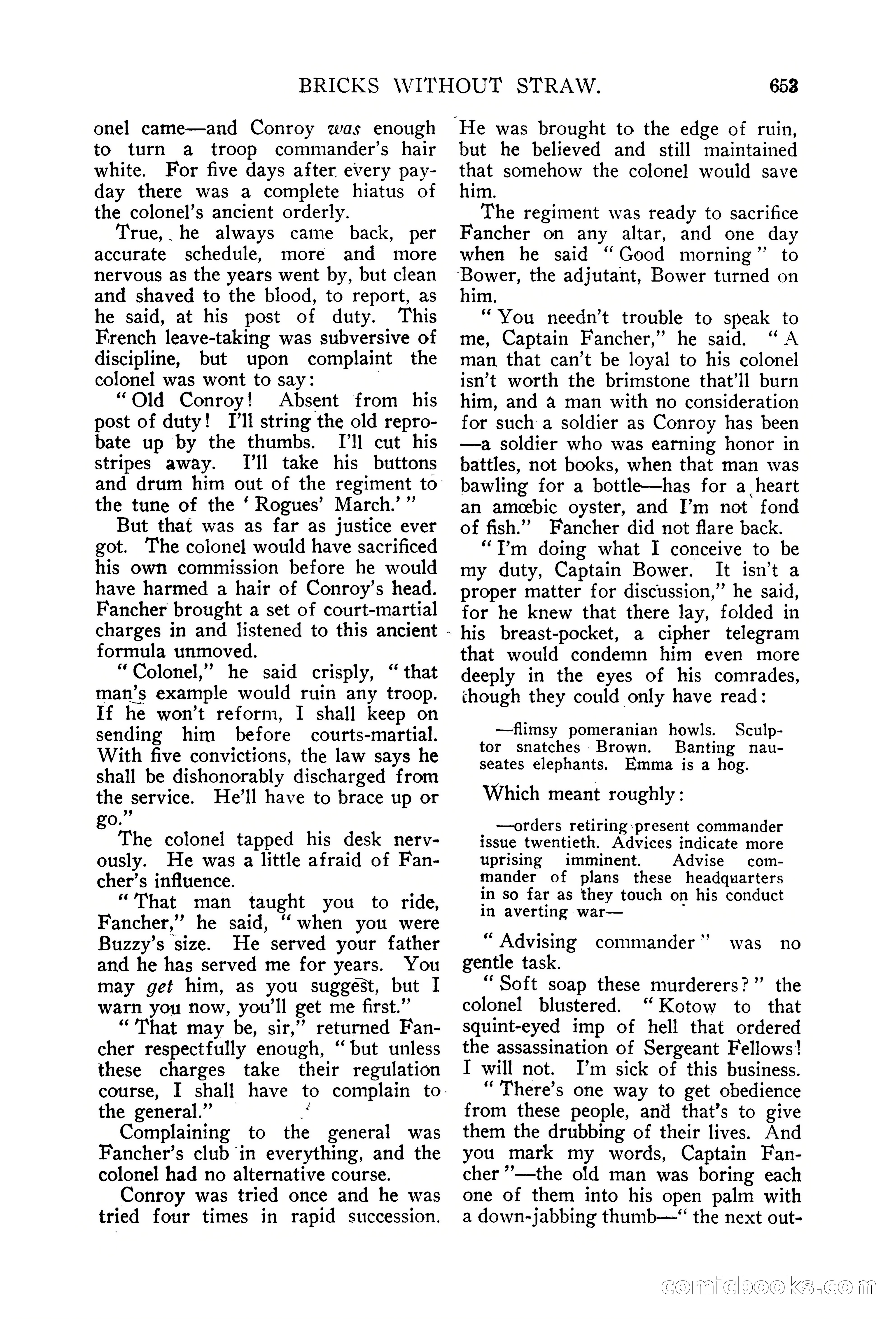
A restored page from Pulp Fiction, 1914. Page through the whole issue in the reader above.
📄 Transcribed text from this page (OCR, searchable)
Machine-transcribed from the original scan — historical spelling and the odd misread are preserved.
BRICKS WITHOUT STRAW. onel came—and Conroy was enough to turn a troop commander’s hair white. For five days after every pay- day there was a complete hiatus of the colonel’s ancient orderly. True, he always came back, per accurate schedule, more and more nervous as the years went by, but clean and shaved to the blood, to report, as he said, at his post of duty. This French leave-taking was subversive of discipline, but upon complaint the colonel was wont to say: “Old Conroy! Absent from his post of duty! I’ll string the old repro- bate up by the thumbs. I'll cut his stripes away. I’ll take his buttons and drum him out of the regiment to the tune of the ‘ Rogues’ March.’ ”’ But that was as far as justice ever got. The colonel would have sacrificed his own commission before he would have harmed a hair of Conroy’s head. Fancher brought a set of court-martial charges in and listened to this ancient - formula unmoved. “ Colonel,” ’ he said crisply, “ that man’s example would ruin any troop. If he won’t reform, I shall keep on sending him before courts-martial. With five convictions, the law says he shall be dishonorably discharged from the service. He’ll have to brace up or go.” The colonel tapped his desk nerv- ously. He was a little afraid of Fan- cher’s influence. “That man taught you to ride, Fancher,” he said, ‘when you were Buzzy’s size. He served your father and he has served me for years. You may get him, as you suggest, but I warn you now, you'll get me first.” “That may be, sir,” returned Fan- cher respectfully enough, “but unless these charges take their regulation course, I shall have to complain to- the general.’ ” Complaining to the general was Fancher’s club in everything, and the colonel had no alternative course. Conroy was tried once and he was tried four times in rapid succession. 653 ‘He was brought to the edge of ruin, but he believed and still maintained that somehow the colonel would save him. The regiment was ready to sacrifice Fancher on any altar, and one day when he said “Good morning’ to ‘Bower, the adjutant, Bower turned on him. “You needn’t trouble to speak to me, Captain Fancher,” he said. “A man that can’t be loyal to his colonel isn’t worth the brimstone that’ll burn him, and a man with no consideration for such a soldier as Conroy has been —a soldier who was earning honor in battles, not books, when that man was bawling for a bottle—has for a heart an amecebic oyster, and I’m not fond of fish.” Fancher did not flare back. “T’m doing what I conceive to be my duty, Captain Bower. It isn’t a proper matter for discussion,’ he said, for he knew that there lay, folded in his breast-pocket, a cipher telegram that would condemn him even more deeply in the eyes of his comrades, though they could only have read: —flimsy pomeranian howls. tor snatches - Brown. seates elephants. Sculp- Banting nau- Emma is a hog. Which meant roughly : —orders retiring-present commander issue twentieth. Advices indicate more uprising imminent. Advise com- mander of plans these headquarters in so far as they touch on his conduct in averting war— “ Advising commander ” gentle task. “Soft soap these murderers?’ the colonel blustered. “ Kotow to that squint-eyed imp of hell that ordered the assassination of Sergeant Fellows! I will not. I’m sick of this business. “ There’s one way to get obedience from these people, and that’s to give them the drubbing of their lives. And you mark my words, Captain Fan- cher ”’—the old man was boring each one of them into his open palm with a down-jabbing thumb—“ the next out- Was no COMicdoo S CO@