
Pulp Fiction, 1914 · page 146 of 266
The Argosy, Vol. 76, No. 3 — page 146: what you’re looking at
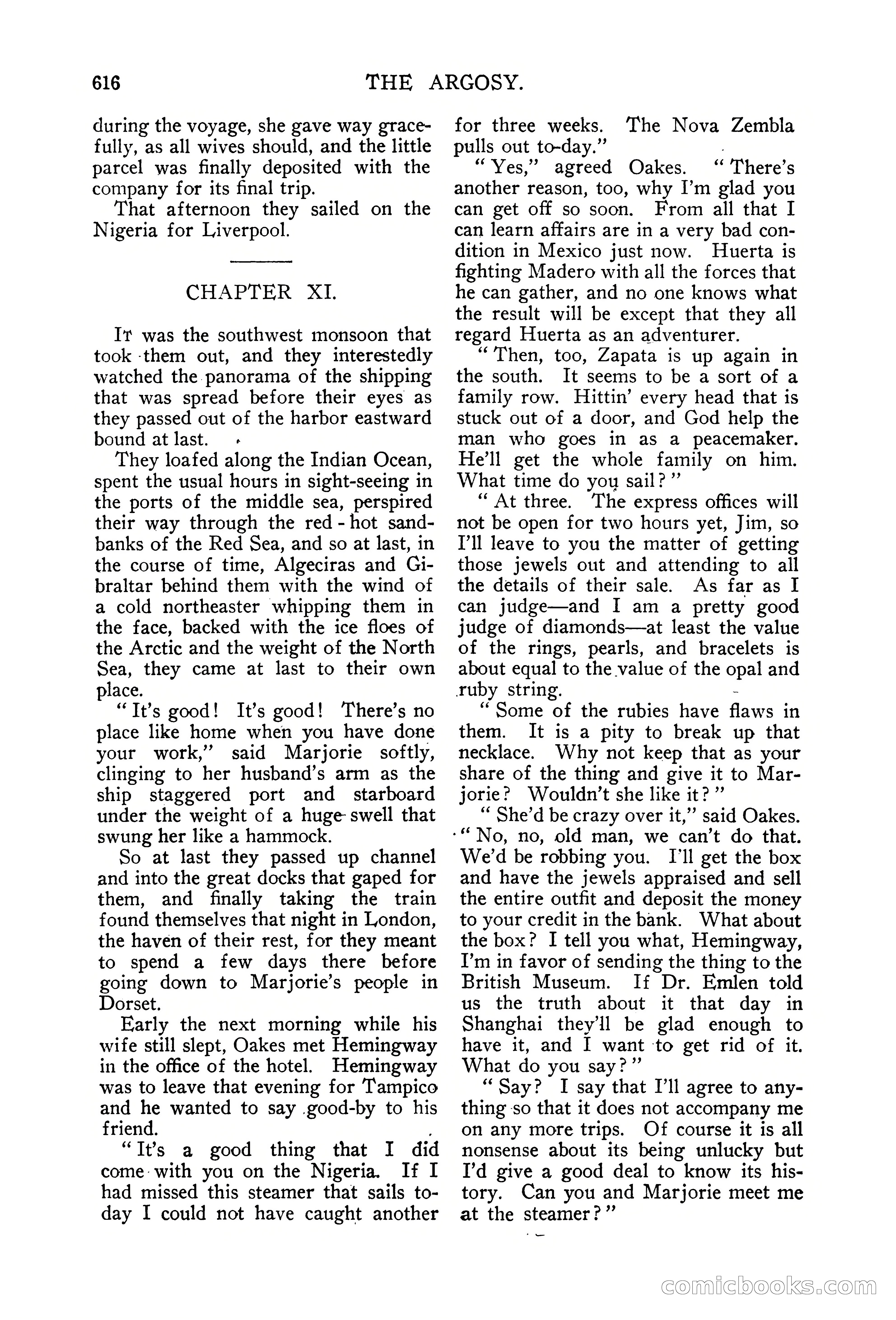
A restored page from Pulp Fiction, 1914. Page through the whole issue in the reader above.
📄 Transcribed text from this page (OCR, searchable)
Machine-transcribed from the original scan — historical spelling and the odd misread are preserved.
616 during the voyage, she gave way grace- fully, as all wives should, and the little parcel was finally deposited with the company for its final trip. That afternoon they sailed on the Nigeria for Liverpool. CHAPTER XI. It was the southwest monsoon that took -them out, and they interestedly watched the.panorama of the shipping that was spread before their eyes as they passed out of the harbor eastward bound at last. They loafed along the Indian Ocean, spent the usual hours in sight-seeing in the ports of the middle sea, perspired their way through the red - hot sand- banks of the Red Sea, and so at last, in the course of time, Algeciras and Gi- braltar behind them with the wind of a cold northeaster whipping them in the face, backed with the ice floes of the Arctic and the weight of the North Sea, they came at last to their own place. “It’s good! It’s good! There’s no place like home when you have done your work,” said Marjorie softly, clinging to her husband’s arm as the ship staggered port and_ starboard under the weight of a huge swell that swung her like a hammock. So at last they passed up channel and into the great docks that gaped for them, and finally taking the train found themselves that night in London, the haven of their rest, for they meant to spend a few days there before going down to Marjorie’s people in Dorset. Early the next morning while his wife still slept, Oakes met Hemingway in the office of the hotel. Hemingway was to leave that evening for Tampico and he wanted to say .good-by to his friend. “Tt’s a good thing that I did come: with you on the Nigeria. If I had missed this steamer that sails to- day I could not have caught another THE ARGOSY. for three weeks. The Nova Zembla pulls out to-day.” “Yes,” agreed Oakes. “ There’s another reason, too, why I’m glad you can get off so soon. From all that I can learn affairs are in a very bad con- dition in Mexico just now. Huerta is fighting Madero with all the forces that he can gather, and no one knows what the result will be except that they all regard Huerta as an adventurer. “Then, too, Zapata is up again in the south. It seems to be a sort of a family row. Hittin’ every head that is stuck out of a door, and God help the man who goes in as a peacemaker. He’ll get the whole family on him. What time do yoy sail?”’ “At three. The express offices will not be open for two hours yet, Jim, so Pil leave to you the matter of getting those jewels out and attending to all the details of their sale. As far as I can judge—and I am a pretty good judge of diamonds—at least the value of the rings, pearls, and bracelets is about equal to the value of the opal and ruby string. “Some of the rubies have flaws in them. It is a pity to break up that necklace. Why not keep that as your share of the thing and give it to Mar- jorie? Wouldn’t she like it?” “ She’d be crazy over it,” said Oakes. -“ No, no, old man, we can’t do that. We'd be robbing you. I'll get the box and have the jewels appraised and sell the entire outfit and deposit the money to your credit in the bank. What about the box? I tell you what, Hemingway, I’m in favor of sending the thing to the British Museum. If Dr. Emlen told us the truth about it that day in Shanghai theyll be glad enough to have it, and I want to get rid of it. What do you say?” “Say? I say that Ill agree to any- thing so that it does not accompany me on any more trips. Of course it is all nonsense about its being unlucky but I'd give a good deal to know its his- tory. Can you and Marjorie meet me at the steamer?” — COMicdoo S CO@