
Pulp Fiction, 1914 · page 130 of 266
The Argosy, Vol. 76, No. 3 — page 130: what you’re looking at
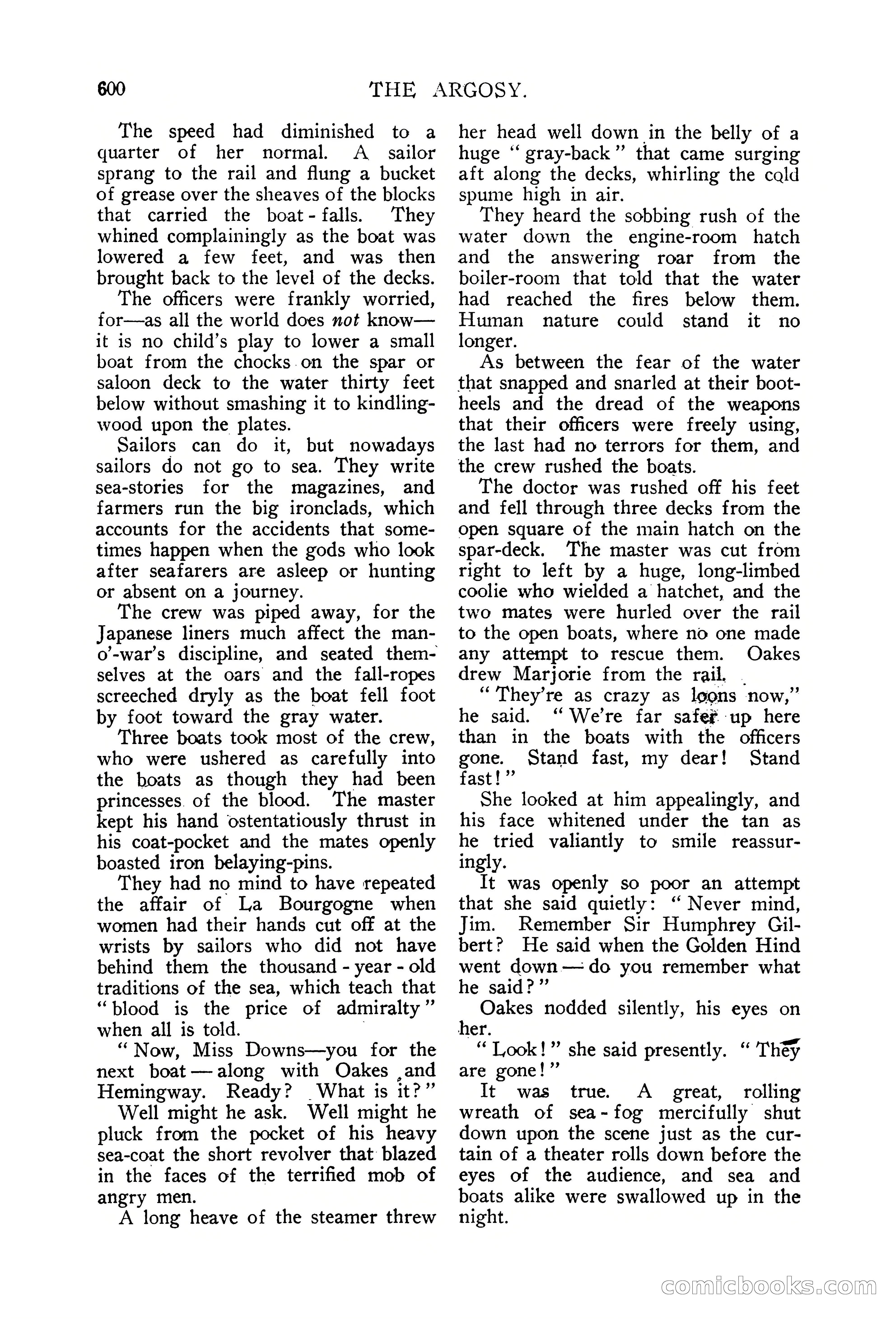
A restored page from Pulp Fiction, 1914. Page through the whole issue in the reader above.
📄 Transcribed text from this page (OCR, searchable)
Machine-transcribed from the original scan — historical spelling and the odd misread are preserved.
600 The speed had diminished to a quarter of her normal. A _ sailor sprang to the rail and flung a bucket of grease over the sheaves of the blocks that carried the boat- falls. They whined complainingly as the boat was lowered a few feet, and was then brought back to the level of the decks. The officers were frankly worried, for—as all the world does not know— it is no child’s play to lower a small boat from the chocks.on the spar or saloon deck to the water thirty feet below without smashing it to kindling- wood upon the plates. Sailors can do it, but nowadays sailors do not go to sea. They write sea-stories for the magazines, and farmers run the big ironclads, which accounts for the accidents that some- times happen when the gods who look after seafarers are asleep or hunting or absent on a journey. The crew was piped away, for the Japanese liners much affect the man- o’-war’s discipline, and seated them- selves at the oars and the fall-ropes screeched dryly as the boat fell foot by foot toward the gray water. Three boats took most of the crew, who were ushered as carefully into the boats as though they had been princesses. of the blood. The master kept his hand ostentatiously thrust in his coat-pocket and the mates openly boasted iron belaying-pins. They had no mind to have repeated the affair of La Bourgogne when women had their hands cut off at the wrists by sailors who did not have behind them the thousand - year - old traditions of the sea, which teach that “blood is the price of admiralty ” when all is told. | “Now, Miss Downs—you for the next boat— along with Oakes and Hemingway. Ready? _What is it?” Well might he ask. Well might he pluck from the pocket of his heavy sea-coat the short revolver that blazed in the faces of the terrified mob of angry men. A long heave of the steamer threw her head well down in the belly of a huge “ gray-back”’ that came surging aft along the decks, whirling the cald spume high in air. They heard the sobbing rush of the water down the engine-room hatch and the answering roar from the boiler-room that told that the water had reached the fires below them. Human nature could stand it no longer. As between the fear of the water that snapped and snarled at their boot- heels and the dread of the weapons that their officers were freely using, the last had no terrors for them, and the crew rushed the boats. The doctor was rushed off his feet and fell through three decks from the open square of the main hatch on the spar-deck. The master was cut from right to left by a huge, long-limbed coolie who wielded a hatchet, and the two mates were hurled over the rail to the open boats, where no one made any attempt to rescue them. Oakes drew Marjorie from the rail. . “They’re as crazy as loons now,” he said. “ We’re far safef up here than in the boats with the officers gone. Stand fast, my dear! Stand fast!” She looked at him appealingly, and his face whitened under the tan as he tried valiantly to smile reassur- ingly. It was openly so poor an attempt that she said quietly: “ Never mind, Jim. Remember Sir Humphrey Gil- bert? He said when the Golden Hind went down—do you remember what he said?” Oakes nodded silently, his eyes on her. “Took!” she said presently. “ They are gone!” It was true. A _ great, rolling wreath of sea-fog mercifully shut down upon the scene just as the cur- tain of a theater rolls down before the eyes of the audience, and sea and boats alike were swallowed up in the night. COMicdoo S CO@