
Pulp Fiction, 1912 · page 23 of 276
The Argosy, Christmas 1912 — page 23: what you’re looking at
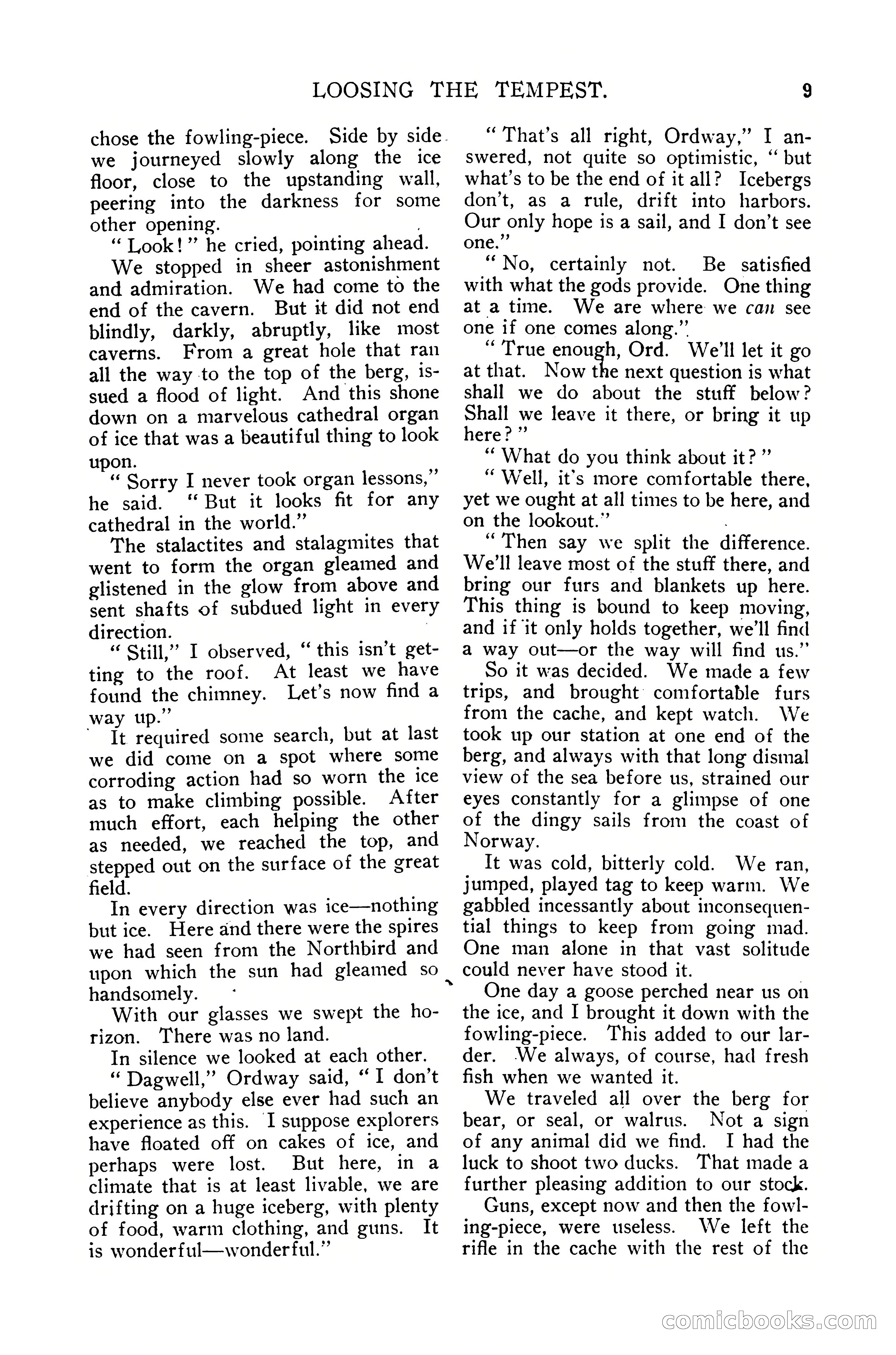
A restored page from Pulp Fiction, 1912. Page through the whole issue in the reader above.
📄 Transcribed text from this page (OCR, searchable)
Machine-transcribed from the original scan — historical spelling and the odd misread are preserved.
LOOSING THE TEMPEST. 9 chose the fowling-piece. we journeyed slowly along the ice floor, close to the upstanding wall, peering into the darkness for some other opening. . “Took!” he cried, pointing ahead. We stopped in sheer astonishment and admiration. We had come to the end of the cavern. But it did not end blindly, darkly, abruptly, like most caverns. From a great hole that ran all the way to the top of the berg, 1s- sued a flood of light. And this shone down on a marvelous cathedral organ of ice that was a beautiful thing to look upon. , “ Sorry I never took organ lessons, he said. ‘But it looks fit for any cathedral in the world.” The stalactites and stalagmites that went to form the organ gleamed and glistened in the glow from above and sent shafts of subdued light in every direction. : “Still,” I observed, “ this isn’t get- ting to the roof. At least we have found the chimney. Let’s now find a way up.” ~ It required some search, but at last we did come on a spot where some corroding action had so worn the ice as to make climbing possible. After much effort, each helping the other as needed, we reached the top, and stepped out on the surface of the great field. In every direction was ice—nothing but ice. Here and there were the spires we had seen from the Northbird and upon which the sun had gleamed so . handsomely. With our glasses we swept the ho- rizon. There was no land. In silence we looked at each other. “ Dagwell,”’ Ordway said, “I don’t believe anybody else ever had such an experience as this. I suppose explorers have floated off on cakes of ice, and perhaps were lost. But here, in a climate that is at least livable, we are drifting on a huge iceberg, with plenty of food, warm clothing, and guns. It is wonderful—wonderful.” Side by side. “That’s all right, Ordway,” I an- swered, not quite so optimistic, ‘ but what’s to be the end of it all? Icebergs don’t, as a rule, drift into harbors. Our only hope is a sail, and I don’t see one.” “No, certainly not. Be satisfied with what the gods provide. One thing at a time. We are where we can see one if one comes along.” “ True enough, Ord. We'll let it go at that. Now the next question is what shall we do about the stuff below? Shall we leave it there, or bring it up here?” “What do you think about it? ” “Well, it’s more comfortable there, yet we ought at all times to be here, and on the lookout.” “Then say we split the difference. We'll leave most of the stuff there, and bring our furs and blankets up here. This thing is bound to keep moving, and if it only holds together, we’ll find a way out—or the way will find us.” So it was decided. We made a few trips, and brought comfortable furs from the cache, and kept watch. We took up our station at one end of the berg, and always with that long dismal view of the sea before us, strained our eyes constantly for a glimpse of one of the dingy sails from the coast of Norway. It was cold, bitterly cold. We ran, jumped, played tag to keep warm. We gabbled incessantly about inconsequen- tial things to keep from going mad. One man alone in that vast solitude could never have stood it. One day a goose perched near us on the ice, and I brought it down with the fowling-piece. This added to our lar- der. We always, of course, had fresh fish when we wanted it. We traveled all over the berg for bear, or seal, or walrus. Not a sign of any animal did we find. I had the luck to shoot two ducks. That made a further pleasing addition to our stock. Guns, except now and then the fowl- ing-piece, were useless. We left the rifle in the cache with the rest of the CoOMmicbook CO