
Pulp Fiction, 1955 · page 83 of 146
Argosy: The Short Story Magazine — page 83: what you’re looking at
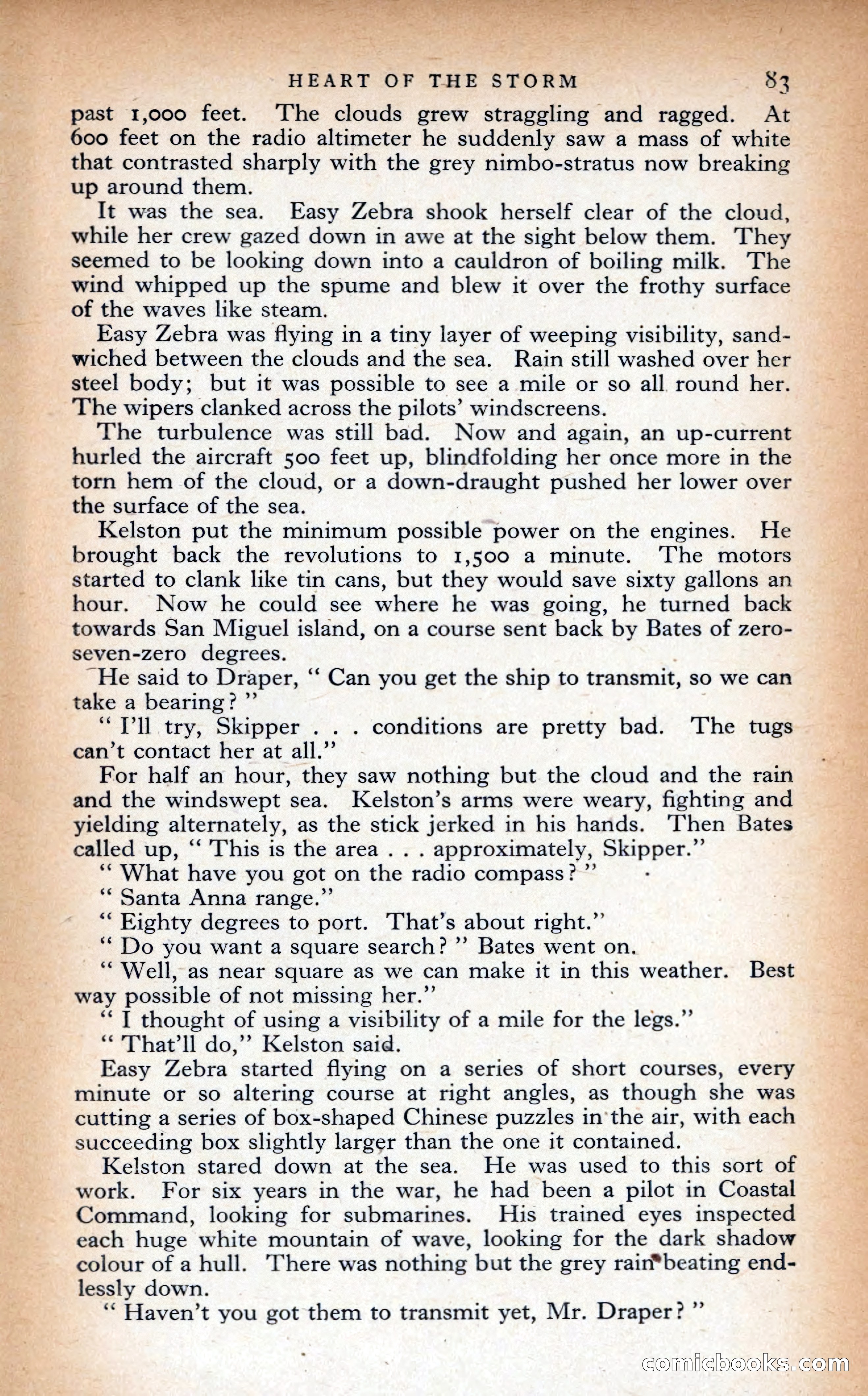
A restored page from Pulp Fiction, 1955. Page through the whole issue in the reader above.
📄 Transcribed text from this page (OCR, searchable)
Machine-transcribed from the original scan — historical spelling and the odd misread are preserved.
> 4 ‘ eS nd ce fie A : es Ps rua -, < a ~— tin ya i Ase! an ies : 5 st faus het sak! oo) KPO be ; x« > “HEART OF THE STORM ~=—_& Ki: ee | - 600 feet on the radio altimeter he suddenly saw a mass of white . o that contrasted sharply with the grey nimbo-stratus now breaking sup around them. mt It was the sea. Easy Zebra shook herself clear of the cloud, while her crew gazed down in awe at the sight below them. They — seemed to be looking down into a cauldron of boiling milk. The wind whipped up the spume and blew it over the frothy surface of the waves like steam. | Easy Zebra was flying in a tiny layer of weeping visibility, sand- ___wiched between the clouds and the sea. Rain still washed over her _ steel body; but it was possible to see a mile or so all. round her. ‘The wipers clanked across the pilots’ windscreens. al The turbulence was still bad. Now and again, an up-current im hurled the aircraft 500 feet up, blindfolding her once more in the torn hem of the cloud, or a down-draught pushed her lower over the surface of the sea. b Kelston put the minimum Spien power on the engines. He brought back the revolutions to 1,500 a minute. ‘The motors an started to clank like tin cans, but they would save sixty gallons an hour. Now he could see where he was going, he turned back towards San Miguel island, on a course sent back by Bates of zero- seven-zero degrees. He said to Draper, “‘ Can you get the ship to transmit, so we can take a bearing? ”’ can’t contact her at all.”’ For half an hour, they saw nothing but the cloud and the rain and the windswept sea. Kelston’s arms were weary, fighting and yielding alternately, as the stick jerked in his hands. Then Bates called up, “‘ This is the area. . . approximately, SaPESt ** ‘What have you got on the radio compass? ”’ ** Santa Anna range.” ““ Eighty degrees to port. That’s about right.” ** Do you want a square search? ”’ Bates went on. “Weill, as near square as we can make it in this weather. Best mee way possible of not missing her.”’ : * T thought of using a visibility of a mile for the legs.” “That'll do,” Kelston said. minute or so altering course at right angles, as though she was cutting a series of box-shaped Chinese puzzles inthe air, with each succeeding box slightly larger than the one it contained. Kelston stared down at the sea. He was used to this sort of work. For six years in the war, he had been a pilot in Coastal Command, looking for submarines. His trained eyes inspected each huge white mountain of wave, looking for the dark shadow colour of a hull. There was nothing but the grey rair®beating end- lessly down. * Haven’t you got them to transmit yet, Mr. Draper? ” Soe past 1,000 feet. The clouds grew straggling and ragged. At “Tl try, Skipper . . . conditions are pretty bad. The tugs Easy Zebra started flying on a series of short courses, every Commicsooksicom),