
Pulp Fiction, 1955 · page 83 of 148
Argosy, September 1955 — page 83: what you’re looking at
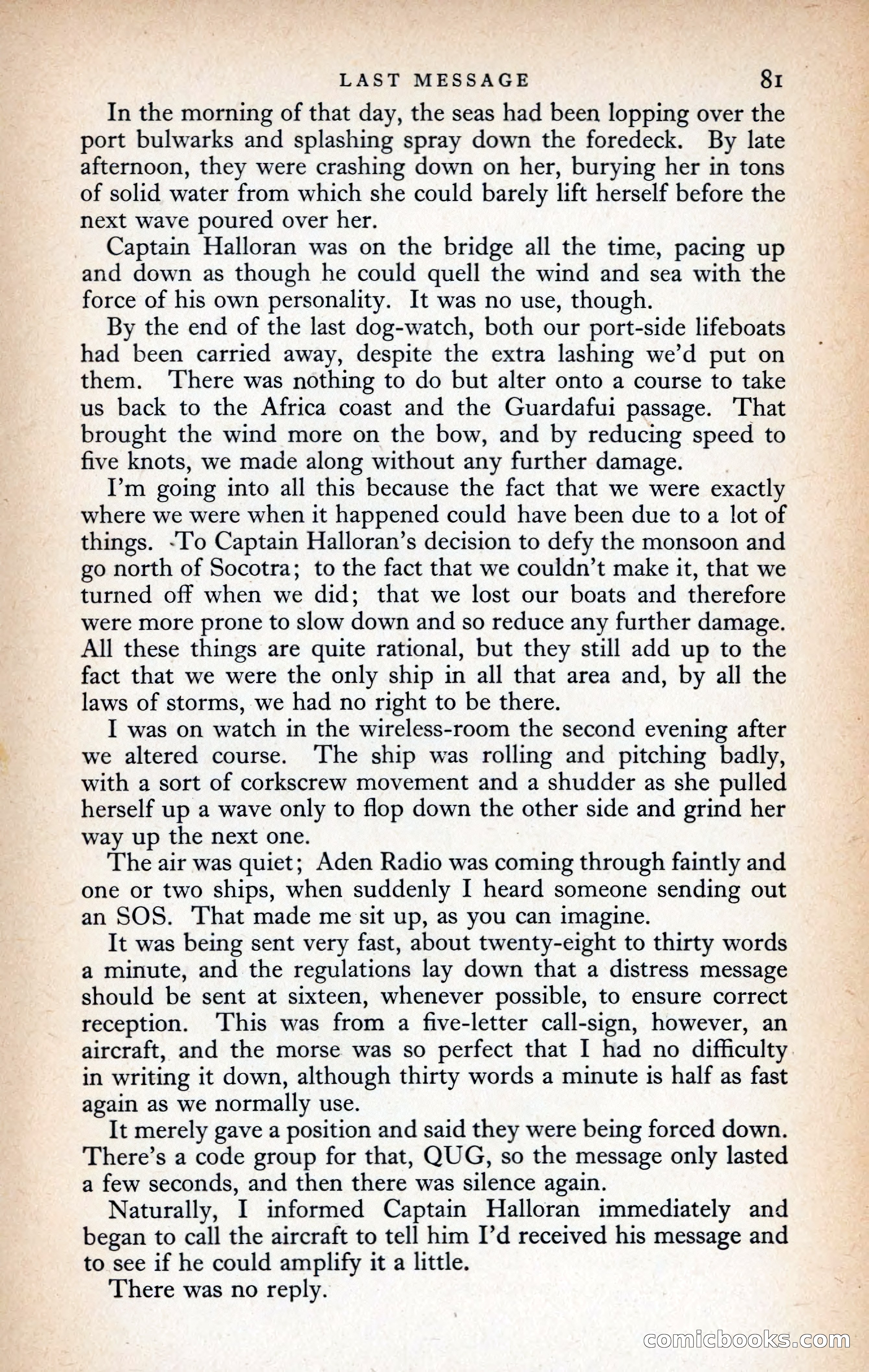
A restored page from Pulp Fiction, 1955. Page through the whole issue in the reader above.
📄 Transcribed text from this page (OCR, searchable)
Machine-transcribed from the original scan — historical spelling and the odd misread are preserved.
LAST MESSAGE 81 In the morning of that day, the seas had been lopping over the port bulwarks and splashing spray down the foredeck. By late afternoon, they were crashing down on her, burying her in tons of solid water from which she could barely lift herself before the next wave poured over her. Captain Halloran was on the bridge all the time, pacing up and down as though he could quell the wind and sea with the force of his own personality. It was no use, though. By the end of the last dog-watch, both our port-side lifeboats had been carried away, despite the extra lashing we’d put on them. ‘There was nothing to do but alter onto a course to take us back to the Africa coast and the Guardafui passage. ‘That brought the wind more on the bow, and by reducing speed to five knots, we made along without any further damage. I’m going into all this because the fact that we were exactly where we were when it happened could have been due to a lot of things. ~To Captain Halloran’s decision to defy the monsoon and go north of Socotra; to the fact that we couldn’t make it, that we turned off when we did; that we lost our boats and therefore were more prone to slow down and so reduce any further damage. All these things are quite rational, but they still add up to the fact that we were the only ship in all that area and, by all the laws of storms, we had no right to be there. I was on watch in the wireless-room the second evening after we altered course. The ship was rolling and pitching badly, with a sort of corkscrew movement and a shudder as she pulled herself up a wave only to flop down the other side and grind her way up the next one. The air was quiet; Aden Radio was coming through faintly and one or two ships, when suddenly I heard someone sending out an SOS. That made me sit up, as you can imagine. It was being sent very fast, about twenty-eight to thirty words a minute, and the regulations lay down that a distress message should be sent at sixteen, whenever possible, to ensure correct reception. ‘This was from a five-letter call-sign, however, an aircraft, and the morse was so perfect that I had no difficulty in writing it down, although thirty words a minute is half as fast again as we normally use. It merely gave a position and said they were being forced down. There’s a code group for that, QUG, so the message only lasted a few seconds, and then there was silence again. Naturally, I informed Captain Halloran immediately and began to call the aircraft to tell him I’d received his message and to see if he could amplify it a little. There was no reply. comicbooks.conn