
Pulp Fiction, 1955 · page 77 of 148
Argosy, September 1955 — page 77: what you’re looking at
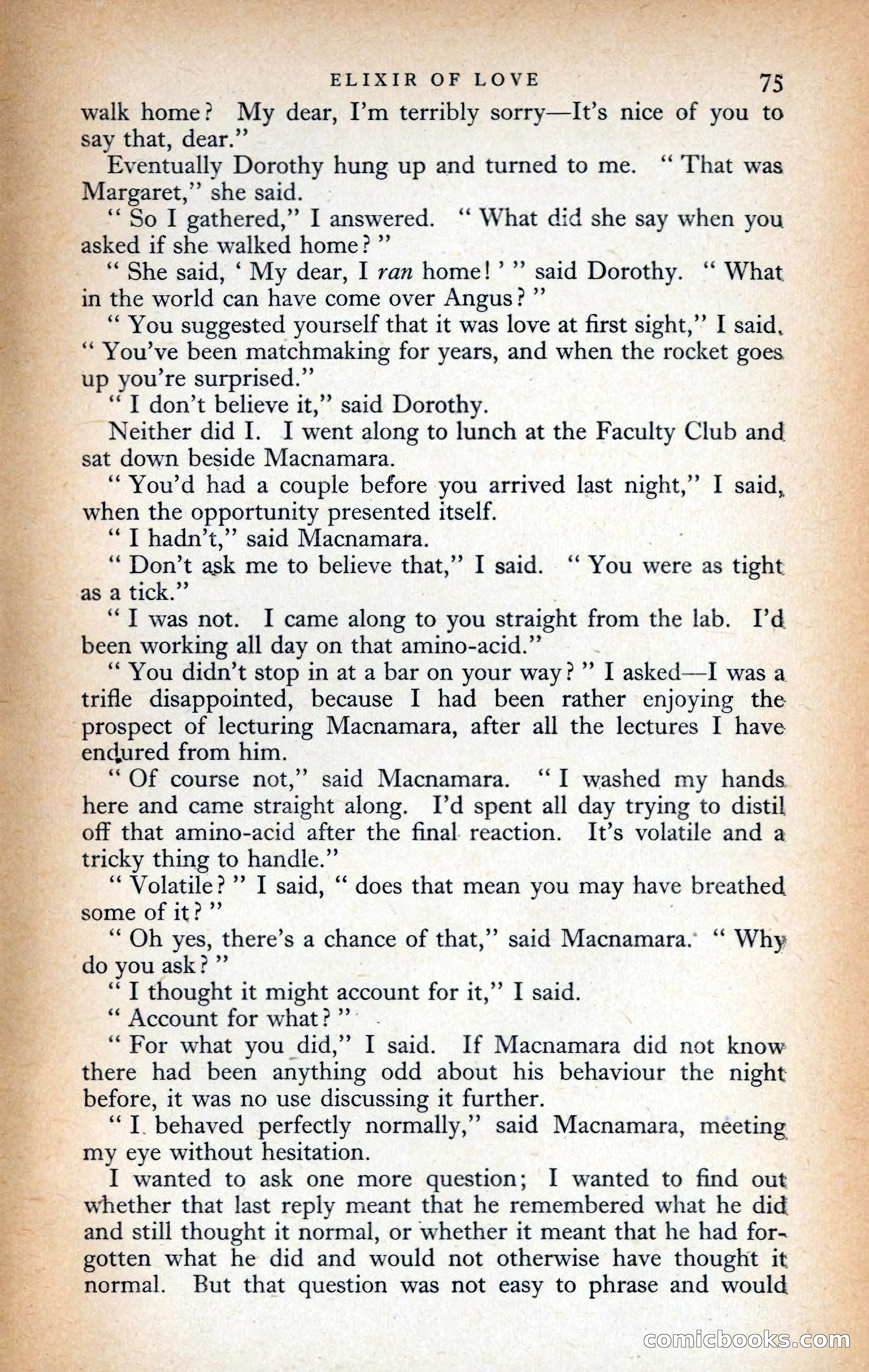
A restored page from Pulp Fiction, 1955. Page through the whole issue in the reader above.
📄 Transcribed text from this page (OCR, searchable)
Machine-transcribed from the original scan — historical spelling and the odd misread are preserved.
2 r = . ‘ f . ¥ oat re mee 4, teas 4 _- Ss pa, 28. ay Oo. “Oe J Sys < ee - ae - MS r : - - _ ni rd a oY o- — “,) A + * et AQ a a : sed Wi ; ; - doe , ’ + Te al lp ~ : hat = is ‘ - eT J * . ype. adel 2 : ; . . ni roe ue’ . ” we ee ELIXIR OF LOVE — 75 ae a walk home? My dear, I’m terribly sorry—It’s nice of you to say that, dear.” . E Eventually Dorothy hung up and turned to me. “ That was ae she said. | ‘So I gathered,” I answered. “‘ What did she say when you _ asked if she walked home? ”’ : : _ “She said, ‘ My dear, I ran home!’ ” said Dorothy. “ What = _ in the world can have come over Angus? ” 4 “You suggested yourself that it was love at first sight,” I said. me * You’ ve been matchmaking for years, and when the rocket goes up you’re surprised.” “1 don’t believe it,” said Dorothy. oe Neither did I. I went along to lunch at the Faculty Club and | sat down beside Macnamara. “You'd had a couple before you arrived last night,’’ I said, when the opportunity presented itself. “1 hadn’t,” said Macnamara. aur ‘Don’t ask me to believe that,” I said. “ You were as tight as a tick.” | ‘““T was not. I came along to you straight from the lab. I’d been working all day on that amino-acid.” “You didn’t stop in at a bar on your way?” I asked—I was a _ trifle disappointed, because I had been rather enjoying the prospect of lecturing Macnamara, after all the lectures I have endured from him. ““Of course not,’’ said Macnamara. “I washed my hands _ here and came straight along. I’d spent all day trying to distil off that amino-acid after the final reaction. It’s volatile and a tricky thing to handle.” aa “Volatile? ” I said, “ does that mean you may have breathed oe some of it? ”’ Bt: m. ** Oh yes, there’s a chance of that,” said Macnamara. “Why do you ask? ”’ a “JT thought it might account for it,” I said. “* Account for what?” “For what you did,” I said. If Macnamara did not know _ there had been anything odd about his behaviour the night before, it was no use discussing it further. | é ‘““T behaved perfectly normally,” said Macnamara, meeting _ my eye without hesitation. a I wanted to ask one more question; I wanted to find out a= _ whether that last reply meant that he remembered what he did : and still thought it normal, or whether it meant that he had for- gotten what he did and would not otherwise have thought it normal. But that question was not easy to phrase and would comichooks.com ©