
Pulp Fiction, 1955 · page 62 of 148
Argosy, September 1955 — page 62: what you’re looking at
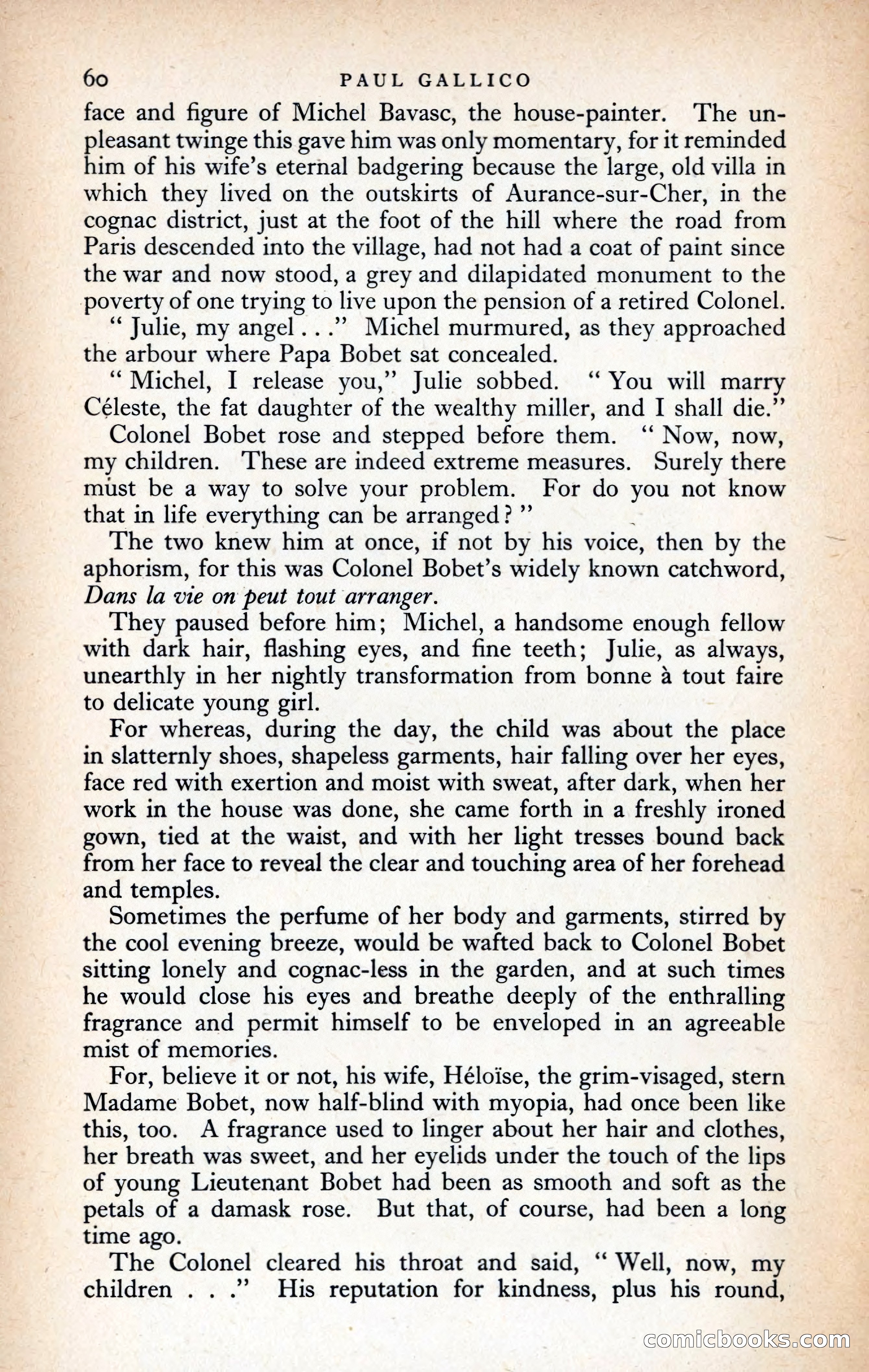
A restored page from Pulp Fiction, 1955. Page through the whole issue in the reader above.
📄 Transcribed text from this page (OCR, searchable)
Machine-transcribed from the original scan — historical spelling and the odd misread are preserved.
60 PAUL GALLICO face and figure of Michel Bavasc, the house-painter. The un- pleasant twinge this gave him was only momentary, for it reminded him of his wife’s eternal badgering because the large, old villa in which they lived on the outskirts of Aurance-sur-Cher, in the cognac district, just at the foot of the hill where the road from Paris descended into the village, had not had a coat of paint since the war and now stood, a grey and dilapidated monument to the poverty of one trying to live upon the pension of a retired Colonel. “Julie, my angel...’ Michel murmured, as they approached the arbour where Papa Bobet sat concealed. “Michel, I release you,” Julie sobbed. ‘“ You will marry Céleste, the fat daughter of the wealthy miller, and I shall die.”’ Colonel Bobet rose and stepped before them. ‘“‘ Now, now, my children. These are indeed extreme measures. Surely there must be a way to solve your problem. For do you not know that in life everything can be arranged? ”’ The two knew him at once, if not by his voice, then by the aphorism, for this was Colonel Bobet’s widely known catchword, Dans la vie on peut tout arranger. They paused before him; Michel, a handsome enough fellow with dark hair, flashing eyes, and fine teeth; Julie, as always, unearthly in her nightly transformation from bonne 4 tout faire to delicate young girl. For whereas, during the day, the child was about the place in slatternly shoes, shapeless garments, hair falling over her eyes, face red with exertion and moist with sweat, after dark, when her work in the house was done, she came forth in a freshly ironed gown, tied at the waist, and with her light tresses bound back from her face to reveal the clear and touching area of her forehead and temples. Sometimes the perfume of her body and garments, stirred by the cool evening breeze, would be wafted back to Colonel Bobet sitting lonely and cognac-less in the garden, and at such times he would close his eyes and breathe deeply of the enthralling fragrance and permit himself to be enveloped in an agreeable mist of memories. For, believe it or not, his wife, Héloise, the grim-visaged, stern Madame Bobet, now half-blind with myopia, had once been like this, too. A fragrance used to linger about her hair and clothes, her breath was sweet, and her eyelids under the touch of the lips of young Lieutenant Bobet had been as smooth and soft as the petals of a damask rose. But that, of course, had been a long time ago. The Colonel cleared his throat and said, “ Well, now, my children . . .” His reputation for kindness, plus his round, comiclbooks.conn