
Pulp Fiction, 1955 · page 29 of 148
Argosy, September 1955 — page 29: what you’re looking at
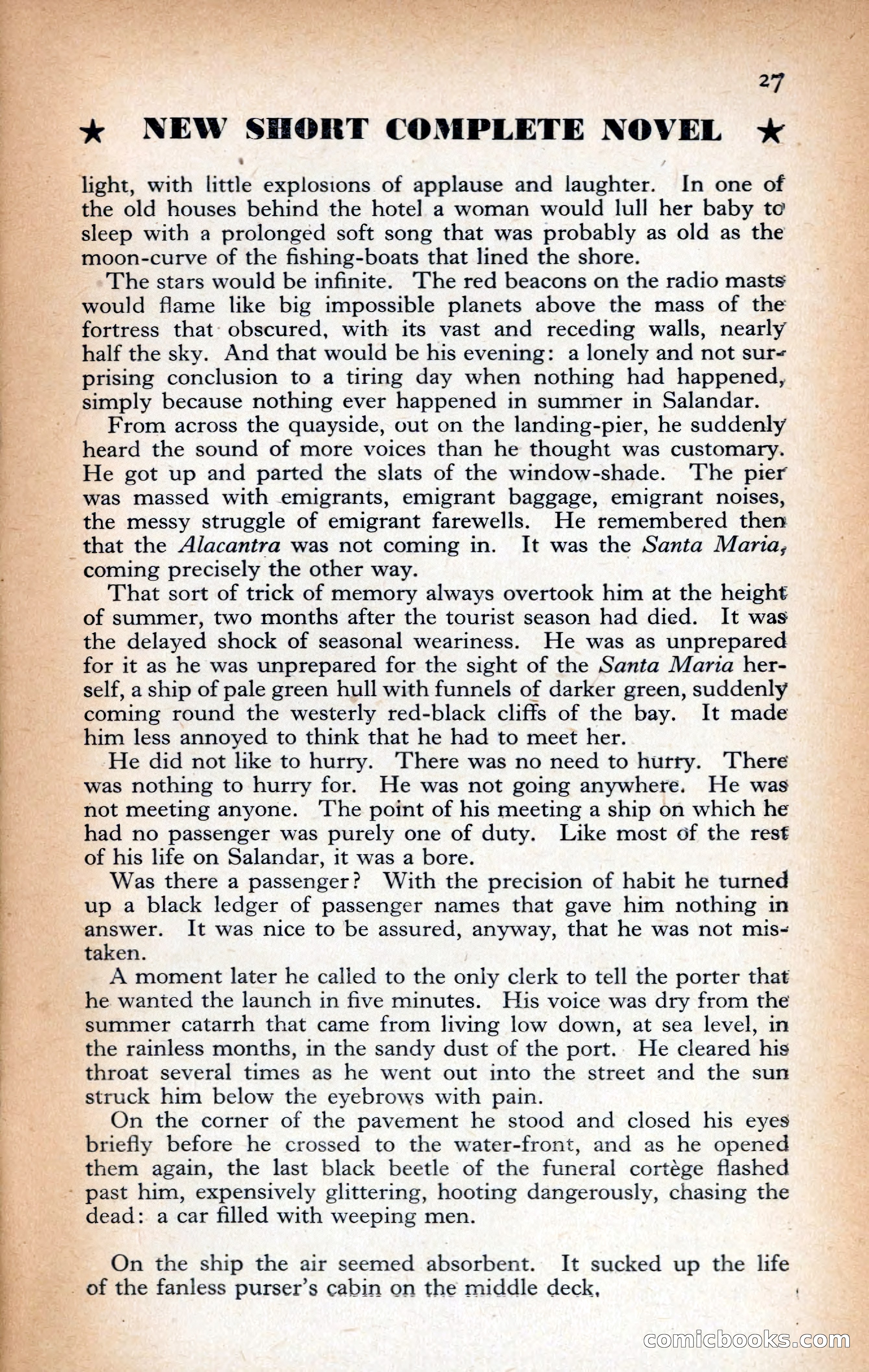
A restored page from Pulp Fiction, 1955. Page through the whole issue in the reader above.
📄 Transcribed text from this page (OCR, searchable)
Machine-transcribed from the original scan — historical spelling and the odd misread are preserved.
oer i a Pll “ > . .y 3 - > 27 *x NEW SHORT COMPLETE NV EE * light, with little explosions of applause and laughter. In one of the old houses behind the hotel a woman would lull her baby te sleep with a prolonged soft song that was probably as old as the moon-curve of the fishing-boats that lined the shore. The stars would be infinite. The red beacons on the radio masts would flame like big impossible planets above the mass of the fortress that: obscured, with its vast and receding walls, nearly half the sky. And that would be his evening: a lonely and not sur- prising conclusion to a tiring day when nothing had happened, _ simply because nothing ever happened in summer in Salandar. From across the quayside, out on the landing-pier, he suddenly heard the sound of more voices than he thought was customary. He got up and parted the slats of the window-shade. ‘The pier was massed with emigrants, emigrant baggage, emigrant noises, the messy struggle of emigrant farewells. He remembered then that the Alacantra was not coming in. It was the Santa Maria, - coming precisely the other way. That sort of trick of memory always overtook him at the height of summer, two months after the tourist season had died. It was the delayed shock of seasonal weariness. He was as unprepared for it as he was unprepared for the sight of the Santa Maria her- self, a ship of pale green hull with funnels of darker green, suddenly coming round the westerly red-black cliffs of the bay. It made him less annoyed to think that he had to meet her. He did not like to hurry. There was no need to hurry. There was nothing to hurry for. He was not going anywhere. He was not meeting anyone. The point of his meeting a ship on which he had no passenger was purely one of duty. Like most of the rest of his life on Salandar, it was a bore. Was there a passenger? With the precision of habit he turned up a black ledger of passenger names that gave him nothing in answer. It was nice to be assured, anyway, that he was not mis- taken. : A moment later he called to the only clerk to tell the porter that he wanted the launch in five minutes. His voice was dry from the summer catarrh that came from living low down, at sea level, in the rainless months, in the sandy dust of the port.. He cleared his throat several times as he went out into the street and the sun struck him below the eyebrows with pain. On the corner of the pavement he stood and closed his eyes briefly before he crossed to the water-front, and as he opened them again, the last black beetle of the funeral cortége flashed - past him, expensively glittering, hooting dangerously, chasing the dead: a car filled with weeping men. On the ship the air seemed absorbent. It sucked up the life _ of the fanless purser’s cabin on the middle deck, ye ‘ 4 = comniclbooks.conn