
Pulp Fiction, 1865 · page 86 of 399
The Argosy — page 86: what you’re looking at
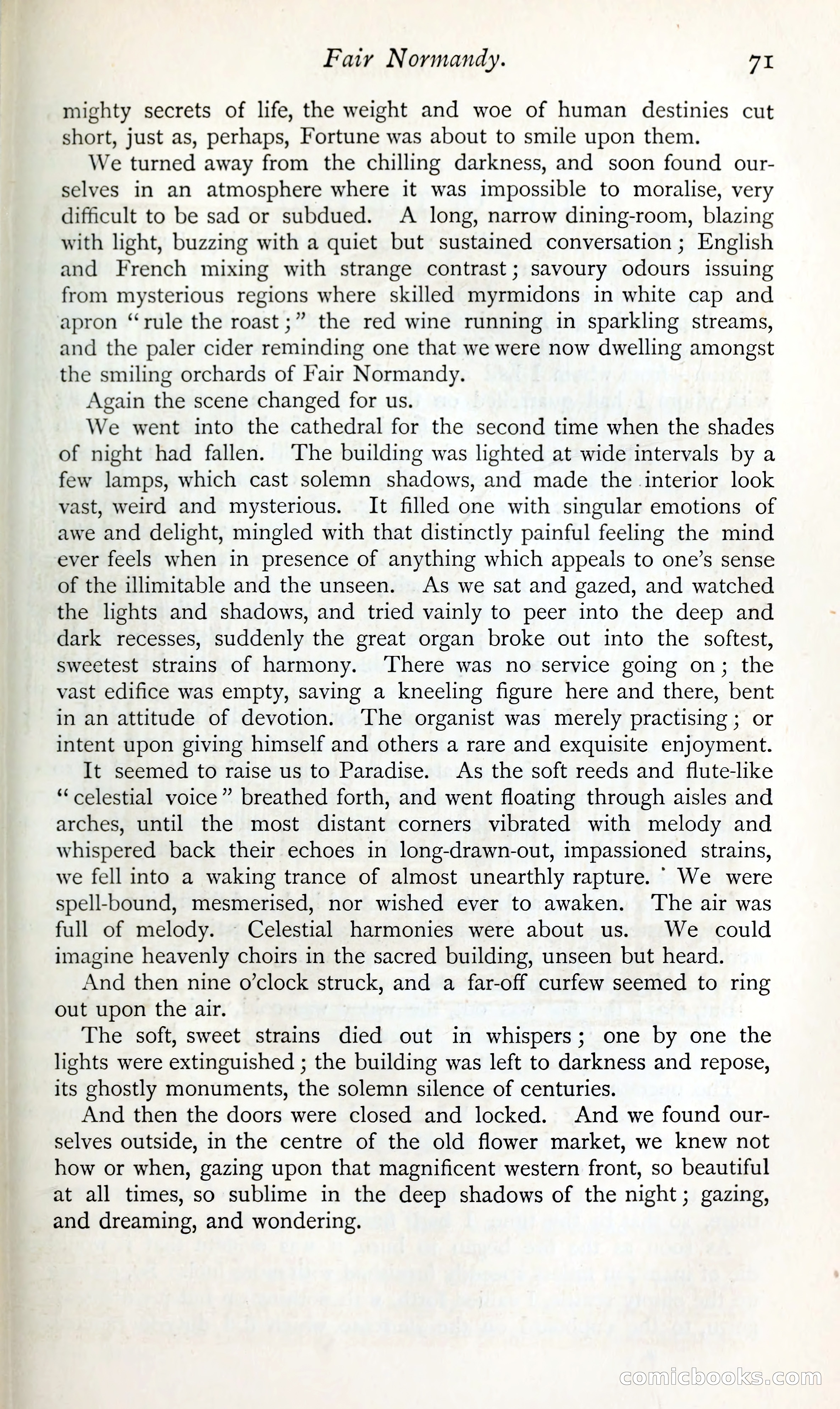
A restored page from Pulp Fiction, 1865. Page through the whole issue in the reader above.
📄 Transcribed text from this page (OCR, searchable)
Machine-transcribed from the original scan — historical spelling and the odd misread are preserved.
Fair Normandy. 7% mighty secrets of life, the weight and woe of human destinies cut short, just as, perhaps, Fortune was about to smile upon them. We turned away from the chilling darkness, and soon found our- selves in an atmosphere where it was impossible to moralise, very difficult to be sad or subdued. A long, narrow dining-room, blazing with light, buzzing with a quiet but sustained conversation ; English and French mixing with strange contrast; savoury odours issuing from mysterious regions where skilled myrmidons in white cap and apron “rule the roast ;” the red wine running in sparkling streams, and the paler cider reminding one that we were now dwelling amongst the smiling orchards of Fair Normandy. Again the scene changed for us. We went into the cathedral for the second time when the shades of night had fallen. ‘The building was lighted at wide intervals by a few lamps, which cast solemn shadows, and made the interior look vast, weird and mysterious. It filled one with singular emotions of awe and delight, mingled with that distinctly painful feeling the mind ever feels when in presence of anything which appeals to one’s sense of the illimitable and the unseen. As we sat and gazed, and watched the lights and shadows, and tried vainly to peer into the deep and dark recesses, suddenly the great organ broke out into the softest, sweetest strains of harmony. ‘There was no service going on; the vast edifice was empty, saving a kneeling figure here and there, bent in an attitude of devotion. ‘The organist was merely practising; or intent upon giving himself and others a rare and exquisite enjoyment. It seemed to raise us to Paradise. As the soft reeds and flute-like “celestial voice” breathed forth, and went floating through aisles and arches, until the most distant corners vibrated with melody and whispered back their echoes in long-drawn-out, impassioned strains, we fell into a waking trance of almost unearthly rapture. We were spell-bound, mesmerised, nor wished ever to awaken. ‘The air was full of melody. — Celestial harmonies were about us. We could imagine heavenly choirs in the sacred building, unseen but heard. And then nine o’clock struck, and a far-off curfew seemed to ring out upon the air. The soft, sweet strains died out in whispers; one by one the lights were extinguished ; the building was left to darkness and repose, its ghostly monuments, the solemn silence of centuries. And then the doors were closed and locked. And we found our- selves outside, in the centre of the old flower market, we knew not how or when, gazing upon that magnificent western front, so beautiful at all times, so sublime in the deep shadows of the night; gazing, and dreaming, and wondering. COMICOOoOkKS ) (©)