
Pulp Fiction, 1865 · page 84 of 399
The Argosy — page 84: what you’re looking at
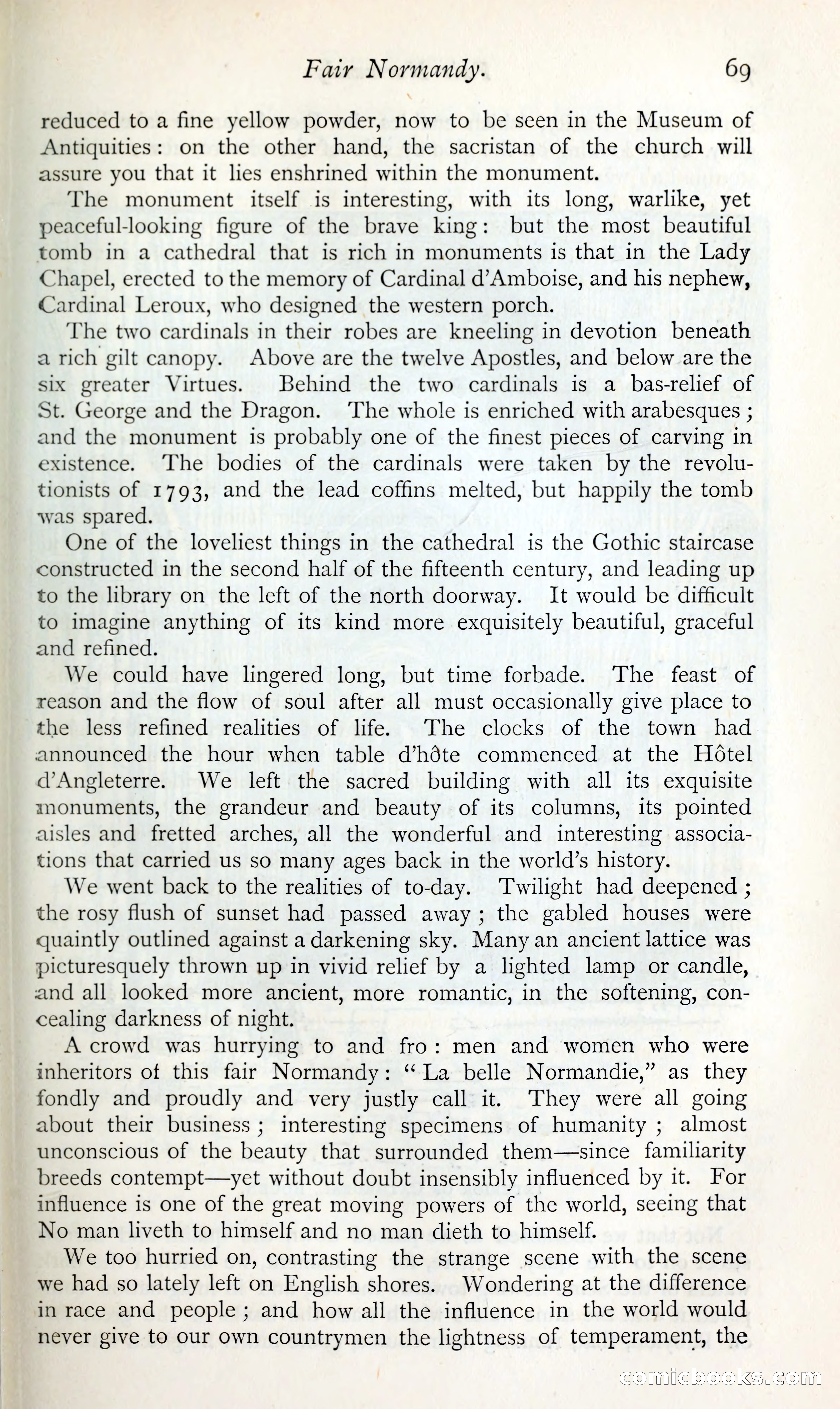
A restored page from Pulp Fiction, 1865. Page through the whole issue in the reader above.
📄 Transcribed text from this page (OCR, searchable)
Machine-transcribed from the original scan — historical spelling and the odd misread are preserved.
Far Normandy. 69 reduced to a fine yellow powder, now to be seen in the Museum of Antiquities: on the other hand, the sacristan of the church will assure you that it les enshrined within the monument. The monument itself is interesting, with its long, warlike, yet peaceful-looking figure of the brave king: but the most beautiful tomb in a cathedral that is rich in monuments is that in the Lady Chapel, erected to the memory of Cardinal d’Amboise, and his nephew, Cardinal Leroux, who designed the western porch. The two cardinals in their robes are kneeling in devotion beneath a rich gilt canopy. Above are the twelve Apostles, and below are the six greater Virtues. Behind the two cardinals is a bas-relief of St. George and the Dragon. ‘The whole is enriched with arabesques ; and the monument is probably one of the finest pieces of carving in existence. The bodies of the cardinals were taken by the revolu- tionists of 1793, and the lead coffins melted, but happily the tomb was spared. One of the loveliest things in the cathedral is the Gothic staircase constructed in the second half of the fifteenth century, and leading up to the library on the left of the north doorway. It would be difficult to imagine anything of its kind more exquisitely beautiful, graceful and refined. We could have lingered long, but time forbade. The feast of reason and the flow of soul after all must occasionally give place to the less refined realities of life. ‘The clocks of the town had announced the hour when table d’hdte commenced at the Hotel d’Angleterre. We left the sacred building with all its exquisite monuments, the grandeur and beauty of its columns, its pointed aisles and fretted arches, all the wonderful and interesting associa- tions that carried us so many ages back in the world’s history. We went back to the realities of to-day. Twilight had deepened ; the rosy flush of sunset had passed away; the gabled houses were quaintly outlined against a darkening sky. Many an ancient lattice was picturesquely thrown up in vivid relief by a lighted lamp or candle, and all looked more ancient, more romantic, in the softening, con- cealing darkness of night. A crowd was hurrying to and fro: men and women who were inheritors of this fair Normandy: ‘La belle Normandie,” as they fondly and proudly and very justly call it. They were all going about their business ; interesting specimens of humanity ; almost unconscious of the beauty that surrounded them—since familiarity breeds contempt—yet without doubt insensibly influenced by it. For influence is one of the great moving powers of the world, seeing that No man liveth to himself and no man dieth to himself. We too hurried on, contrasting the strange scene with the scene we had so lately left on English shores. Wondering at the difference in race and people; and how all the influence in the world would never give to our own countrymen the lightness of temperament, the GomilGaooks am