
Pulp Fiction, 1865 · page 69 of 399
The Argosy — page 69: what you’re looking at
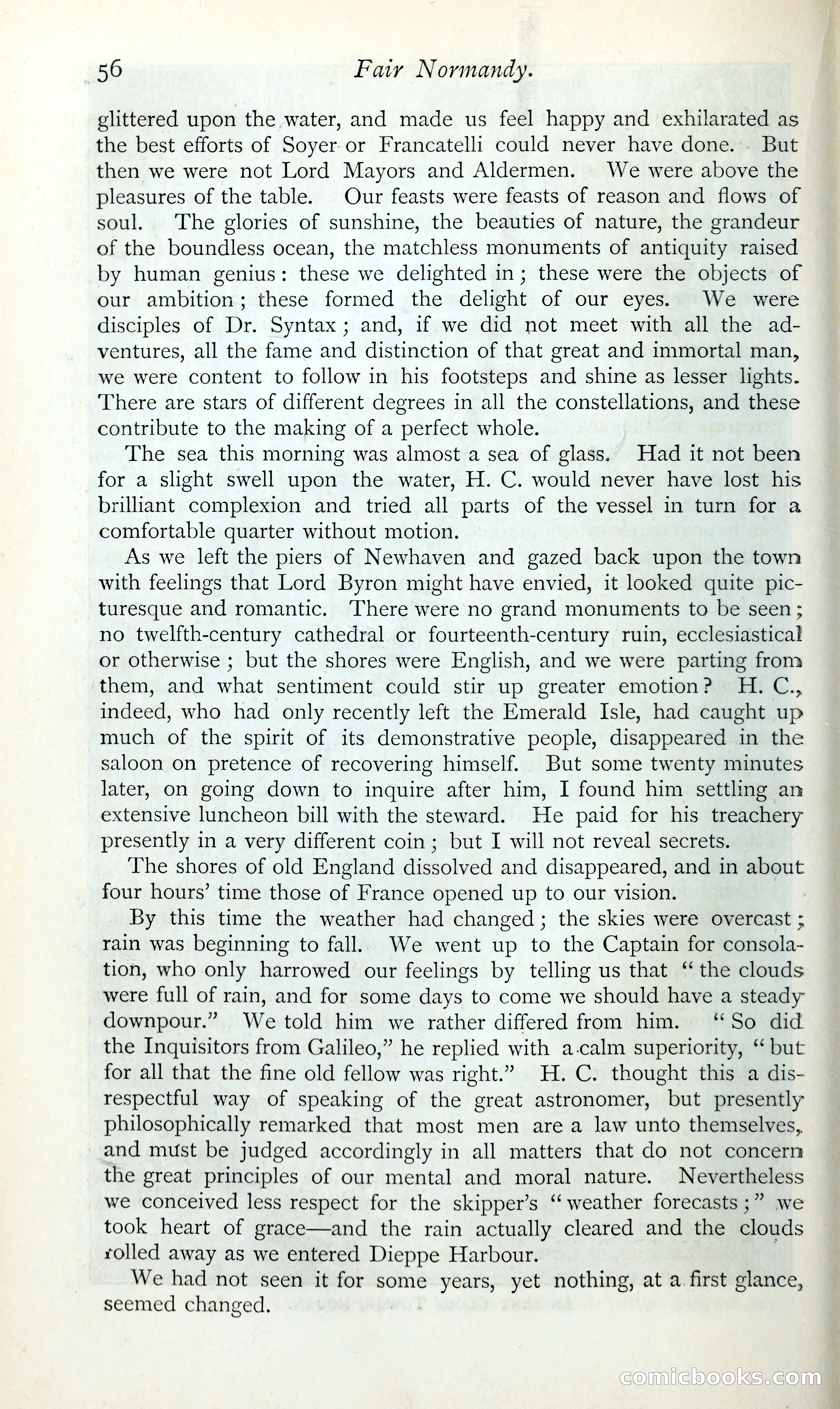
A restored page from Pulp Fiction, 1865. Page through the whole issue in the reader above.
📄 Transcribed text from this page (OCR, searchable)
Machine-transcribed from the original scan — historical spelling and the odd misread are preserved.
56 Far Normandy. glittered upon the water, and made us feel happy and exhilarated as the best efforts of Soyer or Francatelli could never have done. . But then we were not Lord Mayors and Aldermen. We were above the pleasures of the table. Our feasts were feasts of reason and flows of soul. The glories of sunshine, the beauties of nature, the grandeur of the boundless ocean, the matchless monuments of antiquity raised by human genius: these we delighted in; these were the objects of our ambition; these formed the delight of our eyes. We were disciples of Dr. Syntax; and, if we did not meet with all the ad- ventures, all the fame and distinction of that great and immortal man, we were content to follow in his footsteps and shine as lesser lights. There are stars of different degrees in all the constellations, and these contribute to the making of a perfect whole. The sea this morning was almost a sea of glass. Had it not been for a slight swell upon the water, H. C. would never have lost his briluant complexion and tried all parts of the vessel in turn for a comfortable quarter without motion. As we left the piers of Newhaven and gazed back upon the town with feelings that Lord Byron might have envied, it looked quite pic- turesque and romantic. There were no grand monuments to be seen; no twelfth-century cathedral or fourteenth-century ruin, ecclesiastical or otherwise ; but the shores were English, and we were parting from them, and what sentiment could stir up greater emotion? H. C., indeed, who had only recently left the Emerald Isle, had caught up much of the spirit of its demonstrative people, disappeared in the saloon on pretence of recovering himself. But some twenty minutes later, on going down to inquire after him, I found him settling an extensive luncheon bill with the steward. He paid for his treachery presently in a very different coin; but I will not reveal secrets. The shores of old England disbolved and disappeared, and in about four hours’ time those of France opened up to our vision. By this time the weather had changed; the skies were overcast ; rain was beginning to fall. We went up to the Captain for consola- tion, who only harrowed our feelings by telling us that ‘‘ the clouds were full of rain, and for some days to come we should have a steady downpour.” We told him we rather differed from him. ‘So did the Inquisitors from Galileo,” he replied with a-calm superiority, ‘* but for all that the fine old fellow was right.” H.C. thought this a dis- respectful way of speaking of the great astronomer, but presently philosophically remarked that most men are a law unto themselves, and must be judged accordingly in all matters that do not concern the great principles of our mental and moral nature. Nevertheless we conceived less respect for the skipper’s ‘“‘ weather forecasts ;” we took heart of grace—and the rain actually cleared and the clouds rolled away as we entered Dieppe Harbour. | We had not seen it for some years, yet nothing, at a first glance, seemed changed. ECONMNICLOOOKS . EOnAl l am \