
Pulp Fiction, 1865 · page 350 of 399
The Argosy — page 350: what you’re looking at
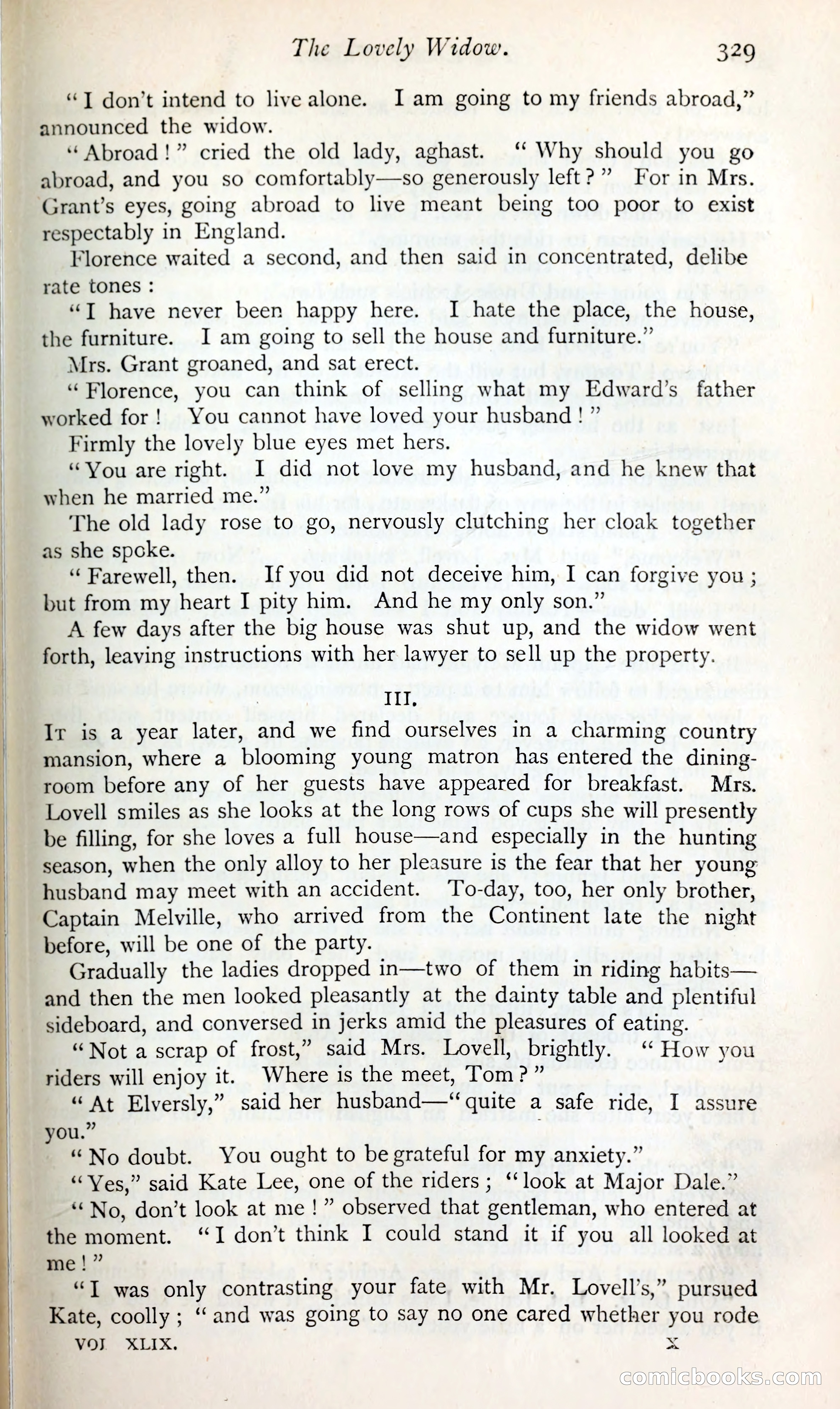
A restored page from Pulp Fiction, 1865. Page through the whole issue in the reader above.
📄 Transcribed text from this page (OCR, searchable)
Machine-transcribed from the original scan — historical spelling and the odd misread are preserved.
The Lovely Widow. 329 “]T don’t intend to livealone. Iam going to my friends abroad,” announced the widow. “Abroad!” cried the old lady, aghast. ‘‘ Why should you go abroad, and you so comfortably—so generously left?” For in Mrs. Grant’s eyes, going abroad to live meant being too poor to exist respectably in England. Florence waited a second, and then said in concentrated, delibe rate tones : “T have never been happy here. I hate the place, the house, the furniture. I am going to sell the house and furniture.” Mrs. Grant groaned, and sat erect. “Florence, you can think of selling what my Edward’s Sethe worked for! You cannot have loved your husband! ” Firmly the lovely blue eyes met hers. “Vou are right. I did not love my husband, and he knew that when he married me.” The old lady rose to go, nervously clutching her cloak together as she spoke. “Farewell, then. Ifyou did not deceive him, I can forgive you ; but from my heart I pity him. And he my only son.” A few days after the big house was shut up, and the widow went forth, leaving instructions with her lawyer to sell up the property. IIT, Ir is a year later, and we find ourselves in a charming country mansion, where a blooming young matron has entered the dining- room before any of her guests have appeared for breakfast. Mrs. Lovell smiles as she looks at the long rows of cups she will presently be filling, for she loves a full house—and especially in the hunting season, when the only alloy to her pleasure is the fear that her young husband may meet with an accident. To-day, too, her only brother, Captain Melville, who arrived from the Continent late the night before, will be one of the party. Gradually the ladies dropped in—two of them in riding habits— and then the men looked pleasantly at the dainty table and plentiful sideboard, and conversed in jerks amid the pleasures of eating. “Not a scrap of frost,” said Mrs. Lovell, brightly. ‘“ How you riders will enjoy it. Where is the meet, Tom?” “ At Elversly,” said her husband—“‘quite a safe ride, I assure ou.” a No doubt. You ought to be grateful for my anxiety.” “Ves,” said Kate Lee, one of the riders; ‘look at Major Dale.” “No, don’t look at me!” observed that gentleman, who entered at the moment. “I don’t think I could stand it if you all looked at me !” “T was only contrasting your fate with Mr. Lovell’s,” pursued Kate, coolly ; “‘and was going to say no one cared whether you rode VOT. XLIX. x Gomiilcaooks im