
Pulp Fiction, 1865 · page 329 of 399
The Argosy — page 329: what you’re looking at
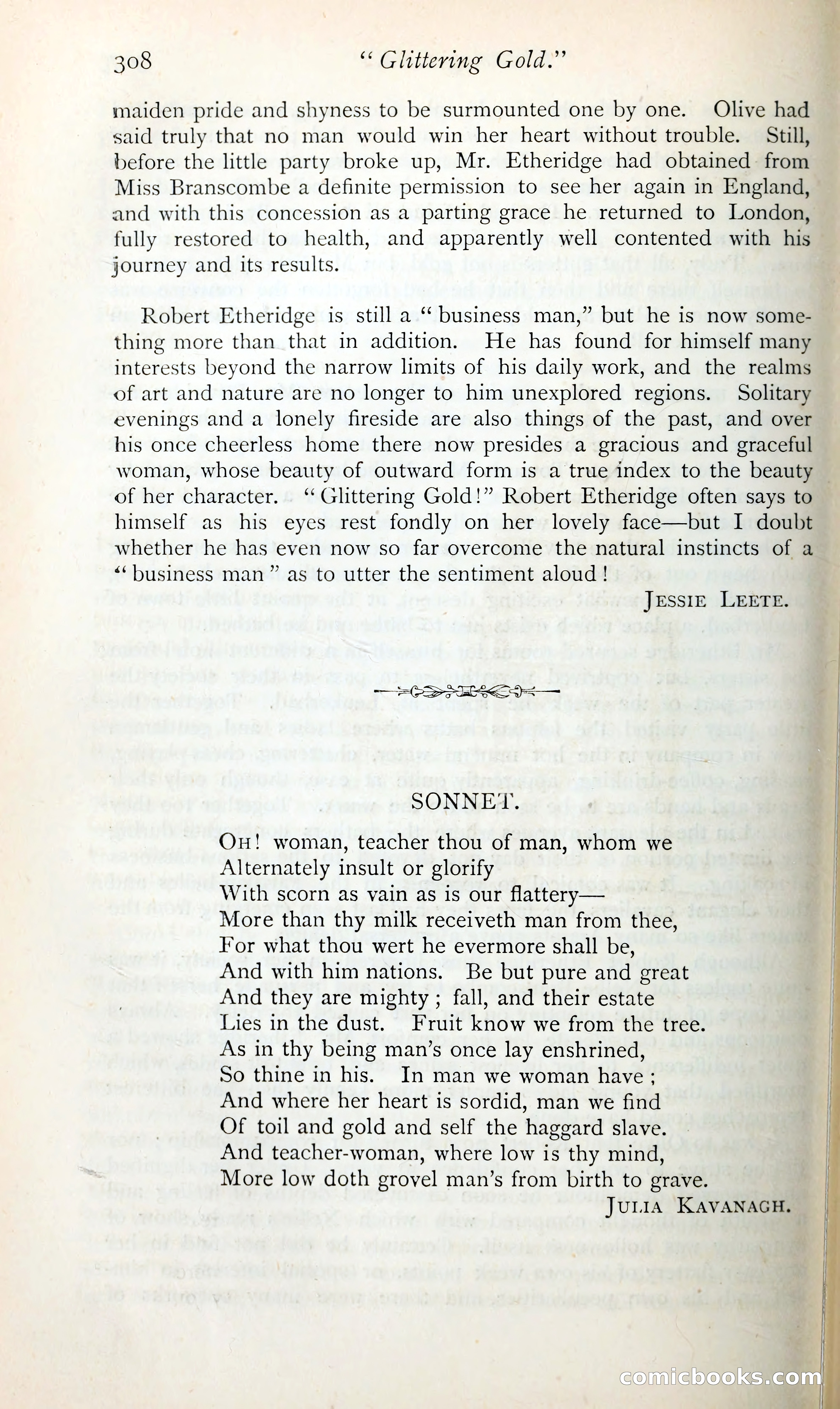
A restored page from Pulp Fiction, 1865. Page through the whole issue in the reader above.
📄 Transcribed text from this page (OCR, searchable)
Machine-transcribed from the original scan — historical spelling and the odd misread are preserved.
308 “Glittering Gold.” maiden pride and shyness to be surmounted one by one. Olive had said truly that no man would win her heart without trouble. Still, before the little party broke up, Mr. Etheridge had obtained from Miss Branscombe a definite permission to see her again in England, and with this concession as a parting grace he returned to London, fully restored to health, and apparently well contented with his journey and its results. Robert Etheridge is still a “ business man,” but he is now some- thing more than that in addition. He has found for himself many interests beyond the narrow limits of his daily work, and the realms of art and nature are no longer to him unexplored regions. Solitary evenings and a lonely fireside are also things of the past, and over his once cheerless home there now presides a gracious and graceful woman, whose beauty of outward form is a true index to the beauty of her character. ‘‘ Glittering Gold!” Robert Etheridge often says to himself as his eyes rest fondly on her lovely face—but I doubt whether he has even now so far overcome the natural instincts of a ‘“business man” as to utter the sentiment aloud ! Jessig LEETE. SONNET. Ou! woman, teacher thou of man, whom we Alternately insult or glorify With scorn as vain as is our flattery— More than thy milk receiveth man from thee, For what thou wert he evermore shall be, And with him nations. Be but pure and great And they are mighty ; fall, and their estate Lies in the dust. Fruit know we from the tree. As in thy being man’s once lay enshrined, So thine in his. In man we woman have; And where her heart is sordid, man we find Of toil and gold and self the haggard slave. And teacher-woman, where low is thy mind, More low doth grovel man’s from birth to grave. Julia KAVANAGH. Eomicbooks.co