
Pulp Fiction, 1865 · page 273 of 399
The Argosy — page 273: what you’re looking at
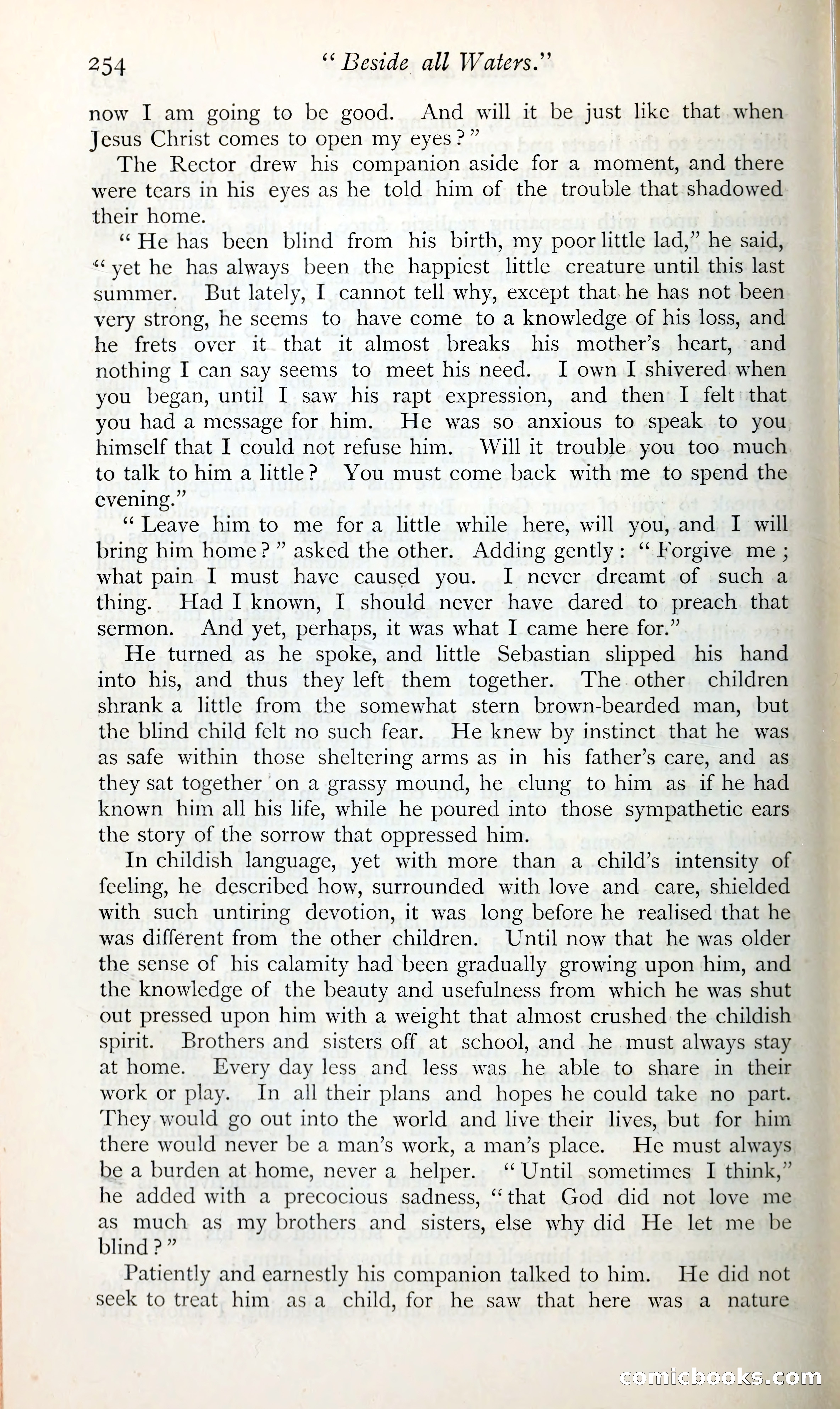
A restored page from Pulp Fiction, 1865. Page through the whole issue in the reader above.
📄 Transcribed text from this page (OCR, searchable)
Machine-transcribed from the original scan — historical spelling and the odd misread are preserved.
See = nn eal erie SS — — 254 ‘““ Beside all Waters.” now I am going to be good. And will it be just like that when Jesus Christ comes to open my eyes?” The Rector drew his companion aside for a moment, and there were tears in his eyes as he told him of the trouble that shadowed their home. | ‘“ He has been blind from his birth, my poor little lad,” he said, “vet he has always been the happiest little creature until this last summer. But lately, I cannot tell why, except that. he has not been very strong, he seems to have come to a knowledge of his loss, and he frets over it that it almost breaks his mother’s heart, and nothing I can say seems to meet his need. I own I shivered when you began, until I saw his rapt expression, and then I felt that you had a message for him. He was so anxious to speak to you himself that I could not refuse him. Will it trouble you too much to talk to him a little? You must come back with me to spend the evening.” “Leave him to me fora little while here, will you, and I will bring him home?” asked the other. Adding gently: “ Forgive me; what pain I must have caused you. I never dreamt of such a thing. Had I known, I should never have dared to preach that sermon. And yet, perhaps, it was what I came here for.” He turned as he spoke, and little Sebastian slipped his hand into his, and thus they left them together. The other children shrank a little from the somewhat stern brown-bearded man, but the blind child felt no such fear. He knew by instinct that he was as safe within those sheltering arms as in his father’s care, and as they sat together on a grassy mound, he clung to him as if he had known him all his life, while he poured into those sympathetic ears the story of the sorrow that oppressed him. In childish language, yet with more than a child’s intensity of feeling, he described how, surrounded with love and care, shielded with such untiring devotion, it was long before he realised that he was different from the other children. Until now that he was older the sense of his calamity had been gradually growing upon him, and the knowledge of the beauty and usefulness from which he was shut out pressed upon him with a weight that almost crushed the childish spirit. Brothers and sisters off at school, and he must always stay at home. Every day less and less was he able to share in their work or play. In all their plans and hopes he could take no part. They would go out into the world and live their lives, but for him there would never be a man’s work, a man’s place. He must always be a burden at home, never a helper. ‘“ Until sometimes I think,” he added with a precocious sadness, “‘that God did not love me as much as my brothers and sisters, else why did He let me be blind ?” Patiently and earnestly his companion talked to him. He did not seek to treat him asa child, for he saw that here was a nature GEomichbooks.co