
Pulp Fiction, 1865 · page 244 of 399
The Argosy — page 244: what you’re looking at
A restored page from Pulp Fiction, 1865. Page through the whole issue in the reader above.
📄 Transcribed text from this page (OCR, searchable)
Machine-transcribed from the original scan — historical spelling and the odd misread are preserved.
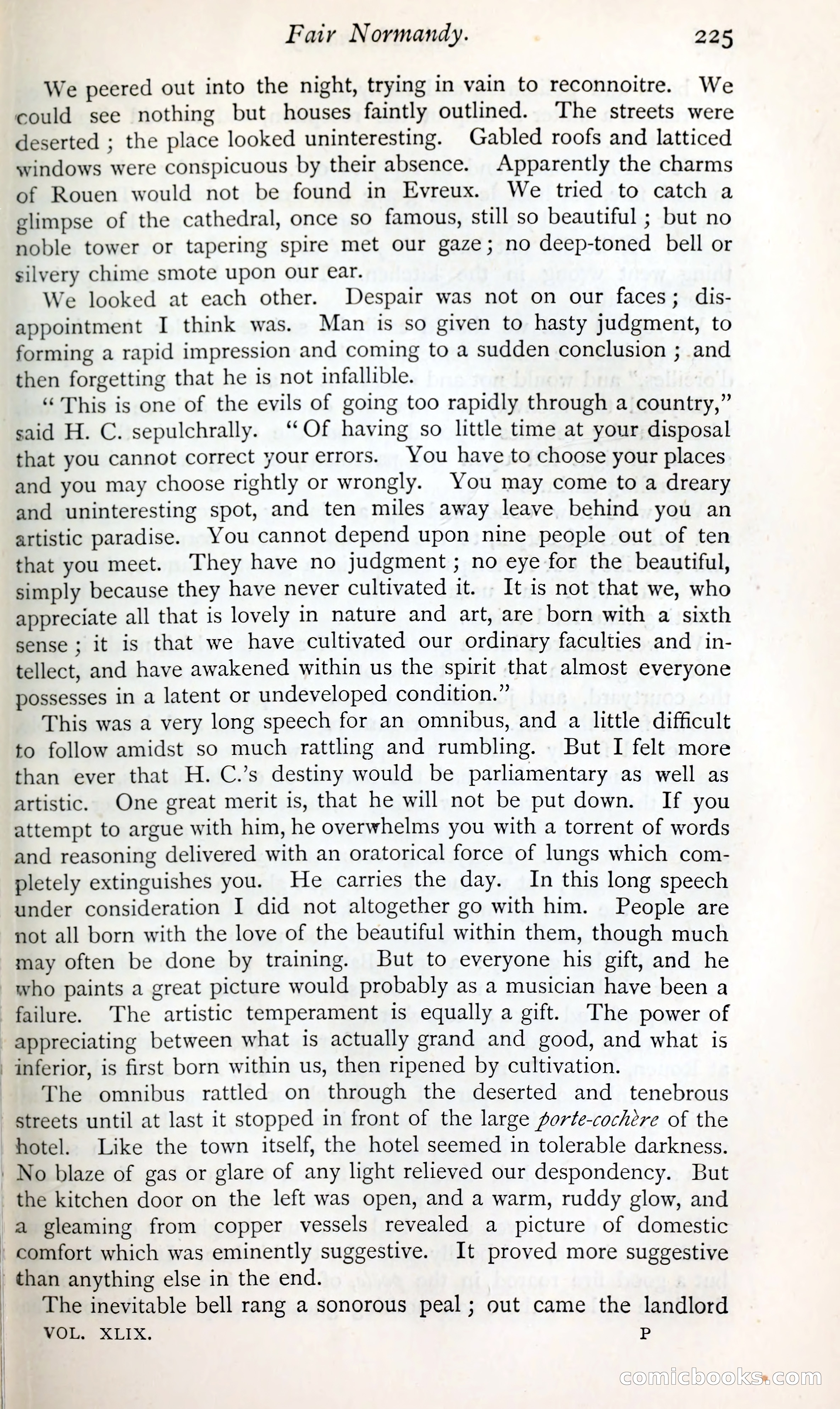
Fair Normandy. 225 We peered out into the night, trying in vain to reconnoitre. We could see nothing but houses faintly outlined. The streets were deserted ; the place looked uninteresting. Gabled roofs and latticed windows were conspicuous by their absence. Apparently the charms of Rouen would not be found in Evreux. We tried to catch a glimpse of the cathedral, once so famous, still so beautiful ; but no noble tower or tapering spire met our gaze; no deep-toned bell or silvery chime smote upon our ear. We looked at each other. Despair was not on our faces; dis- appointment I think was. Man is so given to hasty judgment, to forming a rapid impression and coming to a sudden conclusion ; and then forgetting that he is not infallible. “This is one of the evils of going too rapidly through a country,” said H. C. sepulchrally. ‘Of having so little time at your disposal that you cannot correct your errors. You have to choose your places and you may choose rightly or wrongly. You may come to a dreary and uninteresting spot, and ten miles away leave behind you an artistic paradise. You cannot depend upon nine people out of ten that you meet. They have no judgment; no eye for the beautiful, simply because they have never cultivated it. It is not that we, who appreciate all that is lovely in nature and art, are born with a sixth sense ; it is that we have cultivated our ordinary faculties and in- tellect, and have awakened within us the spirit that almost everyone possesses in a latent or undeveloped condition.” This was a very long speech for an omnibus, and a little difficult to follow amidst so much rattling and rumbling. But I felt more than ever that H. C.’s destiny would be parliamentary as well as artistic. One great merit is, that he will not be put down. If you attempt to argue with him, he overwhelms you with a torrent of words and reasoning delivered with an oratorical force of lungs which com- pletely extinguishes you. He carries the day. In this long speech under consideration I did not altogether go with him. People are not all born with the love of the beautiful within them, though much may often be done by training. But to everyone his gift, and he who paints a great picture would probably as a musician have been a failure. The artistic temperament is equally a gift. The power of appreciating between what is actually grand and good, and what is inferior, is first born within us, then ripened by cultivation. The omnibus rattled on through the deserted and tenebrous streets until at last it stopped in front of the large porte-cochére of the hotel. Like the town itself, the hotel seemed in tolerable darkness. No blaze of gas or glare of any light relieved our despondency. But the kitchen door on the left was open, and a warm, ruddy glow, and a gleaming from copper vessels revealed a picture of domestic comfort which was eminently suggestive. It proved more suggestive than anything else in the end. The inevitable bell rang a sonorous peal; out came the landlord VOL. XLIX. P GOMiGdoo Se (S©) im