
Pulp Fiction, 1865 · page 227 of 399
The Argosy — page 227: what you’re looking at
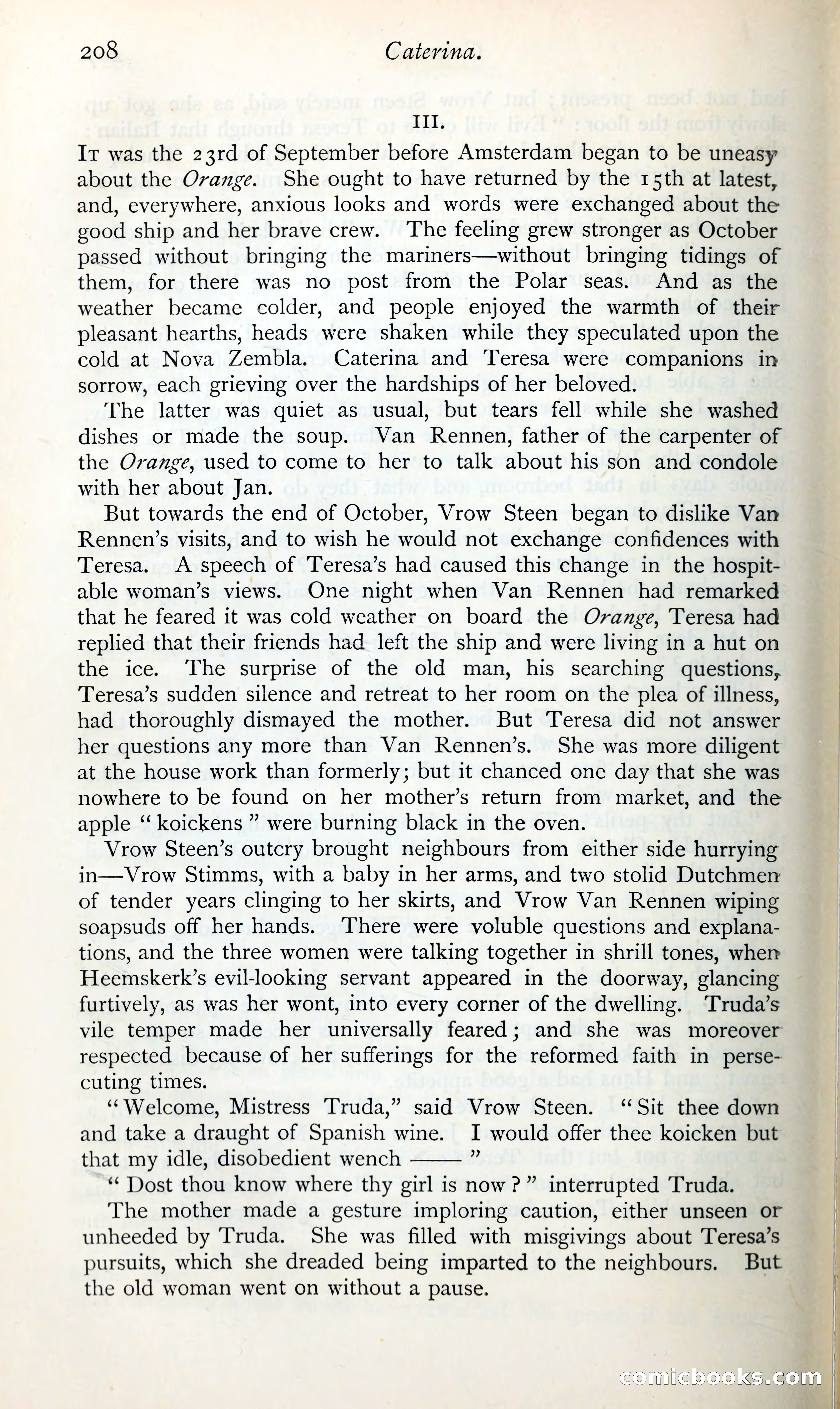
A restored page from Pulp Fiction, 1865. Page through the whole issue in the reader above.
📄 Transcribed text from this page (OCR, searchable)
Machine-transcribed from the original scan — historical spelling and the odd misread are preserved.
208 Caterina. Ifl. It was the 23rd of September before Amsterdam began to be uneasy about the Orange. She ought to have returned by the 15th at latest, and, everywhere, anxious looks and words were exchanged about the good ship and her brave crew. ‘The feeling grew stronger as October passed without bringing the mariners—without bringing tidings of them, for there was no post from the Polar seas. And as the weather became colder, and people enjoyed the warmth of their pleasant hearths, heads were shaken while they speculated upon the cold at Nova Zembla. Caterina and Teresa were companions in sorrow, each grieving over the hardships of her beloved. The latter was quiet as usual, but tears fell while she washed dishes or made the soup. Van Rennen, father of the carpenter of the Orange, used to come to her to talk about his son and condole with her about Jan. But towards the end of October, Vrow Steen began to dislike Van Rennen’s visits, and to wish he would not exchange confidences with Teresa. A speech of Teresa’s had caused this change in the hospit- able woman’s views. One night when Van Rennen had remarked that he feared it was cold weather on board the Orange, Teresa had replied that their friends had left the ship and were living in a hut on the ice. The surprise of the old man, his searching questions, Teresa’s sudden silence and retreat to her room on the plea of illness, had thoroughly dismayed the mother. But Teresa did not answer her questions any more than Van Rennen’s. She was more diligent at the house work than formerly; but it chanced one day that she was nowhere to be found on her mother’s return from market, and the apple ‘‘ koickens ” were burning black in the oven. Vrow Steen’s outcry brought neighbours from either side hurrying in—Vrow Stimms, with a baby in her arms, and two stolid Dutchmen of tender years clinging to her skirts, and Vrow Van Rennen wiping soapsuds off her hands. ‘There were voluble questions and explana- tions, and the three women were talking together in shrill tones, when Heemskerk’s evil-looking servant appeared in the doorway, glancing furtively, as was her wont, into every corner of the dwelling. Truda’s vile temper made her universally feared; and she was moreover respected because of her sufferings for the reformed faith in perse- cuting times. ‘Welcome, Mistress Truda,” said Vrow Steen. ‘Sit thee down and take a draught of Spanish wine. I would offer thee koicken but that my idle, disobedient wench B ‘“ Dost thou know where thy girl is now?” interrupted Truda. The mother made a gesture imploring caution, either unseen or unheeded by Truda. She was filled with misgivings about Teresa’s pursuits, which she dreaded being imparted to the neighbours. But the old woman went on without a pause. €om | a \ ebooks.com |