
Pulp Fiction, 1865 · page 93 of 399
The Argosy — page 93: what you’re looking at
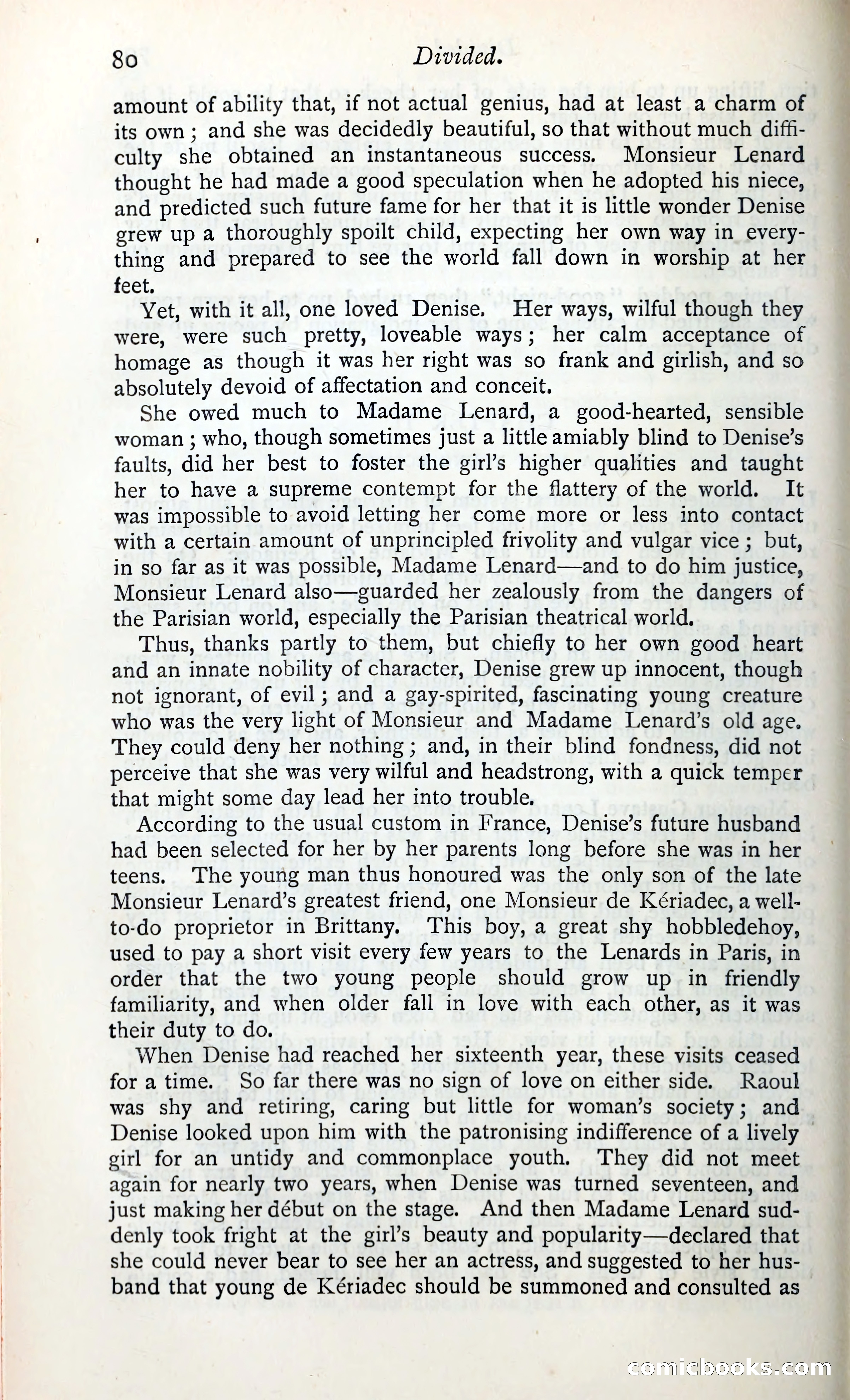
A restored page from Pulp Fiction, 1865. Page through the whole issue in the reader above.
📄 Transcribed text from this page (OCR, searchable)
Machine-transcribed from the original scan — historical spelling and the odd misread are preserved.
80 Divided. amount of ability that, if not actual genius, had at least a charm of its own; and she was decidedly beautiful, so that without much diff- culty she obtained an instantaneous success. Monsieur Lenard thought he had made a good speculation when he adopted his niece, and predicted such future fame for her that it is little wonder Denise grew up a thoroughly spoilt child, expecting her own way in every- thing and prepared to see the world fall down in worship at her feet. Yet, with it all, one loved Denise. Her ways, wilful though they were, were such pretty, loveable ways; her calm acceptance of homage as though it was her right was so frank and girlish, and so absolutely devoid of affectation and conceit. She owed much to Madame Lenard, a good-hearted, sensible woman ; who, though sometimes just a little amiably blind to Denise’s faults, did her best to foster the girl’s higher qualities and taught her to have a supreme contempt for the flattery of the world. It was impossible to avoid letting her come more or less into contact with a certain amount of unprincipled frivolity and vulgar vice ; but, in so far as it was possible, Madame Lenard—and to do him justice, Monsieur Lenard also—guarded her zealously from the dangers of the Parisian world, especially the Parisian theatrical world. Thus, thanks partly to them, but chiefly to her own good heart and an innate nobility of character, Denise grew up innocent, though not ignorant, of evil; and a gay-spirited, fascinating young creature who was the very light of Monsieur and Madame Lenard’s old age. They could deny her nothing ; and, in their blind fondness, did not perceive that she was very wilful and headstrong, with a quick temper that might some day lead her into trouble. According to the usual custom in France, Denise’s future husband had been selected for her by her parents long before she was in her teens. ‘The young man thus honoured was the only son of the late Monsieur Lenard’s greatest friend, one Monsieur de Kériadec, a well- to-do proprietor in Brittany. This boy, a great shy hobbledehoy, used to pay a short visit every few years to the Lenards in Paris, in order that the two young people should grow up in friendly familiarity, and when older fall in love with each other, as it was their duty to do. When Denise had reached her sixteenth year, these visits ceased fora time. So far there was no sign of love on either side. Raoul was shy and retiring, caring but little for woman’s society; and Denise looked upon him with the patronising indifference of a lively — girl for an untidy and commonplace youth. They did not meet again for nearly two years, when Denise was turned seventeen, and just making her début on the stage. And then Madame Lenard sud- denly took fright at the girl’s beauty and popularity—declared that she could never bear to see her an actress, and suggested to her hus- band that young de Kériadec should be summoned and consulted as CONNIE OO KSA)