
Pulp Fiction, 1865 · page 90 of 399
The Argosy — page 90: what you’re looking at
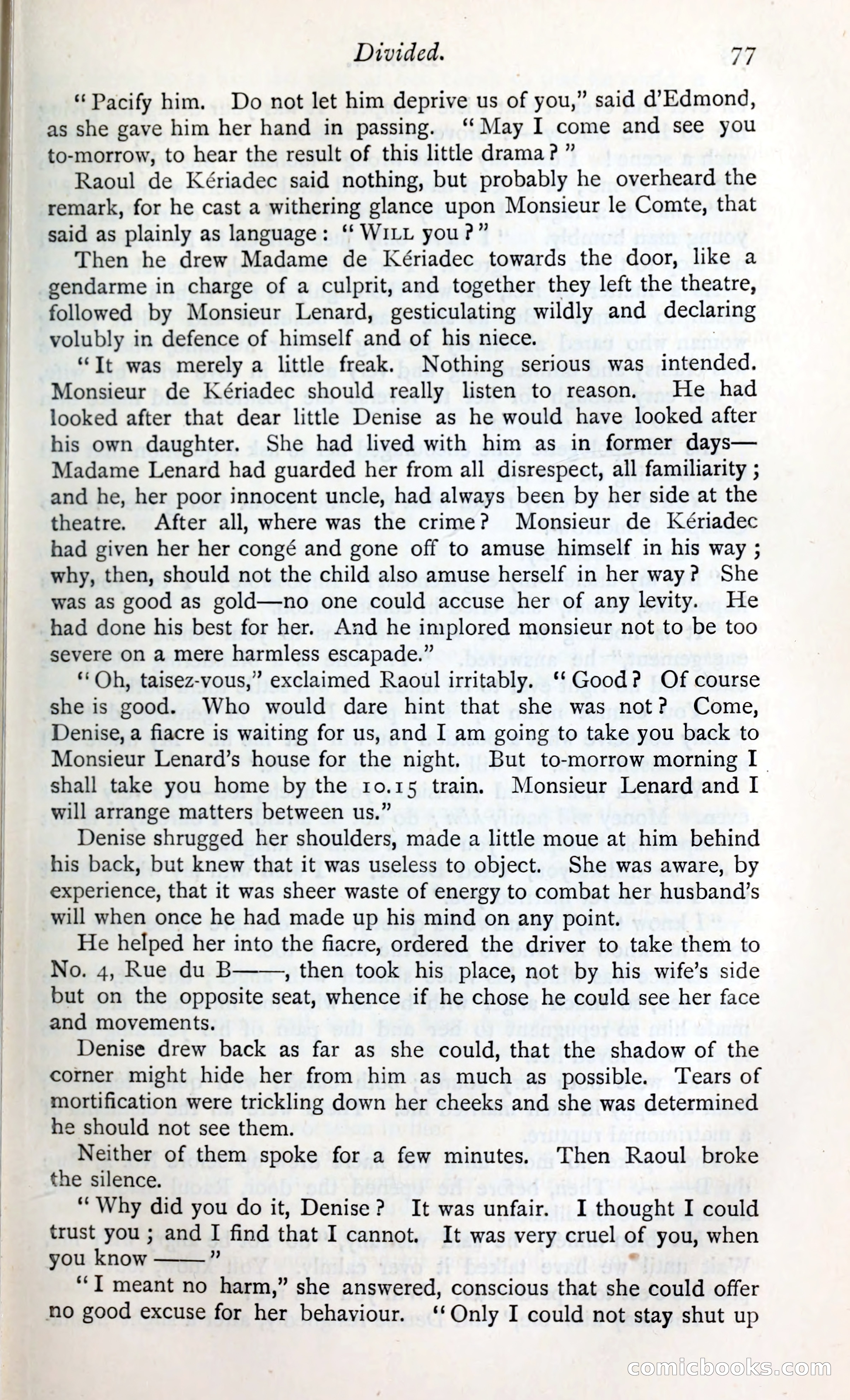
A restored page from Pulp Fiction, 1865. Page through the whole issue in the reader above.
📄 Transcribed text from this page (OCR, searchable)
Machine-transcribed from the original scan — historical spelling and the odd misread are preserved.
Divided. 77 ‘“Pacify him. Do not let him deprive us of you,” said d’Edmond, as she gave him her hand in passing. ‘‘ May I come and see you to-morrow, to hear the result of this little drama? ” Raoul de Kériadec said nothing, but probably he overheard the remark, for he cast a withering glance upon Monsieur le Comte, that said as plainly as language: ‘‘ WILL you?” Then he drew Madame de Kériadec towards the door, like a gendarme in charge of a culprit, and together they left the theatre, followed by Monsieur Lenard, gesticulating wildly and declaring volubly in defence of himself and of his niece. “Tt was merely a little freak. Nothing serious was intended. Monsieur de Kériadec should really listen to reason. He had looked after that dear little Denise as he would have looked after his own daughter. She had lived with him as in former days— Madame Lenard had guarded her from all disrespect, all familiarity ; and he, her poor innocent uncle, had always been by her side at the theatre. After all, where was the crime? Monsieur de Kériadec had given her her congé and gone off to amuse himself in his way ; why, then, should not the child also amuse herself in her way? She was as good as gold—no one could accuse her of any levity. He had done his best for her. And he implored monsieur not to be too severe on a mere harmless escapade.” ‘Oh, taisez-vous,” exclaimed Raoul irritably. ‘‘Good? Of course she is good. Who would dare hint that she was note? Come, Denise, a fiacre is waiting for us, and I am going to take you back to Monsieur Lenard’s house for the night. But to-morrow morning I shall take you home by the 10.15 train. Monsieur Lenard and I will arrange matters between us.” Denise shrugged her shoulders, made a little moue at him behind his back, but knew that it was useless to object. She was aware, by experience, that it was sheer waste of energy to combat her husband’s will when once he had made up his mind on any point. He helped her into the fiacre, ordered the driver to take them to No. 4, Rue du B , then took his place, not by his wife’s side but on the opposite seat, whence if he chose he could see her face and movements. Denise drew back as far as she could, that the shadow of the corner might hide her from him as much as possible. ‘Tears of mortification were trickling down her cheeks and she was determined he should not see them. Neither of them spoke for a few minutes. Then Raoul broke the silence. “Why did you do it, Denise? It was unfair. I thought I could trust you ; and I find that I cannot. It was very cruel of you, when you know * ' ‘J meant no harm,” she answered, conscious that she could offer no good excuse for her behaviour. ‘Only I could not stay shut up EOMIGIOOKS (SO) im