
Pulp Fiction, 1865 · page 381 of 399
The Argosy — page 381: what you’re looking at
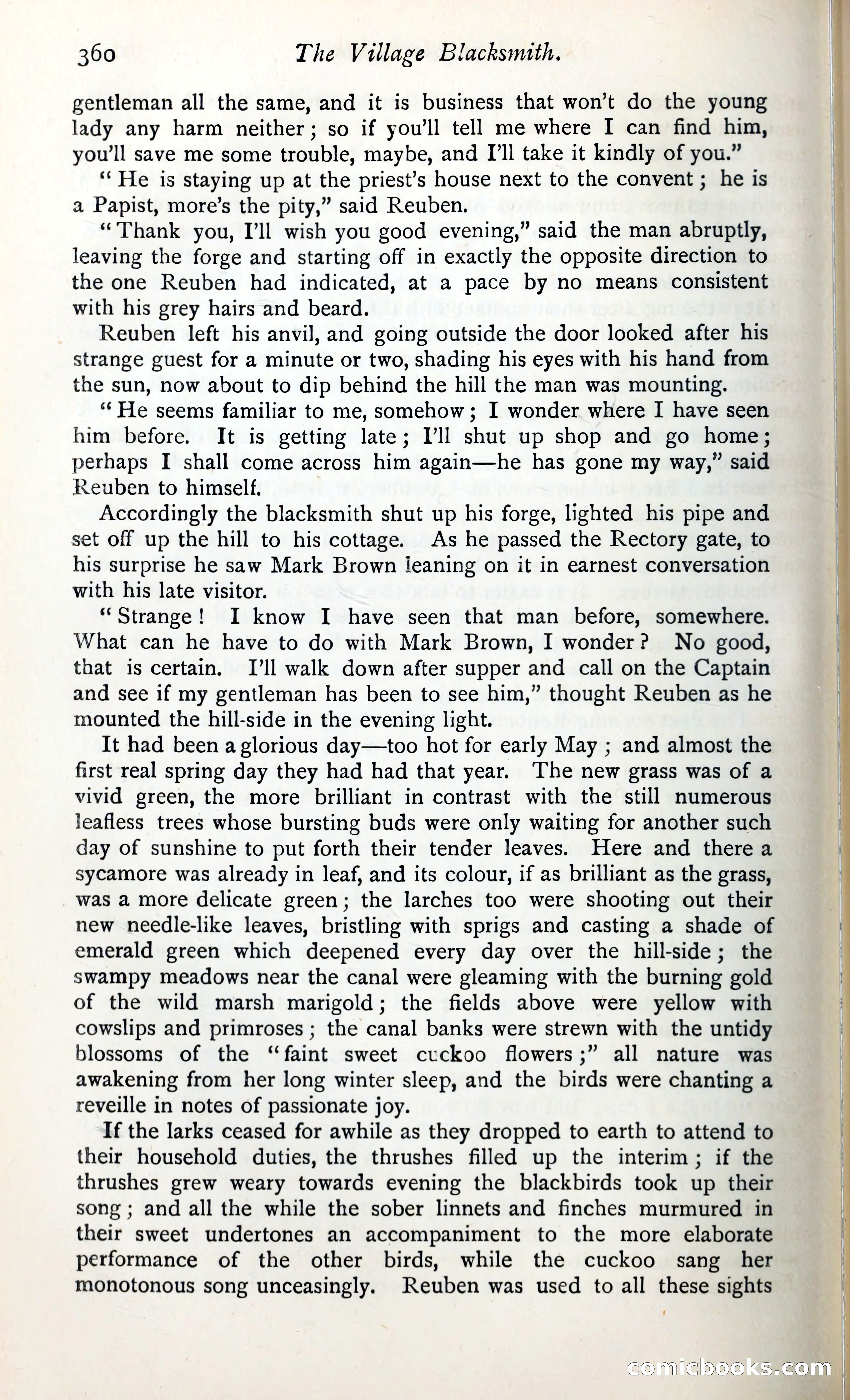
A restored page from Pulp Fiction, 1865. Page through the whole issue in the reader above.
📄 Transcribed text from this page (OCR, searchable)
Machine-transcribed from the original scan — historical spelling and the odd misread are preserved.
360 The Village Blacksmith. gentleman all the same, and it is business that won’t do the young lady any harm neither; so if you'll tell me where I can find him, you'll save me some trouble, maybe, and I'll take it kindly of you.” ‘He is staying up at the priest’s house next to the convent ; he is a Papist, more’s the pity,” said Reuben. “Thank you, I’ll wish you good evening,” said the man abruptly, leaving the forge and starting off in exactly the opposite direction to the one Reuben had indicated, at a pace by no means consistent with his grey hairs and beard. Reuben left his anvil, and going outside the door looked after his strange guest for a minute or two, shading his eyes with his hand from the sun, now about to dip behind the hill the man was mounting. ‘He seems familiar to me, somehow; I wonder where I have seen him before. It is getting late; Ill shut up shop and go home; perhaps I shall come across him again—he has gone my way,” said Reuben to himself. Accordingly the blacksmith shut up his forge, hghted his pipe and set off up the hill to his cottage. As he passed the Rectory gate, to his surprise he saw Mark Brown ieaning on it in earnest conversation with his late visitor. “Strange! I know I have seen that man before, somewhere. What can he have to do with Mark Brown, I wonder? No good, that is certain. I'll walk down after supper and call on the Captain and see if my gentleman has been to see him,” thought Reuben as he mounted the hill-side in the evening light. It had been a glorious day—too hot for early May ; and almost the first real spring day they had had that year. ‘The new grass was of a vivid green, the more brilliant in contrast with the still numerous leafless trees whose bursting buds were only waiting for another such day of sunshine to put forth their tender leaves. Here and there a sycamore was already in leaf, and its colour, if as brilliant as the grass, was a more delicate green; the larches too were shooting out their new needle-like leaves, bristling with sprigs and casting a shade of emerald green which deepened every day over the hill-side; the swampy meadows near the canal were gleaming with the burning gold of the wild marsh marigold; the fields above were yellow with cowslips and primroses ; the canal banks were strewn with the untidy blossoms of the “faint sweet cuckoo flowers ;” all nature was awakening from her long winter sleep, and the birds were chanting a reveille in notes of passionate joy. If the larks ceased for awhile as they dropped to earth to attend to their household duties, the thrushes filled up the interim; if the thrushes grew weary towards evening the blackbirds took up their song ; and all the while the sober linnets and finches murmured in their sweet undertones an accompaniment to the more elaborate performance of the other birds, while the cuckoo sang her monotonous song unceasingly. Reuben was used to all these sights Gomicdooks