
Pulp Fiction, 1865 · page 32 of 399
The Argosy — page 32: what you’re looking at
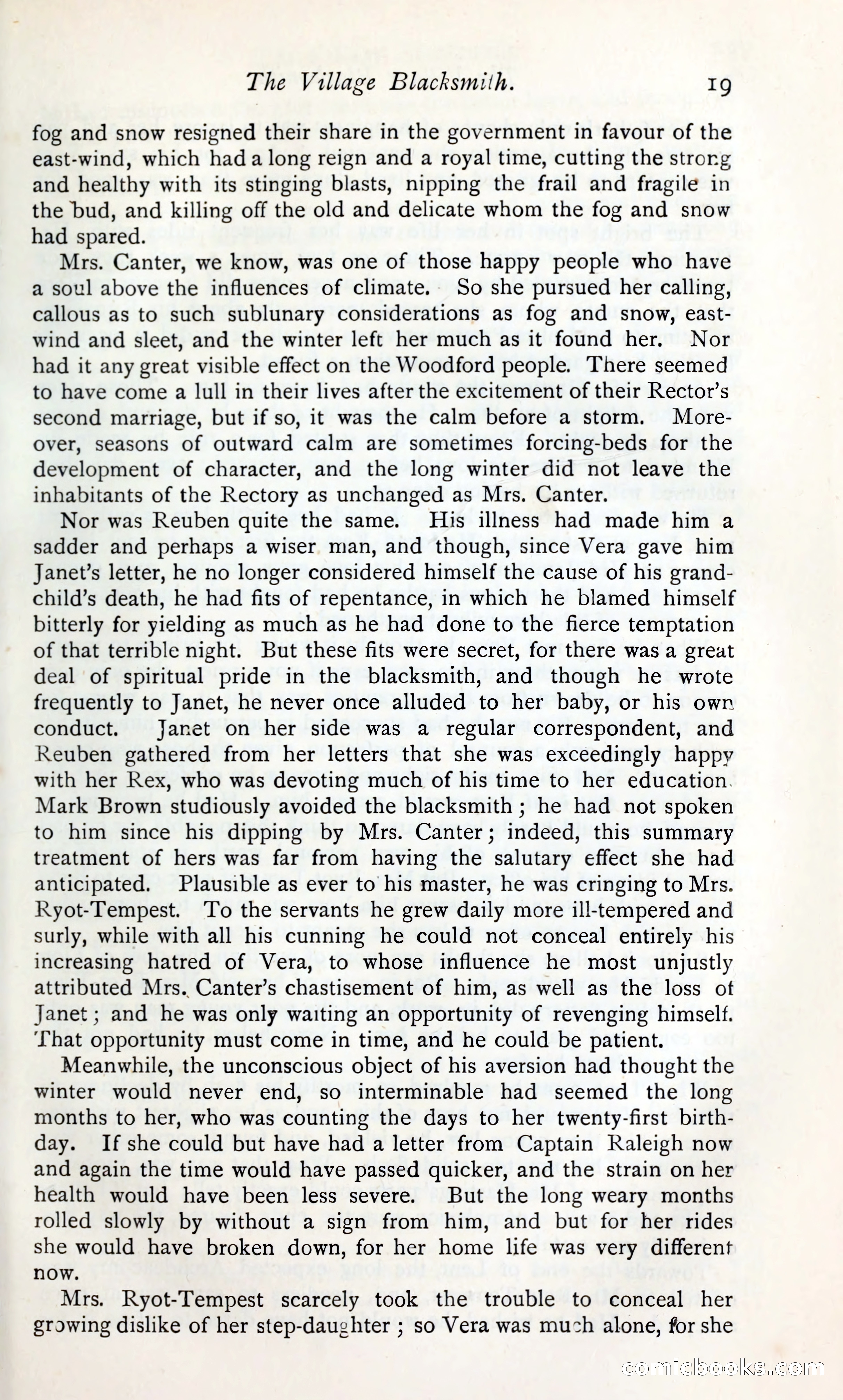
A restored page from Pulp Fiction, 1865. Page through the whole issue in the reader above.
📄 Transcribed text from this page (OCR, searchable)
Machine-transcribed from the original scan — historical spelling and the odd misread are preserved.
The Village Blacksmith. 1g fog and snow resigned their share in the government in favour of the east-wind, which hada long reign and a royal time, cutting the strong and healthy with its stinging blasts, nipping the frail and fragile in the bud, and killing off the old and delicate whom the fog and snow had spared. Mrs. Canter, we know, was one of those happy people who have a soul above the influences of climate. So she pursued her calling, callous as to such sublunary considerations as fog and snow, east- wind and sleet, and the winter left her much as it found her. Nor had it any great visible effect on the Woodford people. There seemed to have come a lull in their lives after the excitement of their Rector’s second marriage, but if so, it was the calm before a storm. More- over, seasons of outward calm are sometimes forcing-beds for the development of character, and the long winter did not leave the inhabitants of the Rectory as unchanged as Mrs. Canter. Nor was Reuben quite the same. His illness had made him a sadder and perhaps a wiser man, and though, since Vera gave him Janet’s letter, he no longer considered himself the cause of his grand- child’s death, he had fits of repentance, in which he blamed himself bitterly for yielding as much as he had done to the fierce temptation of that terrible night. But these fits were secret, for there was a great deal of spiritual pride in the blacksmith, and though he wrote frequently to Janet, he never once alluded to her baby, or his own conduct. Janet on her side was a regular correspondent, and Reuben gathered from her letters that she was exceedingly happy with her Rex, who was devoting much of his time to her education. Mark Brown studiously avoided the blacksmith ; he had not spoken to him since his dipping by Mrs. Canter; indeed, this summary treatment of hers was far from having the salutary effect she had anticipated. Plausible as ever to his master, he was cringing to Mrs. Ryot-Tempest. To the servants he grew daily more ill-tempered and surly, while with all his cunning he could not conceal entirely his increasing hatred of Vera, to whose influence he most unjustly attributed Mrs. Canter’s chastisement of him, as well as the loss of Janet ; and he was only waiting an opportunity of revenging himself. That opportunity must come in time, and he could be patient. Meanwhile, the unconscious object of his aversion had thought the winter would never end, so interminable had seemed the long months to her, who was counting the days to her twenty-first birth- day. If she could but have had a letter from Captain Raleigh now and again the time would have passed quicker, and the strain on her health would have been less severe. But the long weary months rolled slowly by without a sign from him, and but for her rides she would have broken down, for her home life was very different now. Mrs. Ryot-Tempest scarcely took the trouble to conceal her growing dislike of her step-daughter ; so Vera was much alone, for she COnnicaae (S©) mn