
Pulp Fiction, 1865 · page 29 of 399
The Argosy — page 29: what you’re looking at
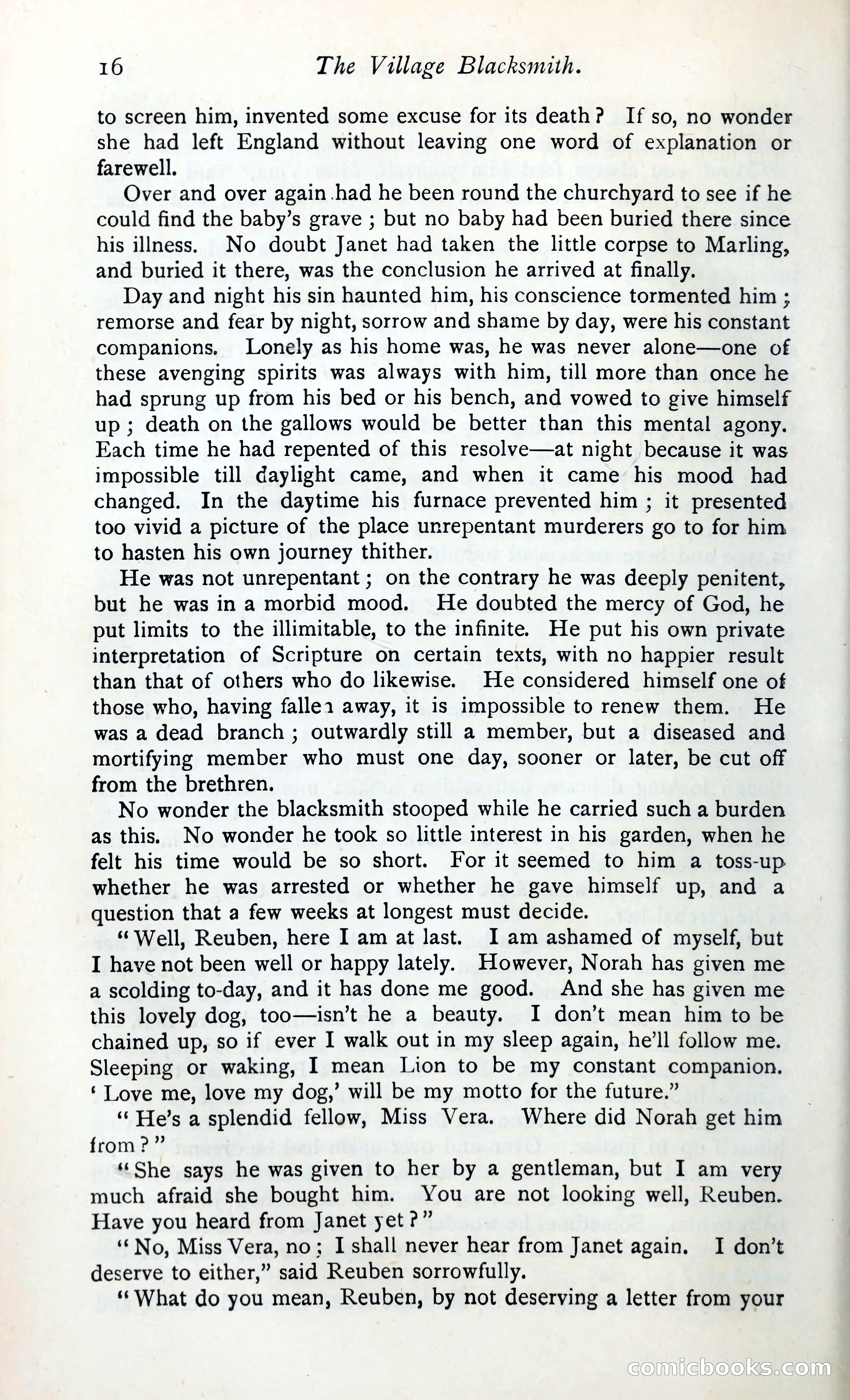
A restored page from Pulp Fiction, 1865. Page through the whole issue in the reader above.
📄 Transcribed text from this page (OCR, searchable)
Machine-transcribed from the original scan — historical spelling and the odd misread are preserved.
16 The Village Blacksmith. to screen him, invented some excuse for its death? If so, no wonder she had left England without leaving one word of explanation or farewell. Over and over again had he been round the churchyard to see if he could find the baby’s grave ; but no baby had been buried there since his illness. No doubt Janet had taken the little corpse to Marling, and buried it there, was the conclusion he arrived at finally. Day and night his sin haunted him, his conscience tormented him ; remorse and fear by night, sorrow and shame by day, were his constant companions, Lonely as his home was, he was never alone—one of these avenging spirits was always with him, till more than once he had sprung up from his bed or his bench, and vowed to give himself up ; death on the gallows would be better than this mental agony. Each time he had repented of this resolve—at night because it was impossible till daylight came, and when it came his mood had changed. In the daytime his furnace prevented him ; it presented too vivid a picture of the place unrepentant murderers go to for him to hasten his own journey thither. He was not unrepentant ; on the contrary he was deeply penitent, but he was in a morbid mood. He doubted the mercy of God, he put limits to the illimitable, to the infinite. He put his own private interpretation of Scripture on certain texts, with no happier result than that of others who do likewise. He considered himself one of those who, having fallea away, it is impossible to renew them. He was a dead branch ; outwardly still a member, but a diseased and mortifying member who must one day, sooner or later, be cut off from the brethren. No wonder the blacksmith stooped while he carried such a burden as this. No wonder he took so little interest in his garden, when he felt his time would be so short. For it seemed to him a toss-up whether he was arrested or whether he gave himself up, and a question that a few weeks at longest must decide. ‘Well, Reuben, here I am at last. I am ashamed of myself, but I have not been well or happy lately. However, Norah has given me a scolding to-day, and it has done me good. And she has given me this lovely dog, too—isn’t he a beauty. I don’t mean him to be chained up, so if ever I walk out in my sleep again, he’ll follow me. Sleeping or waking, I mean Lion to be my constant companion. ‘Love me, love my dog,’ will be my motto for the future.” ‘“ He’s a splendid fellow, Miss Vera. Where did Norah get him from?” “She says he was given to her by a gentleman, but I am very much afraid she bought him. You are not looking well, Reuben. Have you heard from Janet yet ?” ‘“No, Miss Vera, no; I shall never hear from Janet again. I don’t deserve to either,” said Reuben sorrowfully. ‘‘What do you mean, Reuben, by not deserving a letter from your CORNICOOOKS {eo