
Pulp Fiction, 1865 · page 228 of 399
The Argosy — page 228: what you’re looking at
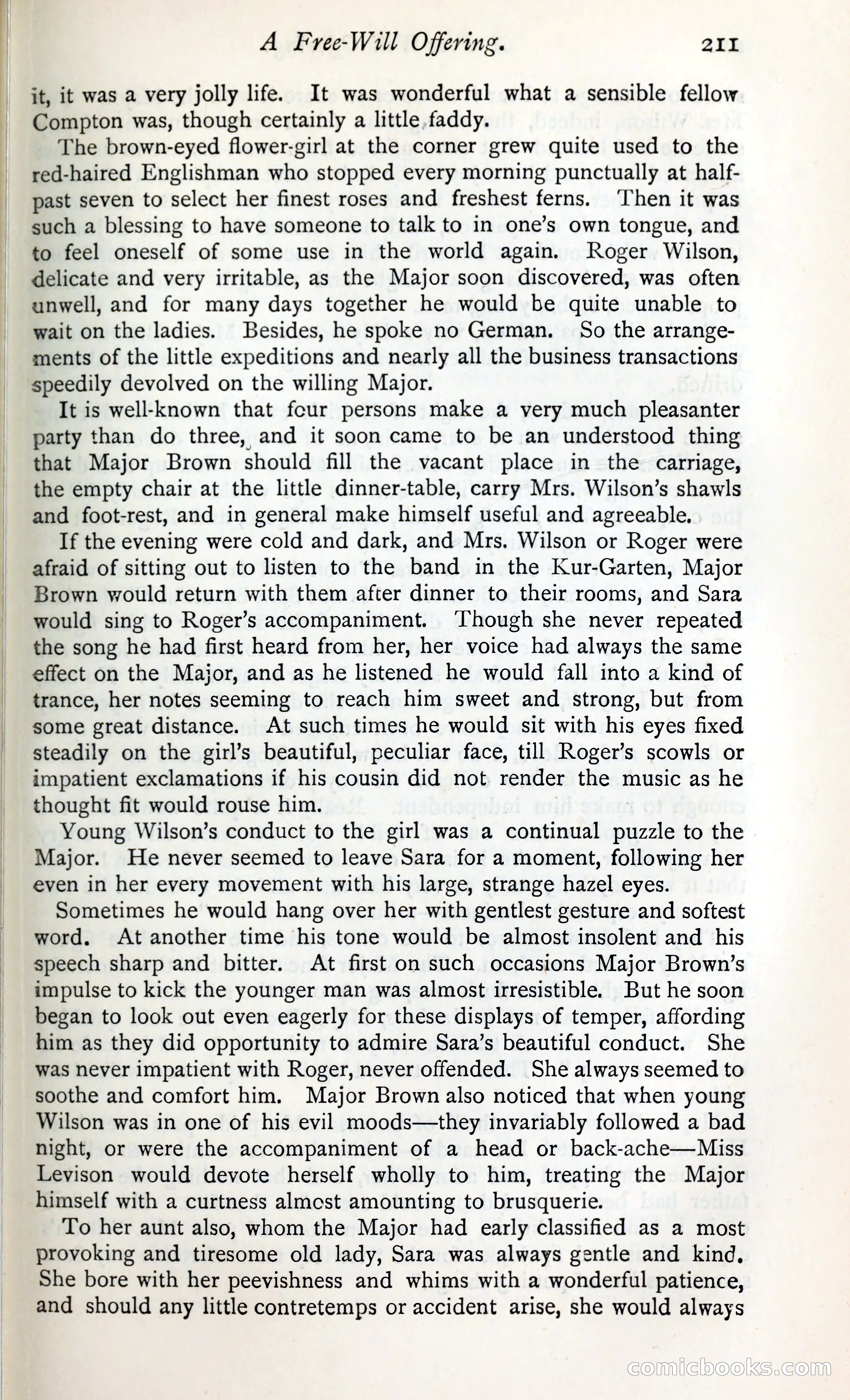
A restored page from Pulp Fiction, 1865. Page through the whole issue in the reader above.
📄 Transcribed text from this page (OCR, searchable)
Machine-transcribed from the original scan — historical spelling and the odd misread are preserved.
tet ——_——_—- —~ or A Free-Will Offering. 211 it, it was a very jolly life. It was wonderful what a sensible fellow Compton was, though certainly a little, faddy. The brown-eyed flower-girl at the corner grew quite used to the red-haired Englishman who stopped every morning punctually at half- past seven to select her finest roses and freshest ferns. ‘I’hen it was such a blessing to have someone to talk to in one’s own tongue, and to feel oneself of some use in the world again. Roger Wilson, delicate and very irritable, as the Major soon discovered, was often unwell, and for many days together he would be quite unable to wait on the ladies. Besides, he spoke no German. So the arrange- ments of the little expeditions and nearly all the business transactions speedily devolved on the willing Major. It is well-known that four persons make a very much pleasanter party than do three, and it soon came to be an understood thing that Major Brown should fill the vacant place in the carriage, the empty chair at the little dinner-table, carry Mrs. Wilson’s shawls and foot-rest, and in general make himself useful and agreeable. If the evening were cold and dark, and Mrs. Wilson or Roger were afraid of sitting out to listen to the band in the Kur-Garten, Major Brown would return with them after dinner to their rooms, and Sara would sing to Roger’s accompaniment. Though she never repeated the song he had first heard from her, her voice had always the same effect on the Major, and as he listened he would fall into a kind of trance, her notes seeming to reach him sweet and strong, but from some great distance. At such times he would sit with his eyes fixed steadily on the girl’s beautiful, peculiar face, till Roger’s scowls or impatient exclamations if his cousin did not render the music as he thought fit would rouse him. Young Wilson’s conduct to the girl was a continual puzzle to the Major. He never seemed to leave Sara for a moment, following her even in her every movement with his large, strange hazel eyes. Sometimes he would hang over her with gentlest gesture and softest word. At another time his tone would be almost insolent and his speech sharp and bitter. At first on such occasions Major Brown’s impulse to kick the younger man was almost irresistible. But he soon began to look out even eagerly for these displays of temper, affording him as they did opportunity to admire Sara’s beautiful conduct. She was never impatient with Roger, never offended. She always seemed to soothe and comfort him. Major Brown also noticed that when young Wilson was in one of his evil moods—they invariably followed a bad night, or were the accompaniment of a head or back-ache—Miss Levison would devote herself wholly to him, treating the Major himself with a curtness almest amounting to brusquerie. To her aunt also, whom the Major had early classified as a most provoking and tiresome old lady, Sara was always gentle and kind, She bore with her peevishness and whims with a wonderful patience, and should any little contretemps or accident arise, she would always CORNICLIOO cs) (C(O)