
Pulp Fiction, 1865 · page 172 of 399
The Argosy — page 172: what you’re looking at
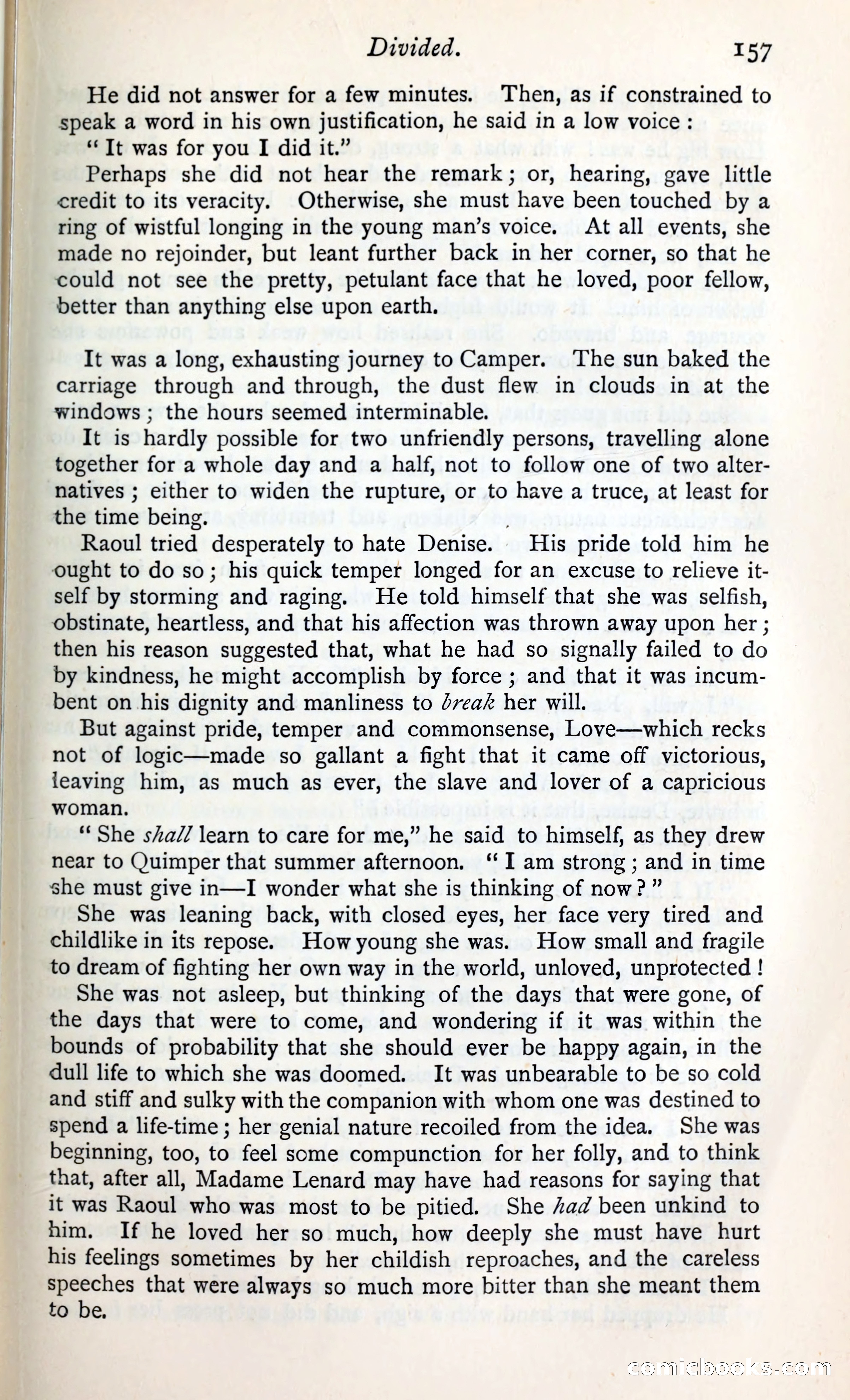
A restored page from Pulp Fiction, 1865. Page through the whole issue in the reader above.
📄 Transcribed text from this page (OCR, searchable)
Machine-transcribed from the original scan — historical spelling and the odd misread are preserved.
Divided. 157 He did not answer for a few minutes. Then, as if constrained to speak a word in his own justification, he said in a low voice: “It was for you I did it.” Perhaps she did not hear the remark; or, hearing, gave little credit to its veracity. Otherwise, she must have been touched by a ring of wistful longing in the young man’s voice. At all events, she made no rejoinder, but leant further back in her corner, so that he could not see the pretty, petulant face that he loved, poor fellow, better than anything else upon earth. It was a long, exhausting journey to Camper. ‘The sun baked the carriage through and through, the dust flew in clouds in at the windows ; the hours seemed interminable. It is hardly possible for two unfriendly persons, travelling alone together for a whole day and a half, not to follow one of two alter- natives ; either to widen the rupture, or to have a truce, at least for the time being. | Raoul tried desperately to hate Denise. His pride told him he ought to do so; his quick temper longed for an excuse to relieve it- self by storming and raging. He told himself that she was selfish, obstinate, heartless, and that his affection was thrown away upon her ; then his reason suggested that, what he had so signally failed to do by kindness, he might accomplish by force ; and that it was incum- bent on his dignity and manliness to dveaz her will. But against pride, temper and commonsense, Love—which recks not of logic—made so gallant a fight that it came off victorious, leaving him, as much as ever, the slave and lover of a capricious woman. ‘She sia// learn to care for me,” he said to himself, as they drew near to Quimper that summer afternoon. ‘‘ I am strong; and in time she must give in—I wonder what she is thinking of now?” She was leaning back, with closed eyes, her face very tired and childlike in its repose. How young she was. How small and fragile to dream of fighting her own way in the world, unloved, unprotected ! She was not asleep, but thinking of the days that were gone, of the days that were to come, and wondering if it was within the bounds of probability that she should ever be happy again, in the dull life to which she was doomed. It was unbearable to be so cold and stiff and sulky with the companion with whom one was destined to spend a life-time; her genial nature recoiled from the idea. She was beginning, too, to feel some compunction for her folly, and to think that, after all, Madame Lenard may have had reasons for saying that it was Raoul who was most to be pitied. She ad been unkind to him. If he loved her so much, how deeply she must have hurt his feelings sometimes by her childish reproaches, and the careless speeches that were always so much more bitter than she meant them to be, COnnicloooks (SO) am